


Home
Modeling Income Distributions and Lorenz Curves
Barnes and Noble
Loading Inventory...
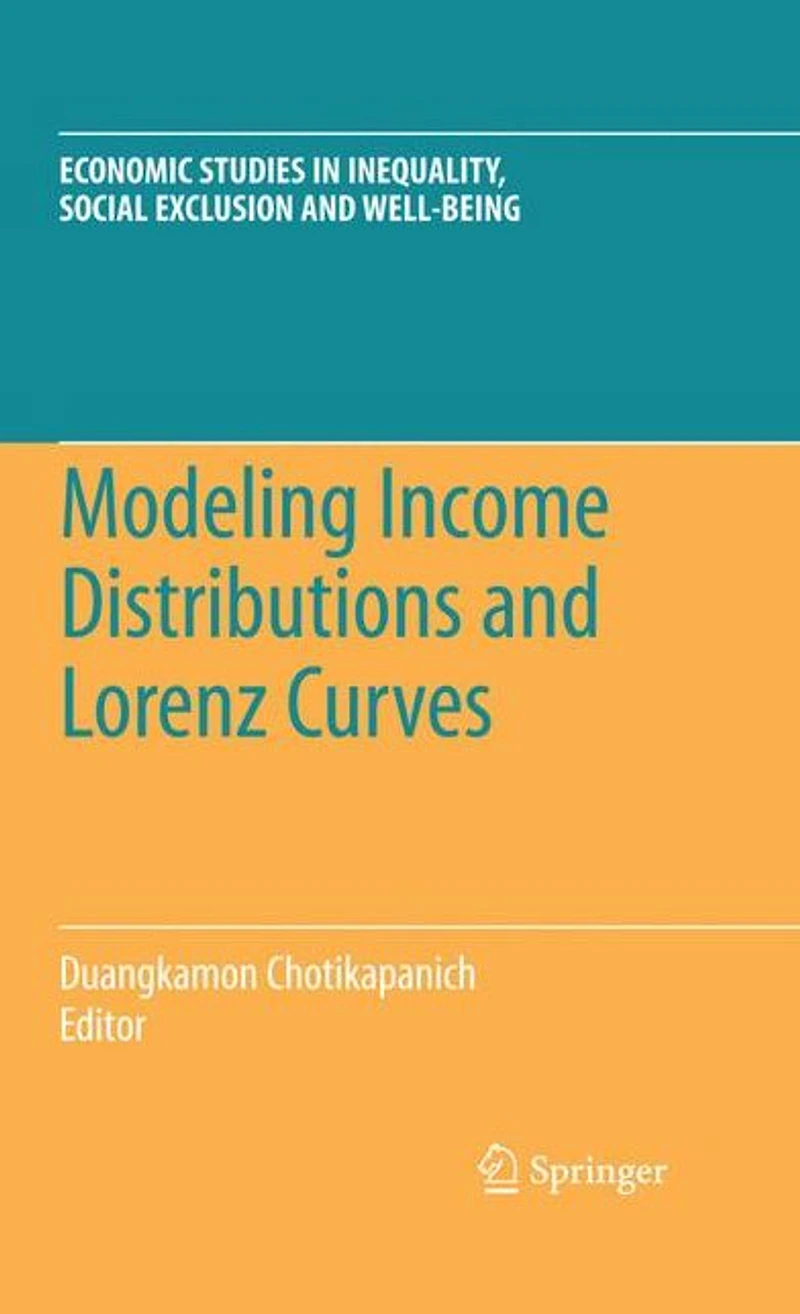
Modeling Income Distributions and Lorenz Curves in Bloomington, MN
By Barnes & Noble
Current price: $169.99

Modeling Income Distributions and Lorenz Curves in Bloomington, MN
Current price: $169.99
Loading Inventory...
Size: Hardcover
Jean-Jacques Rousseau wrote in the Preface to his famous Discourse on Inequality that “I consider the subject of the following discourse as one of the most interesting questions philosophy can propose, and unhappily for us, one of the most thorny that philosophers can have to solve. For how shall we know the source of inequality between men, if we do not begin by knowing mankind?” (Rousseau, 1754). This citation of Rousseau appears in an article in Spanish where Dagum (2001), in the memory of whom this book is published, also cites Socrates who said that the only useful knowledge is that which makes us better and Seneca who wrote that knowing what a straight line is, is not important if we do not know what rectitude is. These references are indeed a good illustration of Dagum’s vast knowledge, which was clearly not limited to the field of Economics. For Camilo the first part of Rousseau’s citation certainly justified his interest in the field of inequality which was at the centre of his scientific preoccupations. It should however be stressed that for Camilo the second part of the citation represented a “solid argument in favor of giving macroeconomic foundations to microeconomic behavior” (Dagum, 2001). More precisely, “individualism and methodological holism complete each other in contributing to the explanation of individual and social behavior” (Dagum, 2001).
Jean-Jacques Rousseau wrote in the Preface to his famous Discourse on Inequality that “I consider the subject of the following discourse as one of the most interesting questions philosophy can propose, and unhappily for us, one of the most thorny that philosophers can have to solve. For how shall we know the source of inequality between men, if we do not begin by knowing mankind?” (Rousseau, 1754). This citation of Rousseau appears in an article in Spanish where Dagum (2001), in the memory of whom this book is published, also cites Socrates who said that the only useful knowledge is that which makes us better and Seneca who wrote that knowing what a straight line is, is not important if we do not know what rectitude is. These references are indeed a good illustration of Dagum’s vast knowledge, which was clearly not limited to the field of Economics. For Camilo the first part of Rousseau’s citation certainly justified his interest in the field of inequality which was at the centre of his scientific preoccupations. It should however be stressed that for Camilo the second part of the citation represented a “solid argument in favor of giving macroeconomic foundations to microeconomic behavior” (Dagum, 2001). More precisely, “individualism and methodological holism complete each other in contributing to the explanation of individual and social behavior” (Dagum, 2001).
Shop Similar Products












Find at Mall of America® in Bloomington, MN
Visit at Mall of America® in Bloomington, MN