


Home
Mineral and Organic Fertilization and Its Effects on the Environment
Barnes and Noble
Loading Inventory...
Mineral and Organic Fertilization and Its Effects on the Environment in Bloomington, MN
Current price: $61.00

Mineral and Organic Fertilization and Its Effects on the Environment in Bloomington, MN
Current price: $61.00
Loading Inventory...
Size: OS
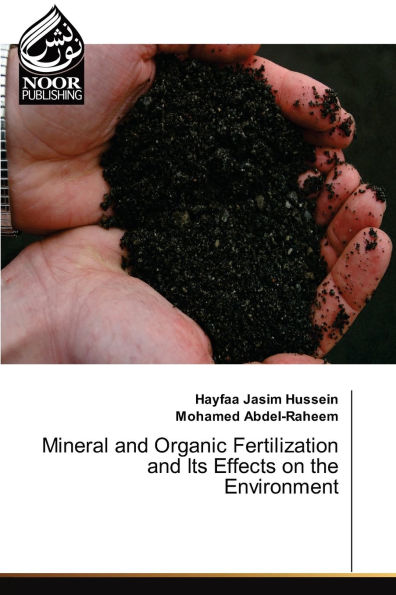
The intensive use of mineral (M) fertilizers may cause harm the environment via leaching or greenhouse gas emissions, destroy soil fertility as a consequence of loss of soil organic matter, and, due to their high price, they are economically unviable for producers. It is widely accepted that organic (O) fertilizers may deal with pressing challenges facing modern agriculture, even if farmers need to improve their knowledge for applying in fertilization programs. A meta-analysis approach has been adopted to evaluate the effects on soil organic carbon (SOC) and crop yield of O fertilizers, applied alone or in combination with mineral fertilizers (MO) under conventional (CT), reduced (RT), and no-tillage (NT) regimes. The analysis was performed in different climatic conditions, soil properties, crop species, and irrigation management. Organic fertilizers have a positive influence in increasing SOC compared with M (on average 12.9%), even if high values were observed under NT (20.6%). The need for flexible and environment-specific systems when considering organic fertilization subjected to different tillage regimes.
The intensive use of mineral (M) fertilizers may cause harm the environment via leaching or greenhouse gas emissions, destroy soil fertility as a consequence of loss of soil organic matter, and, due to their high price, they are economically unviable for producers. It is widely accepted that organic (O) fertilizers may deal with pressing challenges facing modern agriculture, even if farmers need to improve their knowledge for applying in fertilization programs. A meta-analysis approach has been adopted to evaluate the effects on soil organic carbon (SOC) and crop yield of O fertilizers, applied alone or in combination with mineral fertilizers (MO) under conventional (CT), reduced (RT), and no-tillage (NT) regimes. The analysis was performed in different climatic conditions, soil properties, crop species, and irrigation management. Organic fertilizers have a positive influence in increasing SOC compared with M (on average 12.9%), even if high values were observed under NT (20.6%). The need for flexible and environment-specific systems when considering organic fertilization subjected to different tillage regimes.
Shop Similar Products












Find at Mall of America® in Bloomington, MN
Visit at Mall of America® in Bloomington, MN