


Home
Military Persuasion: Deterrence and Provocation in Crisis and War
Barnes and Noble
Loading Inventory...
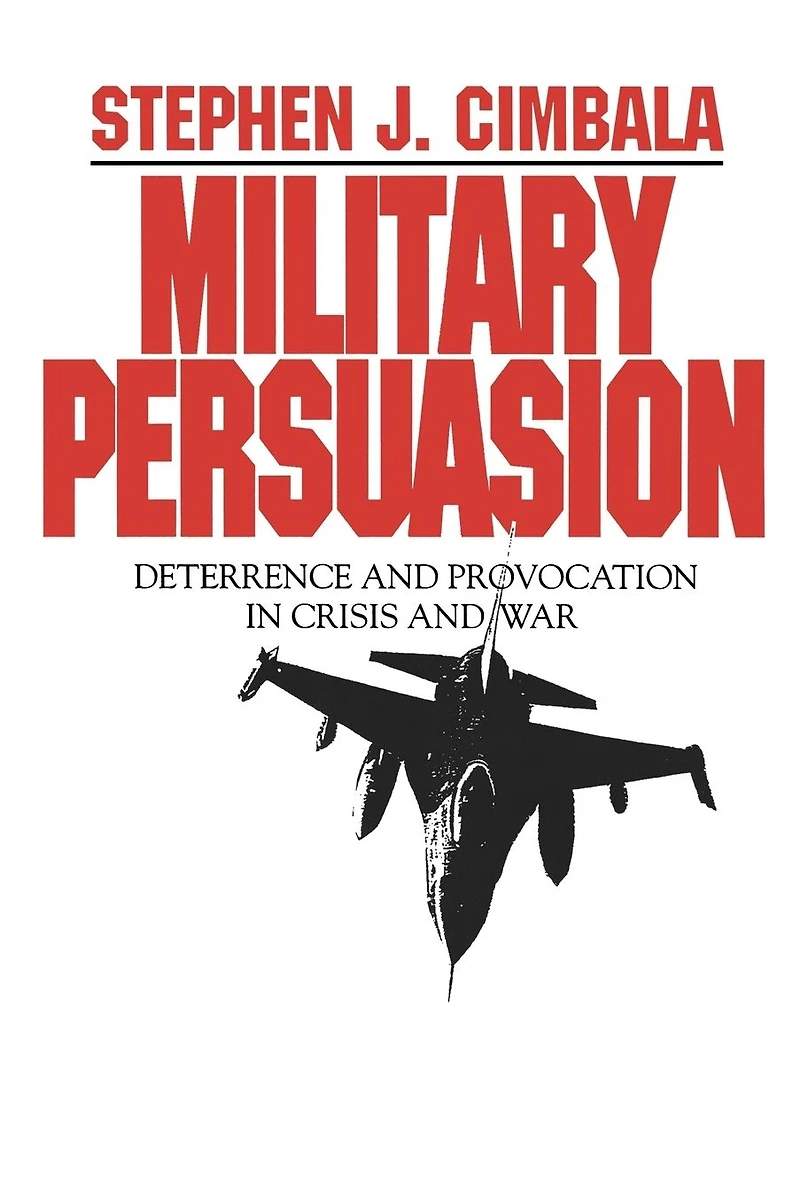
Military Persuasion: Deterrence and Provocation in Crisis and War in Bloomington, MN
By Barnes & Noble
Current price: $34.95

Military Persuasion: Deterrence and Provocation in Crisis and War in Bloomington, MN
Current price: $34.95
Loading Inventory...
Size: Paperback
In Military Persuasion, Stephen J. Cimbala reconciles two central approaches to war and peace studies. In the study of crisis management and war termination, the security literature overwhelmingly emphasizes the making of credible deterrent threats and coercive bargaining, while peace studies and conflict resolution literature focuses on conciliation and the offering of acceptable terms prior to or during a conflict. Cimbala contends that both threats and accommodation have their place in successfully preventing and ending conflicts. Military Persuasion is particularly welcome in the 1990s, as policy makers and scholars debate whether nuclear deterrence deserves credit as a positive factor in the avoidance of military confrontation between the superpowers during the Cold War years. Cimbala examines several cases of great-power decision making before, during, and after the Cold War to demonstrate that deterrent threats alone have not successfully avoided war during this century. In some important instances, such as the months leading up to World War I, threats have actually fed into a chain of miscalculation that ultimately led to war. Cimbala also considers the Berlin crisis of 1948, the Cuban Missile Crisis of 1962, and the Gulf War of 1991, the first major post–Cold War conflict. Military Persuasion makes a significant contribution to war and peace studies, firmly grounded in a realistic appraisal of the human dimension to crisis management.
In Military Persuasion, Stephen J. Cimbala reconciles two central approaches to war and peace studies. In the study of crisis management and war termination, the security literature overwhelmingly emphasizes the making of credible deterrent threats and coercive bargaining, while peace studies and conflict resolution literature focuses on conciliation and the offering of acceptable terms prior to or during a conflict. Cimbala contends that both threats and accommodation have their place in successfully preventing and ending conflicts. Military Persuasion is particularly welcome in the 1990s, as policy makers and scholars debate whether nuclear deterrence deserves credit as a positive factor in the avoidance of military confrontation between the superpowers during the Cold War years. Cimbala examines several cases of great-power decision making before, during, and after the Cold War to demonstrate that deterrent threats alone have not successfully avoided war during this century. In some important instances, such as the months leading up to World War I, threats have actually fed into a chain of miscalculation that ultimately led to war. Cimbala also considers the Berlin crisis of 1948, the Cuban Missile Crisis of 1962, and the Gulf War of 1991, the first major post–Cold War conflict. Military Persuasion makes a significant contribution to war and peace studies, firmly grounded in a realistic appraisal of the human dimension to crisis management.
Shop Similar Products










Find at Mall of America® in Bloomington, MN
Visit at Mall of America® in Bloomington, MN