


Home
Metal Compounds Cancer Therapy
Barnes and Noble
Loading Inventory...
Metal Compounds Cancer Therapy in Bloomington, MN
Current price: $290.00

Metal Compounds Cancer Therapy in Bloomington, MN
Current price: $290.00
Loading Inventory...
Size: Hardcover
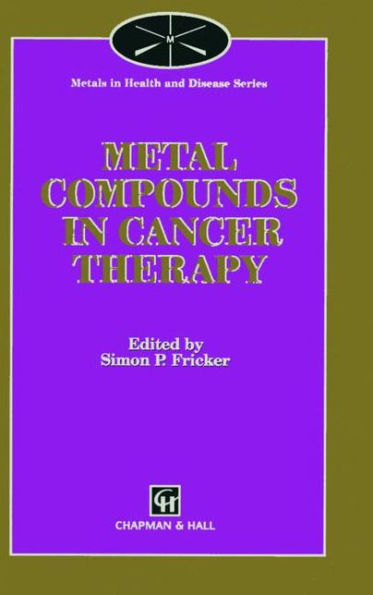
The discovery of the antitumour activity of cisplatin in 1965 and its subsequent introduction into clinical trials in 1971 was the catalyst for a major international research effort investigating the potential of metal compounds in cancer therapy. Cisplatin now occupies an important place in the armamentarium of the oncologist due to its effectiveness in the treatment of testicular cancer. A second generation analogue, carbo platin, offers reduced toxicity together with therapeutic activity, which gives it a place in the front-line therapy of genitourinary cancers. These and other successes have encouraged the search for novel metal-based drugs for cancer therapy. Research has shown that metal compounds have potential for activity not only as cytotoxic antitumour agents, but also in areas such as adjuvant therapy, diagnosis and immunotherapy. The aim of this book is to review and describe the major achievements and developments arising from this international research effort. The contributing authors come from laboratories throughout Europe and America and represent the many disci plines characteristic of this research, such as clinical research, pharmacology, tumour biology and inorganic medicinal chemistry.
The discovery of the antitumour activity of cisplatin in 1965 and its subsequent introduction into clinical trials in 1971 was the catalyst for a major international research effort investigating the potential of metal compounds in cancer therapy. Cisplatin now occupies an important place in the armamentarium of the oncologist due to its effectiveness in the treatment of testicular cancer. A second generation analogue, carbo platin, offers reduced toxicity together with therapeutic activity, which gives it a place in the front-line therapy of genitourinary cancers. These and other successes have encouraged the search for novel metal-based drugs for cancer therapy. Research has shown that metal compounds have potential for activity not only as cytotoxic antitumour agents, but also in areas such as adjuvant therapy, diagnosis and immunotherapy. The aim of this book is to review and describe the major achievements and developments arising from this international research effort. The contributing authors come from laboratories throughout Europe and America and represent the many disci plines characteristic of this research, such as clinical research, pharmacology, tumour biology and inorganic medicinal chemistry.













Find at Mall of America® in Bloomington, MN
Visit at Mall of America® in Bloomington, MN