


Home
Mesozoic Sub-Continental Lithospheric Thinning under Eastern Asia: Special Publication #280
Barnes and Noble
Loading Inventory...
Mesozoic Sub-Continental Lithospheric Thinning under Eastern Asia: Special Publication #280 in Bloomington, MN
By Barnes & Noble
Current price: $90.00

Mesozoic Sub-Continental Lithospheric Thinning under Eastern Asia: Special Publication #280 in Bloomington, MN
Current price: $90.00
Loading Inventory...
Size: Hardcover
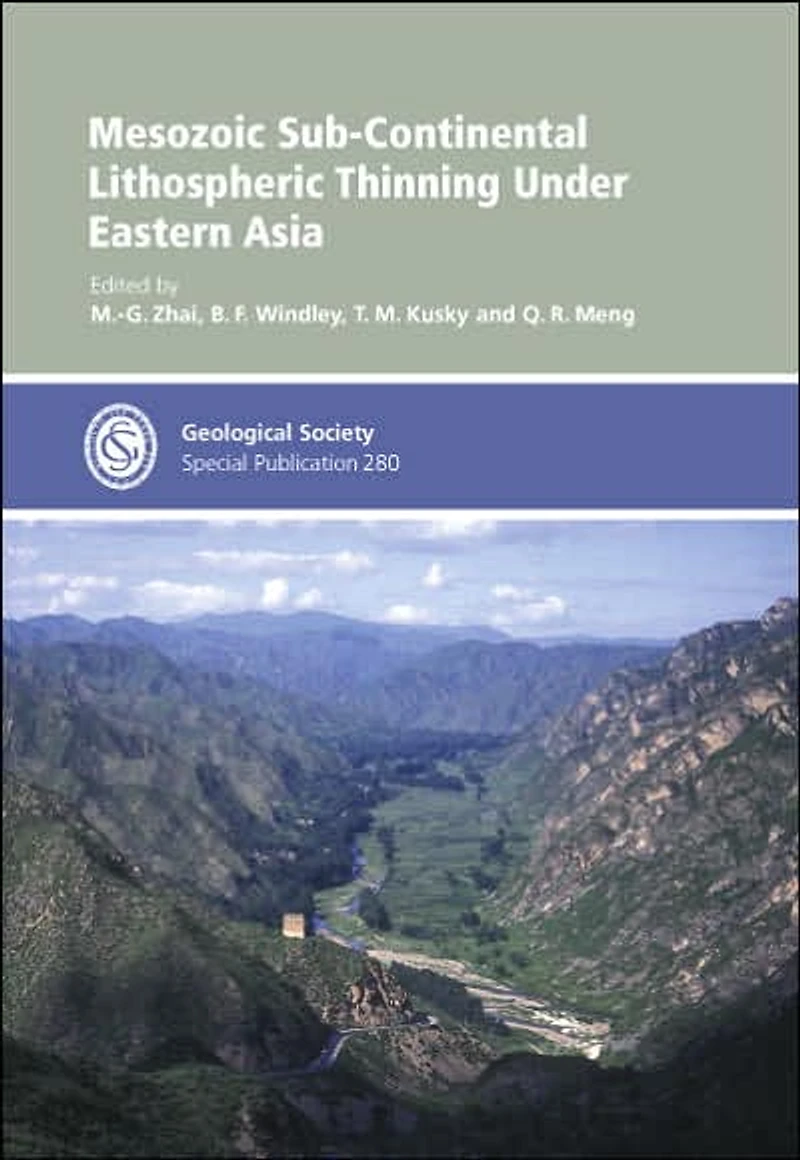
The North China craton is the only known place where an Archaean craton with a thick tectospheric root lost half of that root in younger tectonism by processes such as delamination, convection, hydration-weakening, compositional change or some other mechanism. In this volume, authors provide data constraining the geometry and timing of root loss, aimed at understanding why and how continental roots are lost in general. Modelling how often this process may have occurred in the geological past, and how much lithospheric material has been recycled to the convecting mantle through this mechanism, could drastically change our current understanding of crustal growth rates and processes. Possible triggering mechanisms for root loss include collision of the South China (Yangtze) and North China cratons in the Triassic, the India-Asia collision, closure of the Solonker and Monhgol-Okhotsk oceans, Mesozoic subduction of the Pacific Plate beneath eastern China, impingement of mantle plumes, mantle hydration from long-term subduction and several rifting events. In this volume, we link studies of crustal tectonics with investigations aimed at determining the nature of and timing of the formation and loss of the root, in order to better-understand mechanisms of continental root formation, evolution and recycling/removal.
The North China craton is the only known place where an Archaean craton with a thick tectospheric root lost half of that root in younger tectonism by processes such as delamination, convection, hydration-weakening, compositional change or some other mechanism. In this volume, authors provide data constraining the geometry and timing of root loss, aimed at understanding why and how continental roots are lost in general. Modelling how often this process may have occurred in the geological past, and how much lithospheric material has been recycled to the convecting mantle through this mechanism, could drastically change our current understanding of crustal growth rates and processes. Possible triggering mechanisms for root loss include collision of the South China (Yangtze) and North China cratons in the Triassic, the India-Asia collision, closure of the Solonker and Monhgol-Okhotsk oceans, Mesozoic subduction of the Pacific Plate beneath eastern China, impingement of mantle plumes, mantle hydration from long-term subduction and several rifting events. In this volume, we link studies of crustal tectonics with investigations aimed at determining the nature of and timing of the formation and loss of the root, in order to better-understand mechanisms of continental root formation, evolution and recycling/removal.
Shop Similar Products







Find at Mall of America® in Bloomington, MN
Visit at Mall of America® in Bloomington, MN