


Home
Memory and Identity in the Learned World: Community Formation in the Early Modern World of Learning and Science
Barnes and Noble
Loading Inventory...
Memory and Identity in the Learned World: Community Formation in the Early Modern World of Learning and Science in Bloomington, MN
Current price: $149.00

Memory and Identity in the Learned World: Community Formation in the Early Modern World of Learning and Science in Bloomington, MN
Current price: $149.00
Loading Inventory...
Size: OS
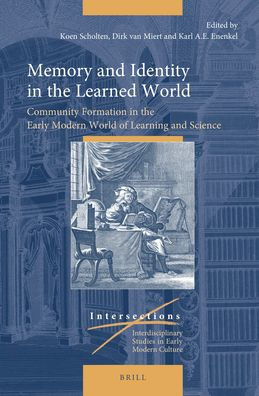
Memory and Identity in the Learned World offers a detailed and varied account of community formation in the early modern world of learning and science. The book traces how collective identity, institutional memory and modes of remembrance helped to shape learned and scientific communities. The case studies in this book analyse how learned communities and individuals presented and represented themselves, for example in letters, biographies, histories, journals, opera omnia, monuments, academic travels and memorials. By bringing together the perspectives of historians of literature, scholarship, universities, science, and art, this volume studies knowledge communities by looking at the centrality of collective identity and memory in their formations and reformations. Contributors: Lieke van Deinsen, Karl Enenkel, Constance Hardesty, Paul Hulsenboom, Dirk van Miert, Alan Moss, Richard Kirwan, Koen Scholten, Floris Solleveld, and Esther M. Villegas de la Torre.
Memory and Identity in the Learned World offers a detailed and varied account of community formation in the early modern world of learning and science. The book traces how collective identity, institutional memory and modes of remembrance helped to shape learned and scientific communities. The case studies in this book analyse how learned communities and individuals presented and represented themselves, for example in letters, biographies, histories, journals, opera omnia, monuments, academic travels and memorials. By bringing together the perspectives of historians of literature, scholarship, universities, science, and art, this volume studies knowledge communities by looking at the centrality of collective identity and memory in their formations and reformations. Contributors: Lieke van Deinsen, Karl Enenkel, Constance Hardesty, Paul Hulsenboom, Dirk van Miert, Alan Moss, Richard Kirwan, Koen Scholten, Floris Solleveld, and Esther M. Villegas de la Torre.
Shop Similar Products









Find at Mall of America® in Bloomington, MN
Visit at Mall of America® in Bloomington, MN