


Home
Mathematical Ecology of Populations and Ecosystems
Barnes and Noble
Loading Inventory...
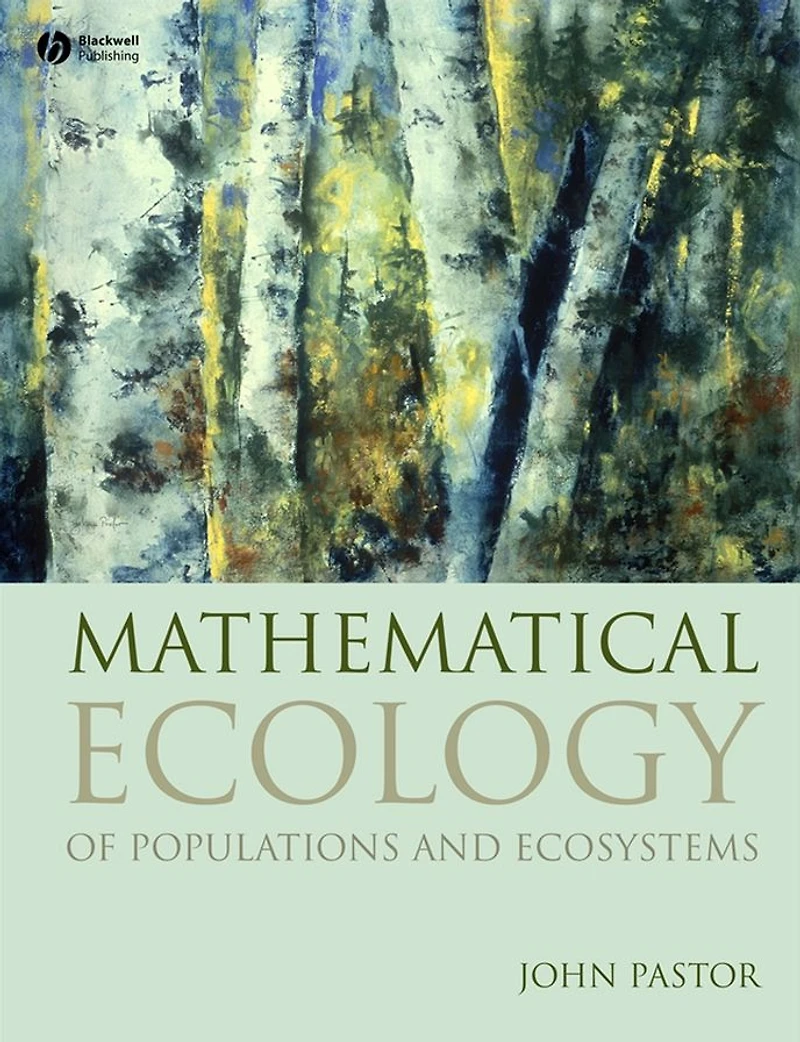
Mathematical Ecology of Populations and Ecosystems in Bloomington, MN
By Barnes & Noble
Current price: $75.00

Mathematical Ecology of Populations and Ecosystems in Bloomington, MN
Current price: $75.00
Loading Inventory...
Size: EBook
Population ecologists study how births and deaths affect the dynamics of populations and communities, while ecosystem ecologists study how species control the flux of energy and materials through food webs and ecosystems. Although all these processes occur simultaneously in nature, the mathematical frameworks bridging the two disciplines have developed independently. Consequently, this independent development of theory has impeded the cross-fertilization of population and ecosystem ecology. Using recent developments from dynamical systems theory, this advanced undergraduate/graduate level textbook shows how to bridge the two disciplines seamlessly. The book shows how bifurcations between the solutions of models can help understand regime shifts in natural populations and ecosystems once thresholds in rates of births, deaths, consumption, competition, nutrient inputs, and decay are crossed. Mathematical Ecology is essential reading for students of ecology who have had a first course in calculus and linear algebra or students in mathematics wishing to learn how dynamical systems theory can be applied to ecological problems.
Population ecologists study how births and deaths affect the dynamics of populations and communities, while ecosystem ecologists study how species control the flux of energy and materials through food webs and ecosystems. Although all these processes occur simultaneously in nature, the mathematical frameworks bridging the two disciplines have developed independently. Consequently, this independent development of theory has impeded the cross-fertilization of population and ecosystem ecology. Using recent developments from dynamical systems theory, this advanced undergraduate/graduate level textbook shows how to bridge the two disciplines seamlessly. The book shows how bifurcations between the solutions of models can help understand regime shifts in natural populations and ecosystems once thresholds in rates of births, deaths, consumption, competition, nutrient inputs, and decay are crossed. Mathematical Ecology is essential reading for students of ecology who have had a first course in calculus and linear algebra or students in mathematics wishing to learn how dynamical systems theory can be applied to ecological problems.
Shop Similar Products









Find at Mall of America® in Bloomington, MN
Visit at Mall of America® in Bloomington, MN