


Home
Mangrove palms do not grow in the sand of Copacabana
Barnes and Noble
Loading Inventory...
Mangrove palms do not grow in the sand of Copacabana in Bloomington, MN
Current price: $72.00

Mangrove palms do not grow in the sand of Copacabana in Bloomington, MN
Current price: $72.00
Loading Inventory...
Size: OS
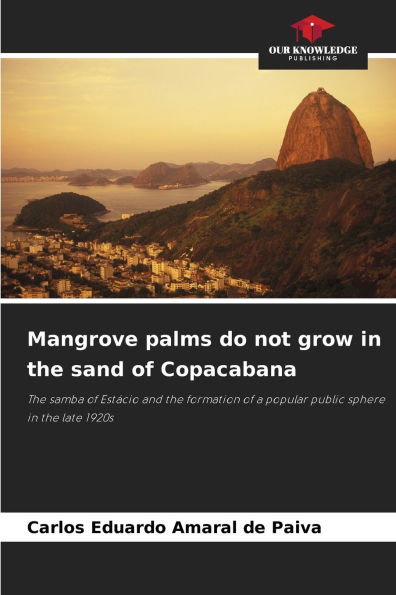
This work studies the musical production of the samba musicians who were part of the group known as 'pessoal do Estácio' (the Estácio people), creators of Deixa Falar, considered the first samba school in Rio de Janeiro, founded in 1928, and responsible for the rhythmic and thematic modification of samba in the late 1920s. Using the idea of the formation of a 'popular public sphere, ' we aim to demonstrate how these transformations, fundamental to the demarcation of samba as an urban musical genre, were intrinsically linked to the forms of organisation and sociability of the non-bourgeois classes of republican Brazil. Thus, the analysis of the formation of samba as a musical genre involves an interpretation of the meaning of various practices within this public sphere, such as forms of religiosity, the process of professionalisation and gender relations, which point to a worldview of the popular classes that diverges from that of the dominant classes.
This work studies the musical production of the samba musicians who were part of the group known as 'pessoal do Estácio' (the Estácio people), creators of Deixa Falar, considered the first samba school in Rio de Janeiro, founded in 1928, and responsible for the rhythmic and thematic modification of samba in the late 1920s. Using the idea of the formation of a 'popular public sphere, ' we aim to demonstrate how these transformations, fundamental to the demarcation of samba as an urban musical genre, were intrinsically linked to the forms of organisation and sociability of the non-bourgeois classes of republican Brazil. Thus, the analysis of the formation of samba as a musical genre involves an interpretation of the meaning of various practices within this public sphere, such as forms of religiosity, the process of professionalisation and gender relations, which point to a worldview of the popular classes that diverges from that of the dominant classes.
Shop Similar Products


















Find at Mall of America® in Bloomington, MN
Visit at Mall of America® in Bloomington, MN