


Home
linguistic Luck: Safeguards and threats to communication
Barnes and Noble
Loading Inventory...
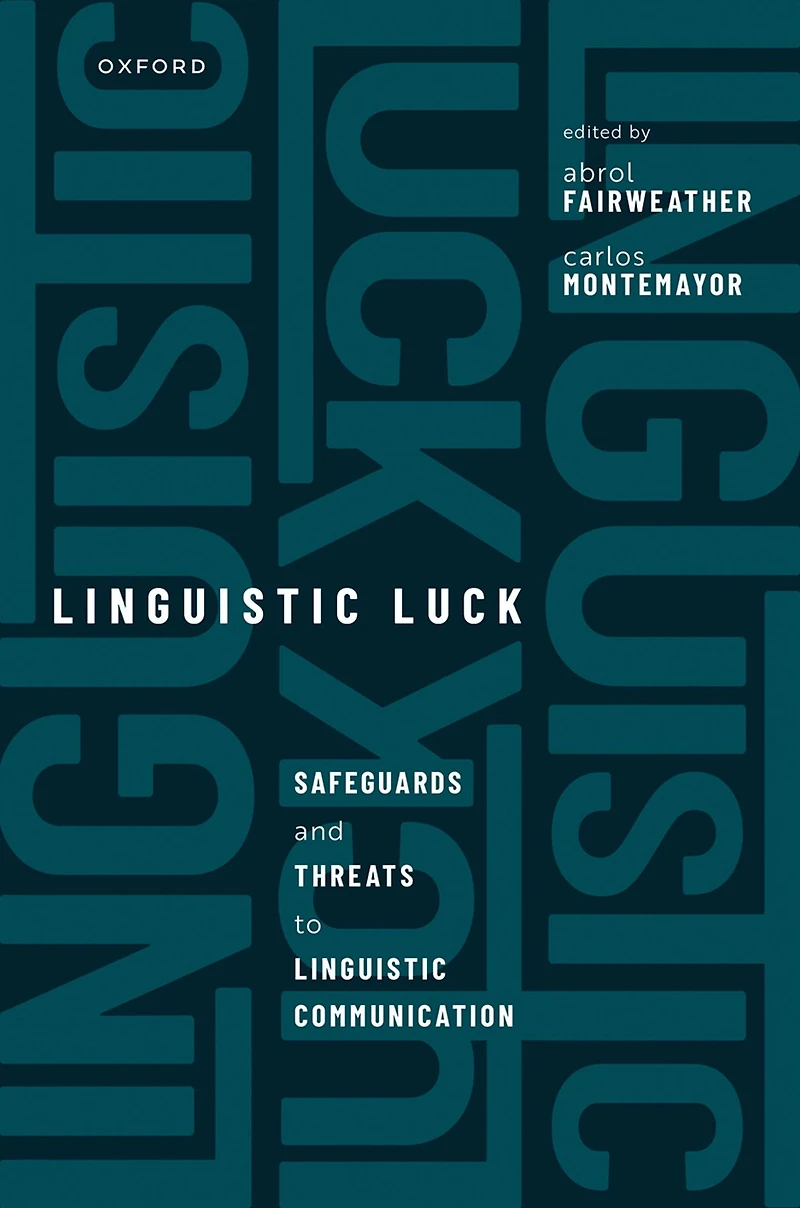

linguistic Luck: Safeguards and threats to communication in Bloomington, MN
By Barnes & Noble
Current price: $89.99

linguistic Luck: Safeguards and threats to communication in Bloomington, MN
Current price: $89.99
Loading Inventory...
Size: EBook
Despite the considerable attention the topic of luck has received in ethics and epistemology, very little has been published in the philosophical literature overtly on linguistic luck. The essays collected here provide the first sustained examination of the diverse forms of linguistic luck, the mechanisms available to reduce the impact of linguistic luck and how to cope with residual luck not eliminated by the causal, inferential, and intentional mechanisms which aim at its eradication. Of primary interest is not some, hitherto unnoticed widespread prevalence of luck in the determinants of meaning and communication, but rather the impressive extent to which luck is reduced or eliminated therein. Whether through casual, inferential or intentional means, the determinants of meaning and communication are impressively independent of luck and chance. In fact, it is difficult to imagine a world with human language where efforts to communicate succeed no better than chance. Linguistic communication is only possible because robust luck reducing variables are at work. The essays collected seek to understand the diversity, scope and mode of operation of luck reducing mechanisms in language. While it is not possible here to cover the full range of linguistic phenomena affected by luck, a wide range of issues in linguistics and philosophy of language are investigated, including, syntax processing, demonstrative reference, conversational implicature, testimony, lexical innovation, joint attention, communicative value, conventionalism vs. anti-conventionalism, metasemantic safety, and semantic skepticism, to name a few.
Despite the considerable attention the topic of luck has received in ethics and epistemology, very little has been published in the philosophical literature overtly on linguistic luck. The essays collected here provide the first sustained examination of the diverse forms of linguistic luck, the mechanisms available to reduce the impact of linguistic luck and how to cope with residual luck not eliminated by the causal, inferential, and intentional mechanisms which aim at its eradication. Of primary interest is not some, hitherto unnoticed widespread prevalence of luck in the determinants of meaning and communication, but rather the impressive extent to which luck is reduced or eliminated therein. Whether through casual, inferential or intentional means, the determinants of meaning and communication are impressively independent of luck and chance. In fact, it is difficult to imagine a world with human language where efforts to communicate succeed no better than chance. Linguistic communication is only possible because robust luck reducing variables are at work. The essays collected seek to understand the diversity, scope and mode of operation of luck reducing mechanisms in language. While it is not possible here to cover the full range of linguistic phenomena affected by luck, a wide range of issues in linguistics and philosophy of language are investigated, including, syntax processing, demonstrative reference, conversational implicature, testimony, lexical innovation, joint attention, communicative value, conventionalism vs. anti-conventionalism, metasemantic safety, and semantic skepticism, to name a few.
Shop Similar Products













Find at Mall of America® in Bloomington, MN
Visit at Mall of America® in Bloomington, MN