


Home
Least-Squares Finite Element Methods
Barnes and Noble
Loading Inventory...
Least-Squares Finite Element Methods in Bloomington, MN
By Barnes & Noble
Current price: $69.99

Least-Squares Finite Element Methods in Bloomington, MN
Current price: $69.99
Loading Inventory...
Size: Hardcover
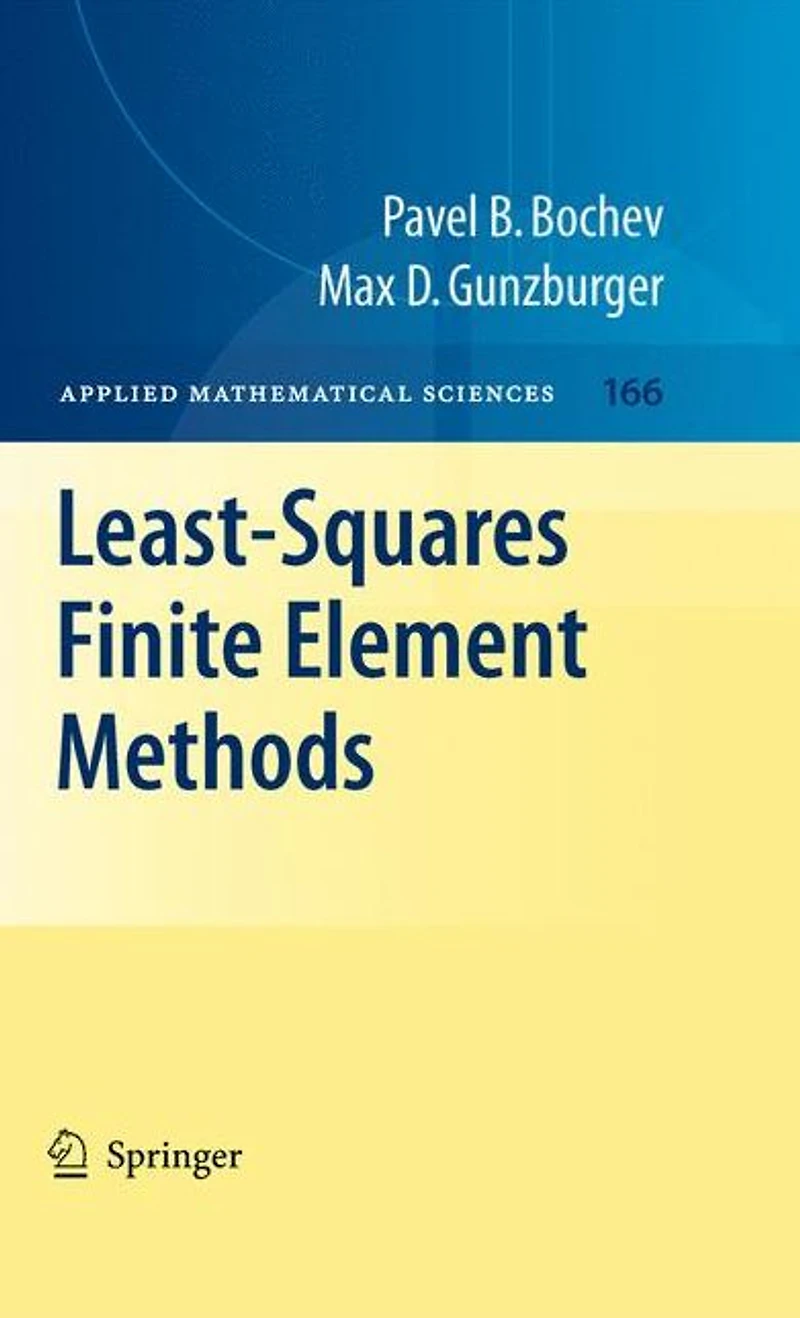
Since their emergence in the early 1950s,finite element methods have become one of the most versatile and powerful methodologies for the approximate numerical solution of partial differential equations. At the time of their inception,finite e- ment methods were viewed primarily as a tool for solving problems in structural analysis. However, it did not take long to discover thatfinite element methods could be applied with equal success to problems in other engineering and scientific fields. Today,finite element methods are also in common use, and indeed are often the method of choice, for incompressiblefluid flow, heat transfer, electromagnetics, and advection-diffusion-reaction problems, just to name a few. Given the early conn- tion betweenfinite element methods and problems engendered by energy minimi- tion principles, it is not surprising that the first mathematical analyses offinite e- ment methods were given in the environment of the classical Rayleigh–Ritz setting. Yet again, using the fertile soil provided by functional analysis in Hilbert spaces, it did not take long for the rigorous analysis offinite element methods to be extended to many other settings. Today,finite element methods are unsurpassed with respect to their level of theoretical maturity.
Since their emergence in the early 1950s,finite element methods have become one of the most versatile and powerful methodologies for the approximate numerical solution of partial differential equations. At the time of their inception,finite e- ment methods were viewed primarily as a tool for solving problems in structural analysis. However, it did not take long to discover thatfinite element methods could be applied with equal success to problems in other engineering and scientific fields. Today,finite element methods are also in common use, and indeed are often the method of choice, for incompressiblefluid flow, heat transfer, electromagnetics, and advection-diffusion-reaction problems, just to name a few. Given the early conn- tion betweenfinite element methods and problems engendered by energy minimi- tion principles, it is not surprising that the first mathematical analyses offinite e- ment methods were given in the environment of the classical Rayleigh–Ritz setting. Yet again, using the fertile soil provided by functional analysis in Hilbert spaces, it did not take long for the rigorous analysis offinite element methods to be extended to many other settings. Today,finite element methods are unsurpassed with respect to their level of theoretical maturity.
Shop Similar Products









Find at Mall of America® in Bloomington, MN
Visit at Mall of America® in Bloomington, MN