


Home
Lagrange-type Functions Constrained Non-Convex Optimization
Barnes and Noble
Loading Inventory...
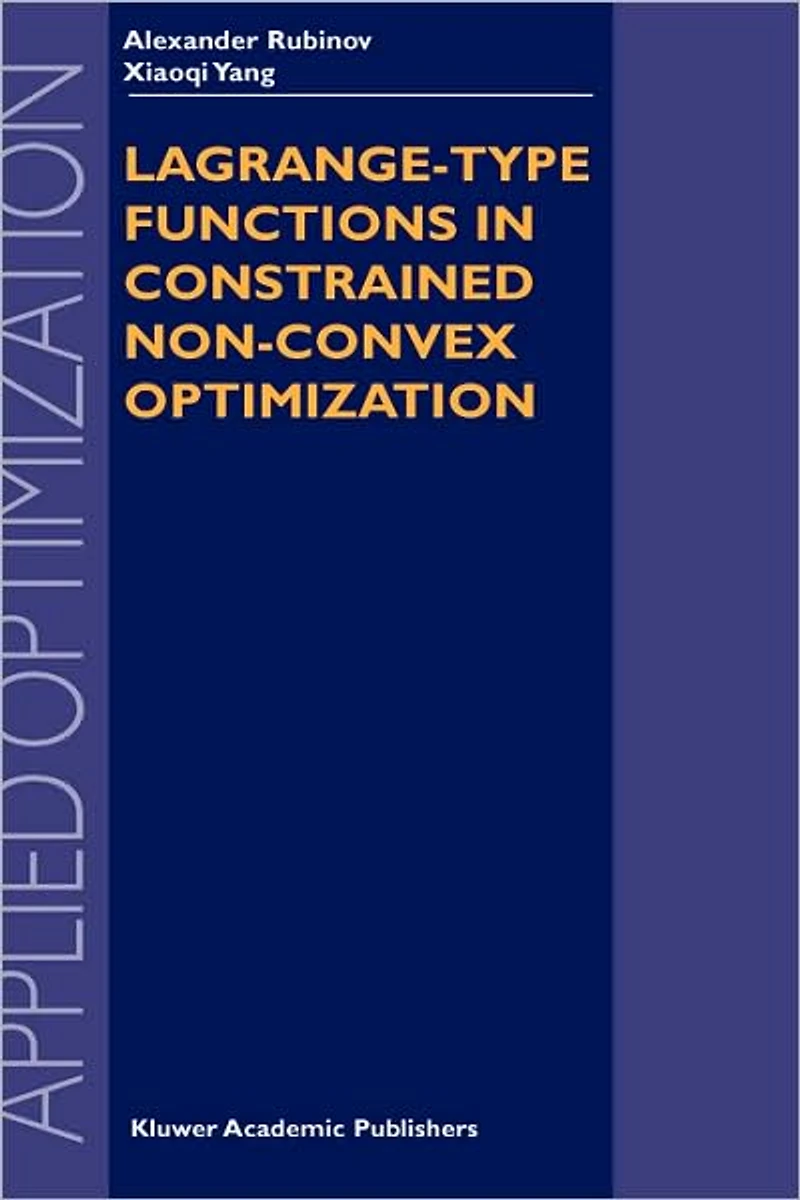
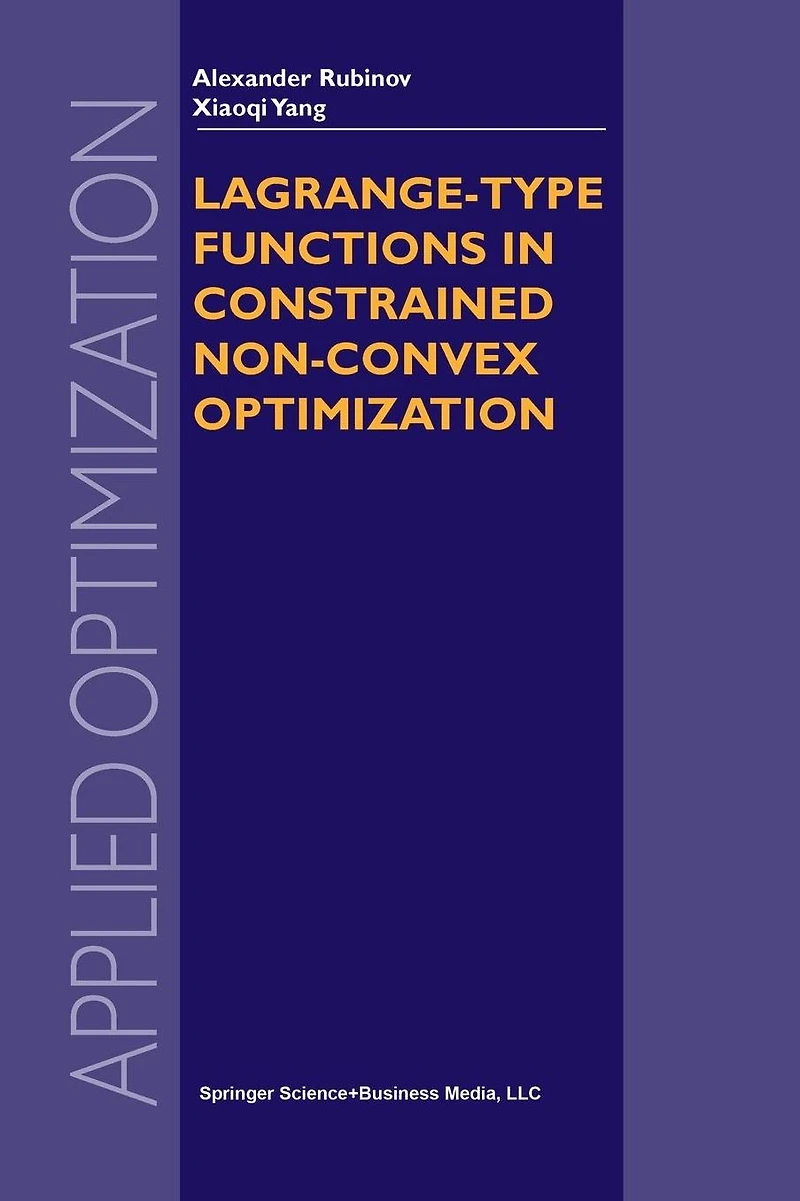
Lagrange-type Functions Constrained Non-Convex Optimization in Bloomington, MN
By Barnes & Noble
Current price: $109.99

Lagrange-type Functions Constrained Non-Convex Optimization in Bloomington, MN
Current price: $109.99
Loading Inventory...
Size: Hardcover
Lagrange and penalty function methods provide a powerful approach, both as a theoretical tool and a computational vehicle, for the study of constrained optimization problems. However, for a nonconvex constrained optimization problem, the classical Lagrange primal-dual method may fail to find a mini mum as a zero duality gap is not always guaranteed. A large penalty parameter is, in general, required for classical quadratic penalty functions in order that minima of penalty problems are a good approximation to those of the original constrained optimization problems. It is well-known that penaity functions with too large parameters cause an obstacle for numerical implementation. Thus the question arises how to generalize classical Lagrange and penalty functions, in order to obtain an appropriate scheme for reducing constrained optimiza tion problems to unconstrained ones that will be suitable for sufficiently broad classes of optimization problems from both the theoretical and computational viewpoints. Some approaches for such a scheme are studied in this book. One of them is as follows: an unconstrained problem is constructed, where the objective function is a convolution of the objective and constraint functions of the original problem. While a linear convolution leads to a classical Lagrange function, different kinds of nonlinear convolutions lead to interesting generalizations. We shall call functions that appear as a convolution of the objective function and the constraint functions, Lagrange-type functions.
Lagrange and penalty function methods provide a powerful approach, both as a theoretical tool and a computational vehicle, for the study of constrained optimization problems. However, for a nonconvex constrained optimization problem, the classical Lagrange primal-dual method may fail to find a mini mum as a zero duality gap is not always guaranteed. A large penalty parameter is, in general, required for classical quadratic penalty functions in order that minima of penalty problems are a good approximation to those of the original constrained optimization problems. It is well-known that penaity functions with too large parameters cause an obstacle for numerical implementation. Thus the question arises how to generalize classical Lagrange and penalty functions, in order to obtain an appropriate scheme for reducing constrained optimiza tion problems to unconstrained ones that will be suitable for sufficiently broad classes of optimization problems from both the theoretical and computational viewpoints. Some approaches for such a scheme are studied in this book. One of them is as follows: an unconstrained problem is constructed, where the objective function is a convolution of the objective and constraint functions of the original problem. While a linear convolution leads to a classical Lagrange function, different kinds of nonlinear convolutions lead to interesting generalizations. We shall call functions that appear as a convolution of the objective function and the constraint functions, Lagrange-type functions.
Shop Similar Products









Find at Mall of America® in Bloomington, MN
Visit at Mall of America® in Bloomington, MN