


Home
Kites of Good Fortune
Barnes and Noble
Loading Inventory...
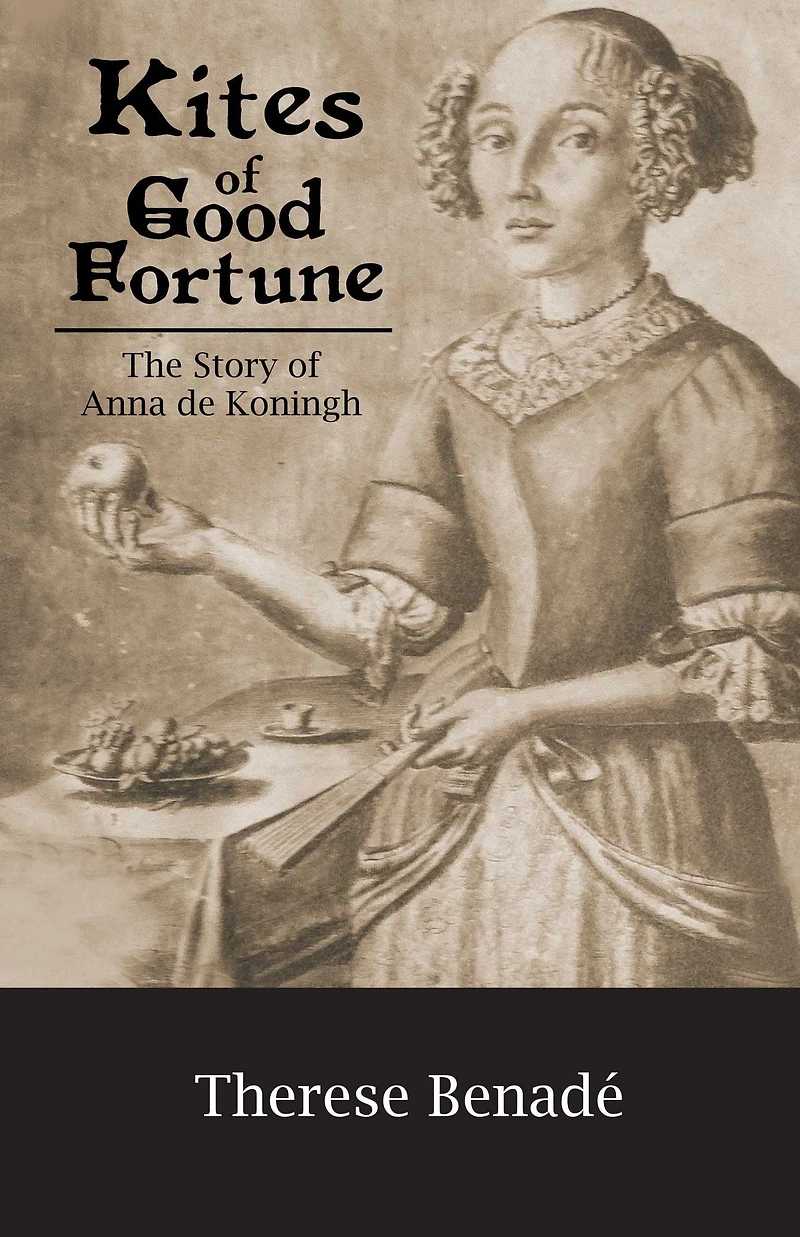
Kites of Good Fortune in Bloomington, MN
By Barnes & Noble
Current price: $5.99

Kites of Good Fortune in Bloomington, MN
Current price: $5.99
Loading Inventory...
Size: EBook
The book is solidly based on archival and museum research. The principal characters, Olof Bergh and Anna de Koningh, are historical personages on whom documents exist in the Cape Archives and in published archival sources. The chief male character, Olof Bergh, was a Dutch East India Company employee whose career can be followed archivally in some detail. His story provides an armature on which the story of Anna de Koningh can be created. Unsurprisingly, there is much less in the documents about her. It is a truth universally acknowledged that women’s lives are less fully recorded archivally than men’s. (Hence the novelist). But there are documentary flashes, as when she fishes Willem Adriaen van der Stel’s wife out of a dam: that comes from Adam Tas’s Diary. Unlike many historical novelists, the author has chosen not to use the easy device of an invented peripheral character as narrator, who witnesses the action and serves up a running commentary on it. She has chosen Anna de Koning herself as her narrator. This was a bold decision, but it works and works well. Indeed she has no invented characters at all; they are all historical personages [except for one musician]. The inner life of Anna de Koning had to be invented, and the author has done that very effectively, in such a way that the reader is involved and interested. Whether the historical Anna de Koning had any of the qualities and skills with which the novelist has endowed her is something the historian will never be able to tell us. But for an hour or two she will live for the reader in a way that makes her time more accessible.
The book is solidly based on archival and museum research. The principal characters, Olof Bergh and Anna de Koningh, are historical personages on whom documents exist in the Cape Archives and in published archival sources. The chief male character, Olof Bergh, was a Dutch East India Company employee whose career can be followed archivally in some detail. His story provides an armature on which the story of Anna de Koningh can be created. Unsurprisingly, there is much less in the documents about her. It is a truth universally acknowledged that women’s lives are less fully recorded archivally than men’s. (Hence the novelist). But there are documentary flashes, as when she fishes Willem Adriaen van der Stel’s wife out of a dam: that comes from Adam Tas’s Diary. Unlike many historical novelists, the author has chosen not to use the easy device of an invented peripheral character as narrator, who witnesses the action and serves up a running commentary on it. She has chosen Anna de Koning herself as her narrator. This was a bold decision, but it works and works well. Indeed she has no invented characters at all; they are all historical personages [except for one musician]. The inner life of Anna de Koning had to be invented, and the author has done that very effectively, in such a way that the reader is involved and interested. Whether the historical Anna de Koning had any of the qualities and skills with which the novelist has endowed her is something the historian will never be able to tell us. But for an hour or two she will live for the reader in a way that makes her time more accessible.
Shop Similar Products

















Find at Mall of America® in Bloomington, MN
Visit at Mall of America® in Bloomington, MN