


Home
Kinematic Modeling, Identification, and Control of Robotic Manipulators
Barnes and Noble
Loading Inventory...

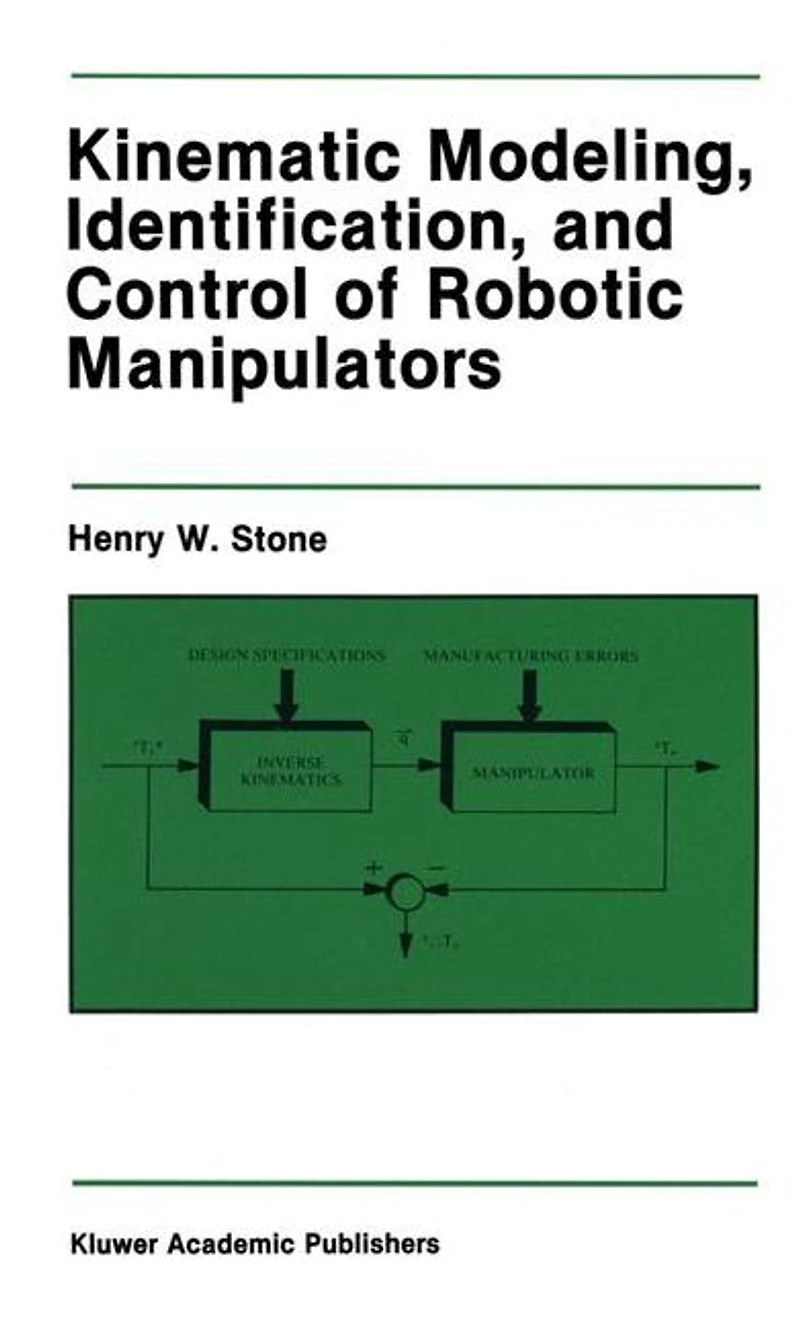
Kinematic Modeling, Identification, and Control of Robotic Manipulators in Bloomington, MN
By Barnes & Noble
Current price: $169.99

Kinematic Modeling, Identification, and Control of Robotic Manipulators in Bloomington, MN
Current price: $169.99
Loading Inventory...
Size: Hardcover
The objective of this dissertation is to advance the stateoftheart in the kinematic modeling, identification, and control of robotic manipulators with rigid links in an effort to improve robot kinematic performance. The positioning accuracy of commerciallyavailable industrial robotic manipulators depends upon a kinematic model which describes the robot geometry in a parametric form. Manufacturing error in the machining and assembly of manipulators lead to discrepancies between the design parameters and the physical structure. Improving the kinematic performance thus requires the identification of the actual kinematic parameters of each individual robot. The identified kinematic parameters are referred to as the arm signature. Existing robot kinematic models, such as the DenavitHartenberg model, are not directly applicable to kinematic parameter identification. In this dissertation we introduce a new kinematic model, called the 5Model, which is applicable to kinematic parameter identification, and use it as the foundation for our development of a general technique for identifying the kinematic parameters of any robot with rigid links.
The objective of this dissertation is to advance the stateoftheart in the kinematic modeling, identification, and control of robotic manipulators with rigid links in an effort to improve robot kinematic performance. The positioning accuracy of commerciallyavailable industrial robotic manipulators depends upon a kinematic model which describes the robot geometry in a parametric form. Manufacturing error in the machining and assembly of manipulators lead to discrepancies between the design parameters and the physical structure. Improving the kinematic performance thus requires the identification of the actual kinematic parameters of each individual robot. The identified kinematic parameters are referred to as the arm signature. Existing robot kinematic models, such as the DenavitHartenberg model, are not directly applicable to kinematic parameter identification. In this dissertation we introduce a new kinematic model, called the 5Model, which is applicable to kinematic parameter identification, and use it as the foundation for our development of a general technique for identifying the kinematic parameters of any robot with rigid links.
Shop Similar Products













Find at Mall of America® in Bloomington, MN
Visit at Mall of America® in Bloomington, MN