


Home
Jung's Four and Some Philosophers: A Paradigm for Philosophy
Barnes and Noble
Loading Inventory...
Jung's Four and Some Philosophers: A Paradigm for Philosophy in Bloomington, MN
By Barnes & Noble
Current price: $125.00

Jung's Four and Some Philosophers: A Paradigm for Philosophy in Bloomington, MN
Current price: $125.00
Loading Inventory...
Size: Hardcover
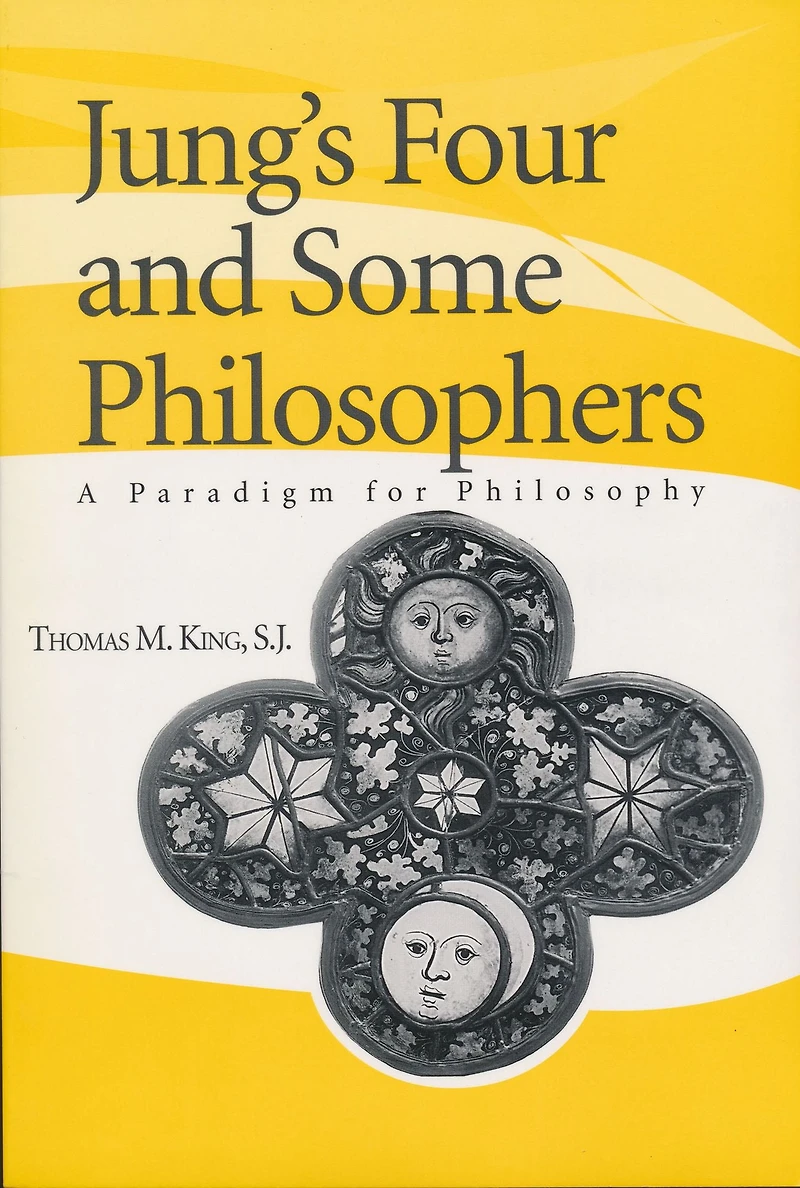
Thomas M. King, S.J. uses Jungian/Myers-Briggs typology to understand the different starting points of twelve philosophers, then uses Jungian patterns of “integration” to show similarities in their development.Jung’s Four and Some Philosophers provides a context in which to understand the widely differing claims of philosophers. The “four” in the title refers to the four faculties that Jung sees occurring in pairs in every psyche: thinking and its opposite, feeling; sensation and its opposite, intuition. One of these four will dominate (among philosophers it will characterize what they find self-evident), while the dominant’s opposite is repressed into the mysterious unconscious. Thus, a thinker will repress one’s feelings. To achieve wholeness, the philosopher must pass beyond what is known to seek the missing faculty and integrate it with the faculties of consciousness. King demonstrates this with highly documented studies of twelve philosophers: Plato, Locke, Sartre, Augustine, Descartes, Spinoza, Rousseau, Kant, Kierkegaard, Whitehead, Hume, and Teilhard, and a final reflection that considers the philosophic and religious quest.
Thomas M. King, S.J. uses Jungian/Myers-Briggs typology to understand the different starting points of twelve philosophers, then uses Jungian patterns of “integration” to show similarities in their development.Jung’s Four and Some Philosophers provides a context in which to understand the widely differing claims of philosophers. The “four” in the title refers to the four faculties that Jung sees occurring in pairs in every psyche: thinking and its opposite, feeling; sensation and its opposite, intuition. One of these four will dominate (among philosophers it will characterize what they find self-evident), while the dominant’s opposite is repressed into the mysterious unconscious. Thus, a thinker will repress one’s feelings. To achieve wholeness, the philosopher must pass beyond what is known to seek the missing faculty and integrate it with the faculties of consciousness. King demonstrates this with highly documented studies of twelve philosophers: Plato, Locke, Sartre, Augustine, Descartes, Spinoza, Rousseau, Kant, Kierkegaard, Whitehead, Hume, and Teilhard, and a final reflection that considers the philosophic and religious quest.
Shop Similar Products







Find at Mall of America® in Bloomington, MN
Visit at Mall of America® in Bloomington, MN