


Home
Hilbert's Program: An Essay on Mathematical Instrumentalism
Barnes and Noble
Loading Inventory...
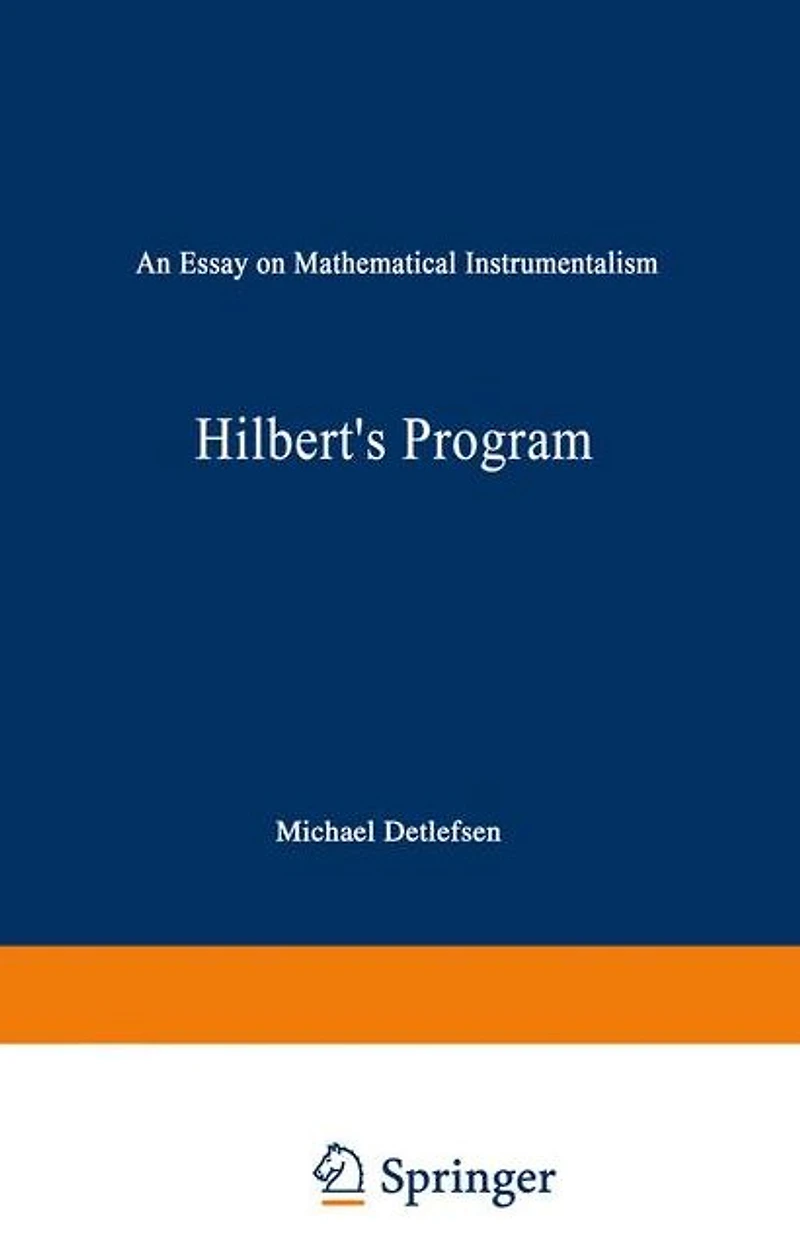
Hilbert's Program: An Essay on Mathematical Instrumentalism in Bloomington, MN
By Barnes & Noble
Current price: $109.99

Hilbert's Program: An Essay on Mathematical Instrumentalism in Bloomington, MN
Current price: $109.99
Loading Inventory...
Size: Hardcover
Hilbert's Program was founded on a concern for the phenomenon of paradox in mathematics. To Hilbert, the paradoxes, which are at once both absurd and irresistible, revealed a deep philosophical truth: namely, that there is a discrepancy between the laws accord ing to which the mind of homo mathematicus works, and the laws governing objective mathematical fact. Mathematical epistemology is, therefore, to be seen as a struggle between a mind that naturally works in one way and a reality that works in another. Knowledge occurs when the two cooperate. Conceived in this way, there are two basic alternatives for mathematical epistemology: a skeptical position which maintains either that mind and reality seldom or never come to agreement, or that we have no very reliable way of telling when they do; and a non-skeptical position which holds that there is significant agree ment between mind and reality, and that their potential discrepan cies can be detected, avoided, and thus kept in check. Of these two, Hilbert clearly embraced the latter, and proposed a program designed to vindicate the epistemological riches represented by our natural, if non-literal, ways of thinking. Brouwer, on the other hand, opted for a position closer (in Hilbert's opinion) to that of the skeptic. Having decided that epistemological purity could come only through sacrifice, he turned his back on his classical heritage to accept a higher calling.
Hilbert's Program was founded on a concern for the phenomenon of paradox in mathematics. To Hilbert, the paradoxes, which are at once both absurd and irresistible, revealed a deep philosophical truth: namely, that there is a discrepancy between the laws accord ing to which the mind of homo mathematicus works, and the laws governing objective mathematical fact. Mathematical epistemology is, therefore, to be seen as a struggle between a mind that naturally works in one way and a reality that works in another. Knowledge occurs when the two cooperate. Conceived in this way, there are two basic alternatives for mathematical epistemology: a skeptical position which maintains either that mind and reality seldom or never come to agreement, or that we have no very reliable way of telling when they do; and a non-skeptical position which holds that there is significant agree ment between mind and reality, and that their potential discrepan cies can be detected, avoided, and thus kept in check. Of these two, Hilbert clearly embraced the latter, and proposed a program designed to vindicate the epistemological riches represented by our natural, if non-literal, ways of thinking. Brouwer, on the other hand, opted for a position closer (in Hilbert's opinion) to that of the skeptic. Having decided that epistemological purity could come only through sacrifice, he turned his back on his classical heritage to accept a higher calling.
Shop Similar Products











Find at Mall of America® in Bloomington, MN
Visit at Mall of America® in Bloomington, MN