


Home
Gatekeeper: Memoirs of a CIA Polygraph Examiner
Barnes and Noble
Loading Inventory...
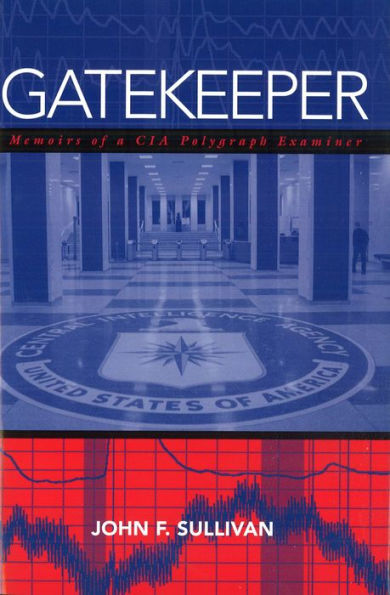
Gatekeeper: Memoirs of a CIA Polygraph Examiner in Bloomington, MN
Current price: $32.95

Gatekeeper: Memoirs of a CIA Polygraph Examiner in Bloomington, MN
Current price: $32.95
Loading Inventory...
Size: Hardcover
John F. Sullivan was a polygraph examiner with the CIA for thirty-one years, during which time he conducted more tests than anyone in the history of the CIA's program. The lie detectors act as the Agency's gatekeepers, preventing foreign agents, unsuitable applicants, and employees guilty of misconduct from penetrating or harming the Agency. Here Sullivan describes his methods, emphasizing the importance of psychology and the examiners' skills in a successful polygraph program. Sullivan acknowledges that using the polygraph effectively is an art as much as a science, yet he convincingly argues that it remains a highly reliable screening device, more successful and less costly than the other primary method, background investigation. In the thousands of tests that Sullivan conducted, he discovered double agents, applicants with criminal backgrounds, and employee misconduct, including compromising affairs and the mishandling of classified information. But Gatekeeper is more than Sullivan's memoirs. It is also a window to the often acrimonious and sometimes alarming internal politics of the CIA: the turf wars over resources, personnel, and mandate; the slow implementation of quality control; the aversion to risk-taking; and the overzealous pursuit of disqualifying information. In an age when the intelligence community's conduct is rightly being questioned, Sullivan contributes a fascinating personal account of one of the Agency's many important tasks.
John F. Sullivan was a polygraph examiner with the CIA for thirty-one years, during which time he conducted more tests than anyone in the history of the CIA's program. The lie detectors act as the Agency's gatekeepers, preventing foreign agents, unsuitable applicants, and employees guilty of misconduct from penetrating or harming the Agency. Here Sullivan describes his methods, emphasizing the importance of psychology and the examiners' skills in a successful polygraph program. Sullivan acknowledges that using the polygraph effectively is an art as much as a science, yet he convincingly argues that it remains a highly reliable screening device, more successful and less costly than the other primary method, background investigation. In the thousands of tests that Sullivan conducted, he discovered double agents, applicants with criminal backgrounds, and employee misconduct, including compromising affairs and the mishandling of classified information. But Gatekeeper is more than Sullivan's memoirs. It is also a window to the often acrimonious and sometimes alarming internal politics of the CIA: the turf wars over resources, personnel, and mandate; the slow implementation of quality control; the aversion to risk-taking; and the overzealous pursuit of disqualifying information. In an age when the intelligence community's conduct is rightly being questioned, Sullivan contributes a fascinating personal account of one of the Agency's many important tasks.
Shop Similar Products




![The Gatekeepers [Includes Digital Copy]](https://prodimage.images-bn.com/pimages/0043396423213_p0_v3_s600x595.jpg)









Find at Mall of America® in Bloomington, MN
Visit at Mall of America® in Bloomington, MN