


Home
Framing American Divorce: From the Revolutionary Generation to the Victorians
Barnes and Noble
Loading Inventory...
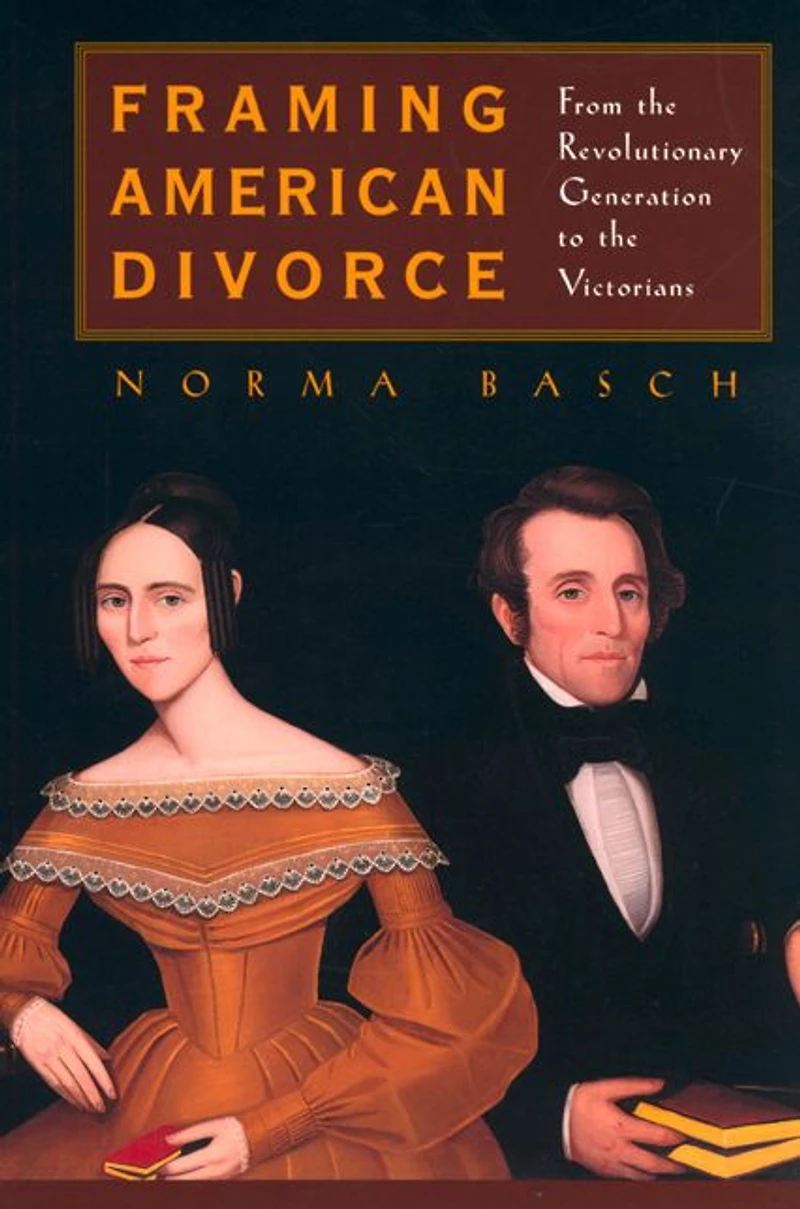
Framing American Divorce: From the Revolutionary Generation to the Victorians in Bloomington, MN
By Barnes & Noble
Current price: $29.95

Framing American Divorce: From the Revolutionary Generation to the Victorians in Bloomington, MN
Current price: $29.95
Loading Inventory...
Size: Paperback
Divorce has become one of the most widely discussed issues in America. In this innovative exploration of the phenomenon of divorce in American society, Norma Basch uses a variety of analytic perspectives to enrich our understanding of the meaning of divorce during the formative years of both the nation and its law, roughly 1770 to 1870. She provides a fascinating, thoughtful look at divorce as a legal action, as an individual experience, and as a cultural symbol in its era of institutionalization and traces the powerful legacy of the first American divorce experiences for us today.Using a unique methodology, Basch fragments her story into three discrete but chronologically overlapping perspectives. In Part I, "Rules," she analyzes the changing legal and legislative aspects of divorce and the public response to them. Part II, "Mediations," focuses on individual cases and presents a closeup analysis of the way ordinary women and men tested the law in the courts. And Part III, "Representations," charts the spiraling imagery of divorce through various fiction and nonfiction narratives that made their way into American popular culture during the nineteenth century.The composite picture that emerges in Framing American Divorce is a vividly untidy one that exposes the gulf between legal and moral abstractions and everyday practices. Divorce, Basch argues, was always a focal point of conflict between the autonomy of women and the authority of men. Tracing the legal, social, and cultural experience of divorce allows Basch to provide a searching exploration of the limits of nineteenthcentury ideals of domesticity, romantic love, and marriage, and their legacy for us today. She brings her findings uptodate with a provocative discussion of the current debate over fault or nofault divorce.
Divorce has become one of the most widely discussed issues in America. In this innovative exploration of the phenomenon of divorce in American society, Norma Basch uses a variety of analytic perspectives to enrich our understanding of the meaning of divorce during the formative years of both the nation and its law, roughly 1770 to 1870. She provides a fascinating, thoughtful look at divorce as a legal action, as an individual experience, and as a cultural symbol in its era of institutionalization and traces the powerful legacy of the first American divorce experiences for us today.Using a unique methodology, Basch fragments her story into three discrete but chronologically overlapping perspectives. In Part I, "Rules," she analyzes the changing legal and legislative aspects of divorce and the public response to them. Part II, "Mediations," focuses on individual cases and presents a closeup analysis of the way ordinary women and men tested the law in the courts. And Part III, "Representations," charts the spiraling imagery of divorce through various fiction and nonfiction narratives that made their way into American popular culture during the nineteenth century.The composite picture that emerges in Framing American Divorce is a vividly untidy one that exposes the gulf between legal and moral abstractions and everyday practices. Divorce, Basch argues, was always a focal point of conflict between the autonomy of women and the authority of men. Tracing the legal, social, and cultural experience of divorce allows Basch to provide a searching exploration of the limits of nineteenthcentury ideals of domesticity, romantic love, and marriage, and their legacy for us today. She brings her findings uptodate with a provocative discussion of the current debate over fault or nofault divorce.
Shop Similar Products











Find at Mall of America® in Bloomington, MN
Visit at Mall of America® in Bloomington, MN