


Home
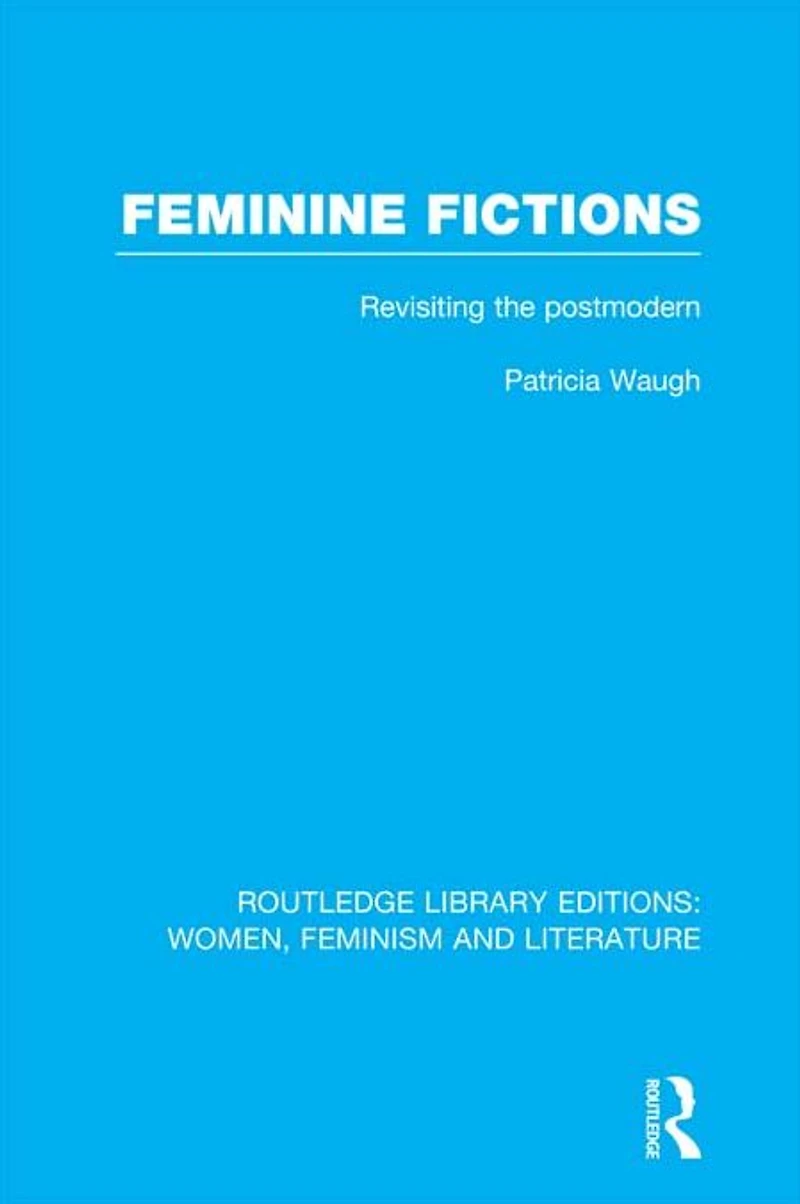
Feminine Fictions: Revisiting the Postmodern
Barnes and Noble
Loading Inventory...
Feminine Fictions: Revisiting the Postmodern in Bloomington, MN
By Barnes & Noble
Current price: $68.99

Feminine Fictions: Revisiting the Postmodern in Bloomington, MN
Current price: $68.99
Loading Inventory...
Size: EBook
‘Postmodernism’ and ‘feminism’ have become familiar terms since the 1960s, developing alongside one another and clearly sharing many strong points of contact. Why then have the critical debates arising out of these movements had so little to say about each other? Patricia Waugh addresses the relationship between feminist and postmodernist writing and theory through the insights of psychoanalysis and in the context of the development of modern fiction in Britain and America. She attempts to uncover the reasons why women writers have been excluded from the considerations of postmodern art.Her route takes her through the theorization of self offered by Freud and Lacan and on to the concept of subjectivity articulated by Kleinian and later object-relations psychoanalysts. She argues that much women’s writing has been inappropriately placed and interpreted within a predominantly formalist-orientated aesthetic and a post-Freudian/liberal, individualist conceptualization of subjectivity and artistic expression. This tendency has been intensified in discussions of postmodernism, and a new feminist aesthetic is thus badly needed.In the second part of the book Patricia Waugh analyses the work of six ‘traditional’ and six ‘experimental’ writers, challenging the restrictive definitions of ‘realist’, ‘modernist’, ‘postmodernist’ in the light of the theoretical position developed in part one. Authors covered include: Woolf (viewed as a postmodernist ‘precursor’ rather than a ‘high’ modernist), Drabble, Tyler, Plath, Brookner, Paley, Lessing, Weldon, Atwood, Walker, Spark, Russ, and Piercy.
‘Postmodernism’ and ‘feminism’ have become familiar terms since the 1960s, developing alongside one another and clearly sharing many strong points of contact. Why then have the critical debates arising out of these movements had so little to say about each other? Patricia Waugh addresses the relationship between feminist and postmodernist writing and theory through the insights of psychoanalysis and in the context of the development of modern fiction in Britain and America. She attempts to uncover the reasons why women writers have been excluded from the considerations of postmodern art.Her route takes her through the theorization of self offered by Freud and Lacan and on to the concept of subjectivity articulated by Kleinian and later object-relations psychoanalysts. She argues that much women’s writing has been inappropriately placed and interpreted within a predominantly formalist-orientated aesthetic and a post-Freudian/liberal, individualist conceptualization of subjectivity and artistic expression. This tendency has been intensified in discussions of postmodernism, and a new feminist aesthetic is thus badly needed.In the second part of the book Patricia Waugh analyses the work of six ‘traditional’ and six ‘experimental’ writers, challenging the restrictive definitions of ‘realist’, ‘modernist’, ‘postmodernist’ in the light of the theoretical position developed in part one. Authors covered include: Woolf (viewed as a postmodernist ‘precursor’ rather than a ‘high’ modernist), Drabble, Tyler, Plath, Brookner, Paley, Lessing, Weldon, Atwood, Walker, Spark, Russ, and Piercy.
Shop Similar Products








Find at Mall of America® in Bloomington, MN
Visit at Mall of America® in Bloomington, MN