


Home
Extravagant Postcolonialism: Modernism and Modernity in Anglophone Fiction, 1958-1988
Barnes and Noble
Loading Inventory...
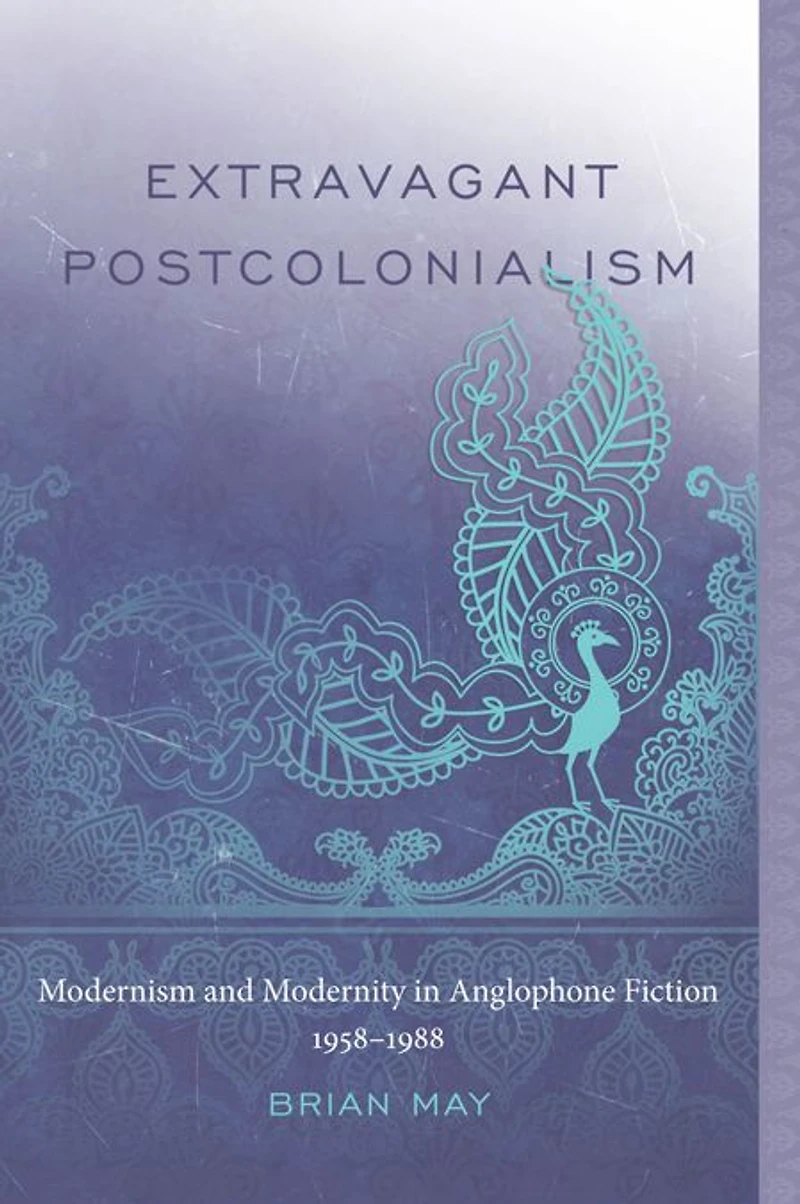
Extravagant Postcolonialism: Modernism and Modernity in Anglophone Fiction, 1958-1988 in Bloomington, MN
By Barnes & Noble
Current price: $54.99

Extravagant Postcolonialism: Modernism and Modernity in Anglophone Fiction, 1958-1988 in Bloomington, MN
Current price: $54.99
Loading Inventory...
Size: EBook
A reappreciation of the undertones of individualism refashioning modernism in select postcolonial worksBrian T. May argues that, contrary to widely held assumptions of postcolonial literary criticism, a distinctive subset of postcolonial novels significantly values and scrupulously explores a healthy individuality. These "extravagant" postcolonial works focus less on collective social reality than on the intimate subjectivity of their characters. Their authors, most of whom received some portion of a canonical western education, do not subordinate the ambitions of their fiction to explicit political causes so much as create a cosmopolitan rhetorical focus suitable to their western-educated, western-trained, audiences.May pursues this argument by scrutinizing novels composed during the thirty-year postindependence, postcolonial era of Anglophone fiction, a period that began with the Nigerian Chinua Achebe's Things Fall Apart and that ended, many would say, with the Ayatollah Khomeini's 1989 publication of the Rushdie Fatwa. May contends that the postcolonial authors under consideration—Naipaul, Rushdie, Achebe, Rhys, Gordimer, and Coetzee—inherited modernism and refashioned it. His account of their work demonstrates how it reflects and transfigures modernists such as Conrad, Eliot, Yeats, Proust, Joyce, and Beckett. Tracing the influence of humanistic values and charting the ethical and aesthetic significance of individualism, May demonstrates that these works of "extravagant postcolonialism" represent less a departure from than a continuation and evolution of modernism.
A reappreciation of the undertones of individualism refashioning modernism in select postcolonial worksBrian T. May argues that, contrary to widely held assumptions of postcolonial literary criticism, a distinctive subset of postcolonial novels significantly values and scrupulously explores a healthy individuality. These "extravagant" postcolonial works focus less on collective social reality than on the intimate subjectivity of their characters. Their authors, most of whom received some portion of a canonical western education, do not subordinate the ambitions of their fiction to explicit political causes so much as create a cosmopolitan rhetorical focus suitable to their western-educated, western-trained, audiences.May pursues this argument by scrutinizing novels composed during the thirty-year postindependence, postcolonial era of Anglophone fiction, a period that began with the Nigerian Chinua Achebe's Things Fall Apart and that ended, many would say, with the Ayatollah Khomeini's 1989 publication of the Rushdie Fatwa. May contends that the postcolonial authors under consideration—Naipaul, Rushdie, Achebe, Rhys, Gordimer, and Coetzee—inherited modernism and refashioned it. His account of their work demonstrates how it reflects and transfigures modernists such as Conrad, Eliot, Yeats, Proust, Joyce, and Beckett. Tracing the influence of humanistic values and charting the ethical and aesthetic significance of individualism, May demonstrates that these works of "extravagant postcolonialism" represent less a departure from than a continuation and evolution of modernism.
Shop Similar Products









Find at Mall of America® in Bloomington, MN
Visit at Mall of America® in Bloomington, MN