


Home
Existential Rationalism: Handling Hume's Fork
Barnes and Noble
Loading Inventory...
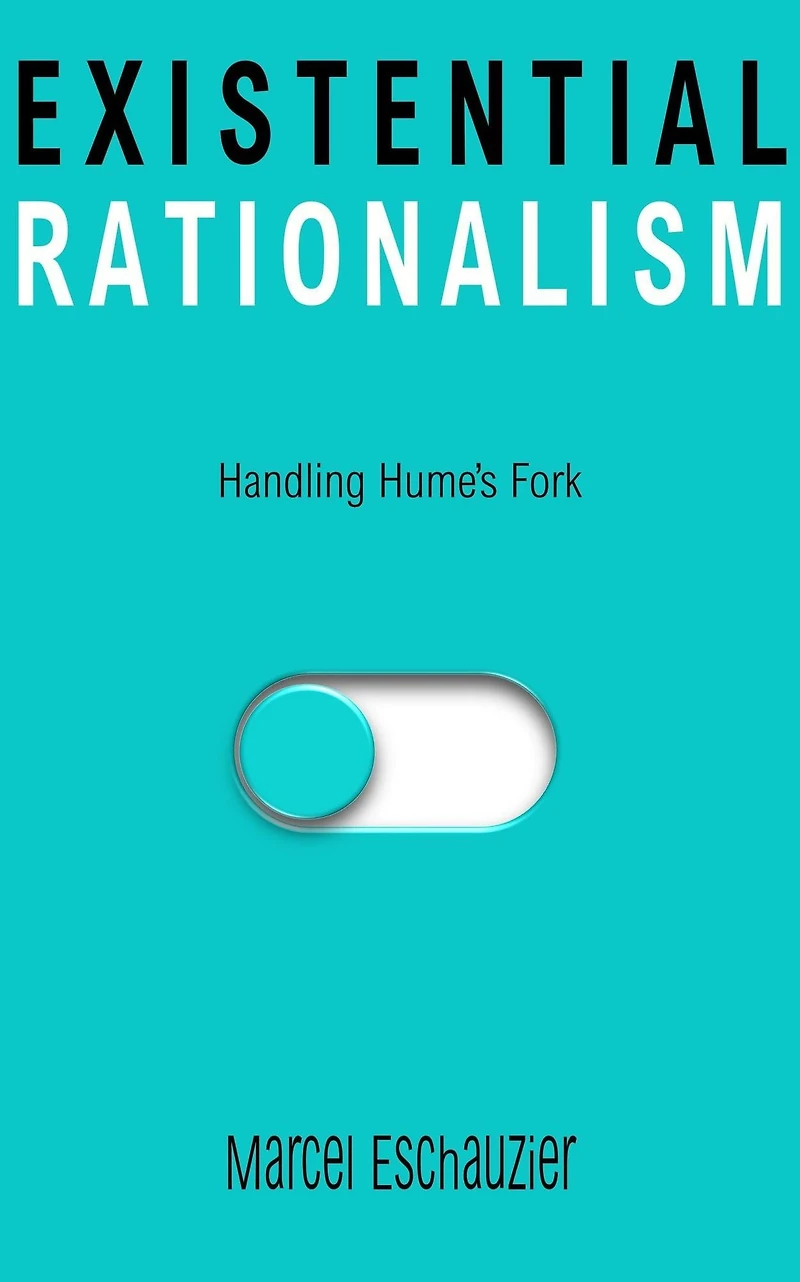
Existential Rationalism: Handling Hume's Fork in Bloomington, MN
By Barnes & Noble
Current price: $13.95

Existential Rationalism: Handling Hume's Fork in Bloomington, MN
Current price: $13.95
Loading Inventory...
Size: EBook
The original treatise introducing rational nondualism.What if Western thought is warped by an illusion so persuasive that it affects almost every aspect of our understanding, including modern science? Scientists look for objective knowledge. But suppose the distinction between the observer and the observed does not exist. This insight—called nondual recognition—is deeply counterintuitive; few grasp its full implications. Yet rational thought points to a nondual world, as articulated in Existential Rationalism. The realization forces us to reexamine the foundations of modern science: Without an objective reality, what makes empirical evidence scientific?This paradox takes us back to the 1700s when David Hume shook the foundations of rationalist philosophy with his compelling case for empiricism. Rationalism never fully recovered from his challenge. However, Eschauzier argues that nondual recognition is the missing piece to reinstate reason as the supreme scientific principle: Without an objective reality, reason justifies empirical science.Thus revitalized, rational thought's four foundational principles still offer trailblazing clarity today. From understanding the dualistic disposition in psychology to nuancing quantum mechanics interpretations, Existential Rationalism charts a bold path forward, synthesizing ancient wisdom and modern science.
The original treatise introducing rational nondualism.What if Western thought is warped by an illusion so persuasive that it affects almost every aspect of our understanding, including modern science? Scientists look for objective knowledge. But suppose the distinction between the observer and the observed does not exist. This insight—called nondual recognition—is deeply counterintuitive; few grasp its full implications. Yet rational thought points to a nondual world, as articulated in Existential Rationalism. The realization forces us to reexamine the foundations of modern science: Without an objective reality, what makes empirical evidence scientific?This paradox takes us back to the 1700s when David Hume shook the foundations of rationalist philosophy with his compelling case for empiricism. Rationalism never fully recovered from his challenge. However, Eschauzier argues that nondual recognition is the missing piece to reinstate reason as the supreme scientific principle: Without an objective reality, reason justifies empirical science.Thus revitalized, rational thought's four foundational principles still offer trailblazing clarity today. From understanding the dualistic disposition in psychology to nuancing quantum mechanics interpretations, Existential Rationalism charts a bold path forward, synthesizing ancient wisdom and modern science.
Shop Similar Products








Find at Mall of America® in Bloomington, MN
Visit at Mall of America® in Bloomington, MN