


Home
Exiles from Eden: Religion and the Academic Vocation in America
Barnes and Noble
Loading Inventory...
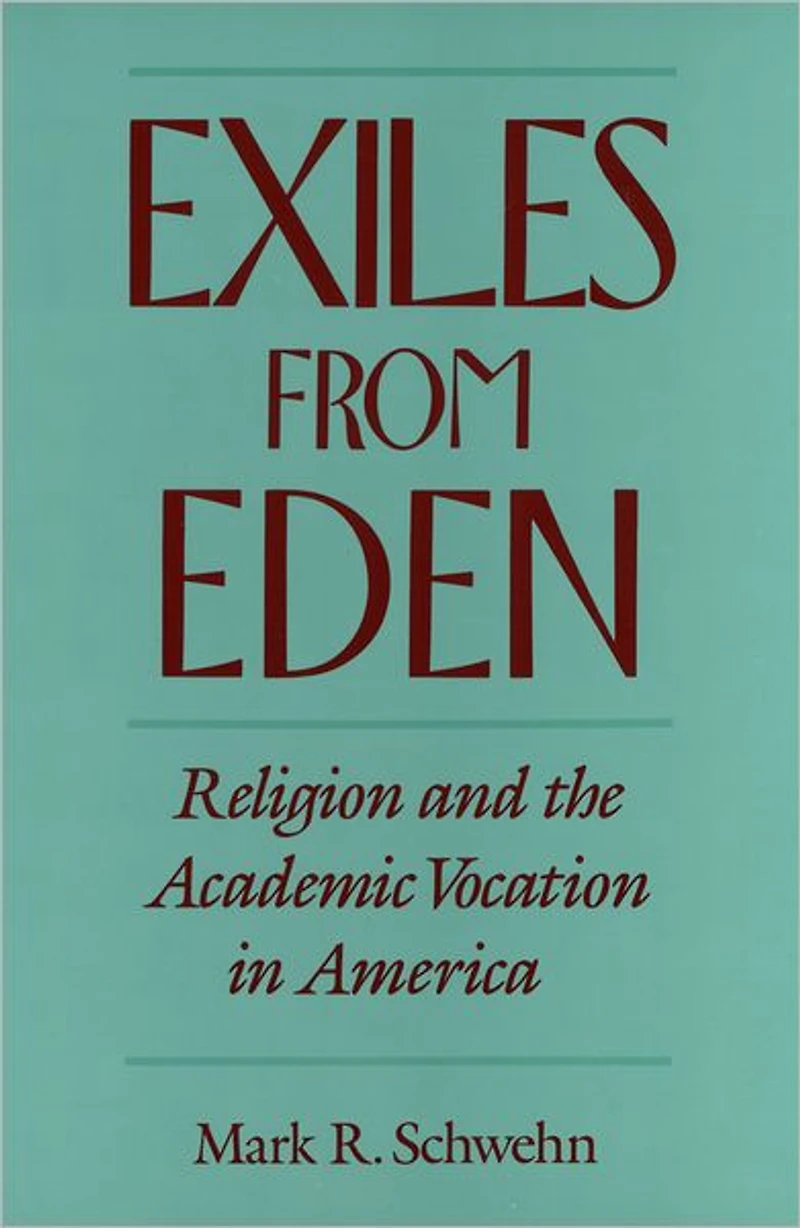
Exiles from Eden: Religion and the Academic Vocation in America in Bloomington, MN
By Barnes & Noble
Current price: $57.23

Exiles from Eden: Religion and the Academic Vocation in America in Bloomington, MN
Current price: $57.23
Loading Inventory...
Size: Paperback
In this thoughtful and literate study, Schwehn argues that Max Weber and several of his contemporaries led higher education astray by stressing researchthe making and transmitting of knowledgeat the expense of shaping moral character. Schwehn sees an urgent need for a change in orientation and calls for a "spiritually grounded education in and for thoughtfulness." The reforms he endorses would replace individualistic behavior, the "doing my own work" syndrome derived from the Enlightenment, with a communitarian ethic grounded in Judeo-Christian spirituality. Schwehn critiques philosophies of higher education he considers misguided, from Weber and Henry Adams to Derek Bok, Allan Bloom, and William G. Perry Jr. He draws out valid insights, always showing the theological underpinnings of the so-called secular thinkers. He emphasizes the importance of community, drawing on both the secular communitarian theory of Richard Rorty and that of the Christian theorist Parker Palmer. Finally, he outlines his own prescription for a classroom-centered spiritual community of scholars. Schwehn's study will interest all those concerned with higher education in America today: faculty, students, parents, alumni, administrators, trustees, and foundation officers.
In this thoughtful and literate study, Schwehn argues that Max Weber and several of his contemporaries led higher education astray by stressing researchthe making and transmitting of knowledgeat the expense of shaping moral character. Schwehn sees an urgent need for a change in orientation and calls for a "spiritually grounded education in and for thoughtfulness." The reforms he endorses would replace individualistic behavior, the "doing my own work" syndrome derived from the Enlightenment, with a communitarian ethic grounded in Judeo-Christian spirituality. Schwehn critiques philosophies of higher education he considers misguided, from Weber and Henry Adams to Derek Bok, Allan Bloom, and William G. Perry Jr. He draws out valid insights, always showing the theological underpinnings of the so-called secular thinkers. He emphasizes the importance of community, drawing on both the secular communitarian theory of Richard Rorty and that of the Christian theorist Parker Palmer. Finally, he outlines his own prescription for a classroom-centered spiritual community of scholars. Schwehn's study will interest all those concerned with higher education in America today: faculty, students, parents, alumni, administrators, trustees, and foundation officers.
Shop Similar Products
















Find at Mall of America® in Bloomington, MN
Visit at Mall of America® in Bloomington, MN