


Home
Embattled Avant-Gardes: Modernism's Resistance to Commodity Culture in Europe
Barnes and Noble
Loading Inventory...
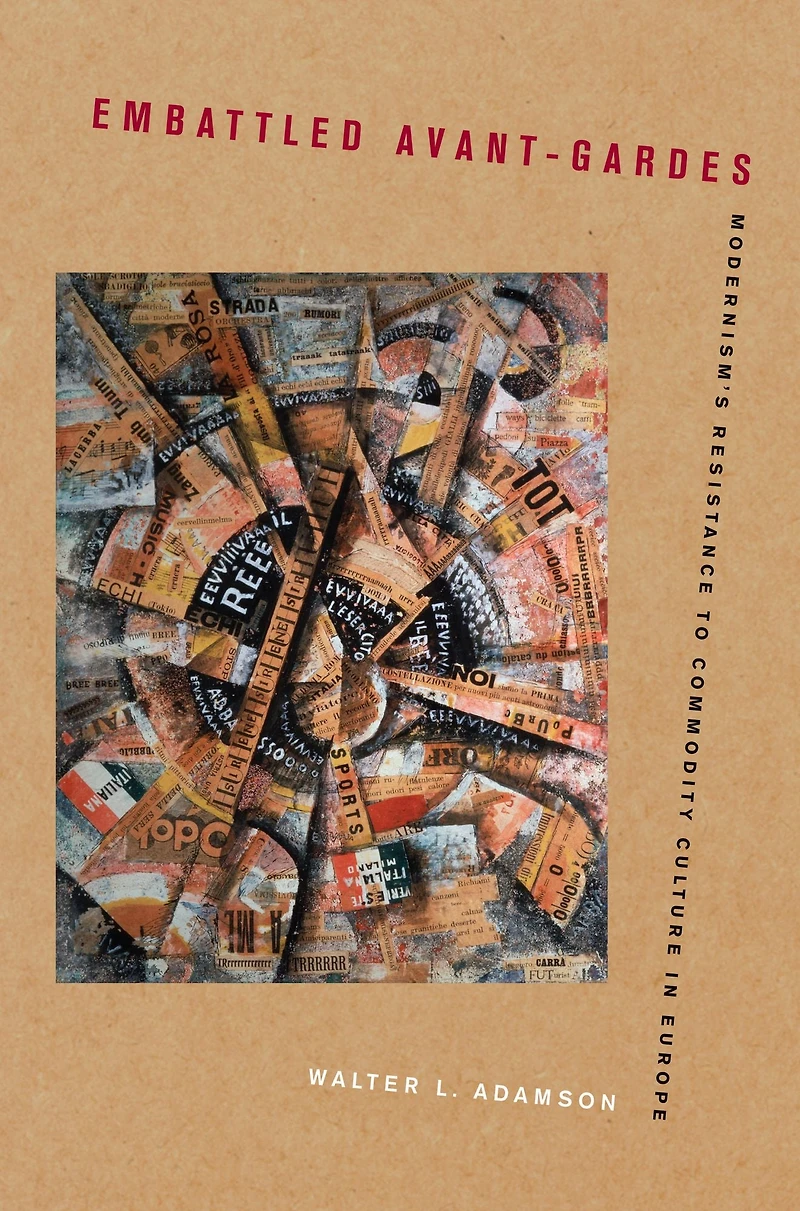
Embattled Avant-Gardes: Modernism's Resistance to Commodity Culture in Europe in Bloomington, MN
By Barnes & Noble
Current price: $34.95

Embattled Avant-Gardes: Modernism's Resistance to Commodity Culture in Europe in Bloomington, MN
Current price: $34.95
Loading Inventory...
Size: Paperback
This sweeping work, at once a panoramic overview and an ambitious critical reinterpretation of European modernism, provides a bold new perspective on a movement that defined the cultural landscape of the early twentieth century. Walter L. Adamson embarks on a lucid, wideranging exploration of the avantgarde practices through which the modernist generations after 1900 resisted the rise of commodity culture as a threat to authentic cultural expression. Taking biographical approaches to numerous avantgarde leaders, Adamson charts the rise and fall of modernist aspirations in movements and individuals as diverse as Ruskin, Marinetti, Kandinsky, Bauhaus, Purism, and the art critic Herbert Read. In conclusion, Adamson rises to the defense of the modernists, suggesting that their ideas are relevant to current efforts to think through what it might mean to create a vibrant, aesthetically satisfying form of cultural democracy.
This sweeping work, at once a panoramic overview and an ambitious critical reinterpretation of European modernism, provides a bold new perspective on a movement that defined the cultural landscape of the early twentieth century. Walter L. Adamson embarks on a lucid, wideranging exploration of the avantgarde practices through which the modernist generations after 1900 resisted the rise of commodity culture as a threat to authentic cultural expression. Taking biographical approaches to numerous avantgarde leaders, Adamson charts the rise and fall of modernist aspirations in movements and individuals as diverse as Ruskin, Marinetti, Kandinsky, Bauhaus, Purism, and the art critic Herbert Read. In conclusion, Adamson rises to the defense of the modernists, suggesting that their ideas are relevant to current efforts to think through what it might mean to create a vibrant, aesthetically satisfying form of cultural democracy.
Shop Similar Products














Find at Mall of America® in Bloomington, MN
Visit at Mall of America® in Bloomington, MN