


Home
Dynamics of Nutrient Cycling and Food Webs
Barnes and Noble
Loading Inventory...
Dynamics of Nutrient Cycling and Food Webs in Bloomington, MN
By Barnes & Noble
Current price: $109.99

Dynamics of Nutrient Cycling and Food Webs in Bloomington, MN
Current price: $109.99
Loading Inventory...
Size: Paperback
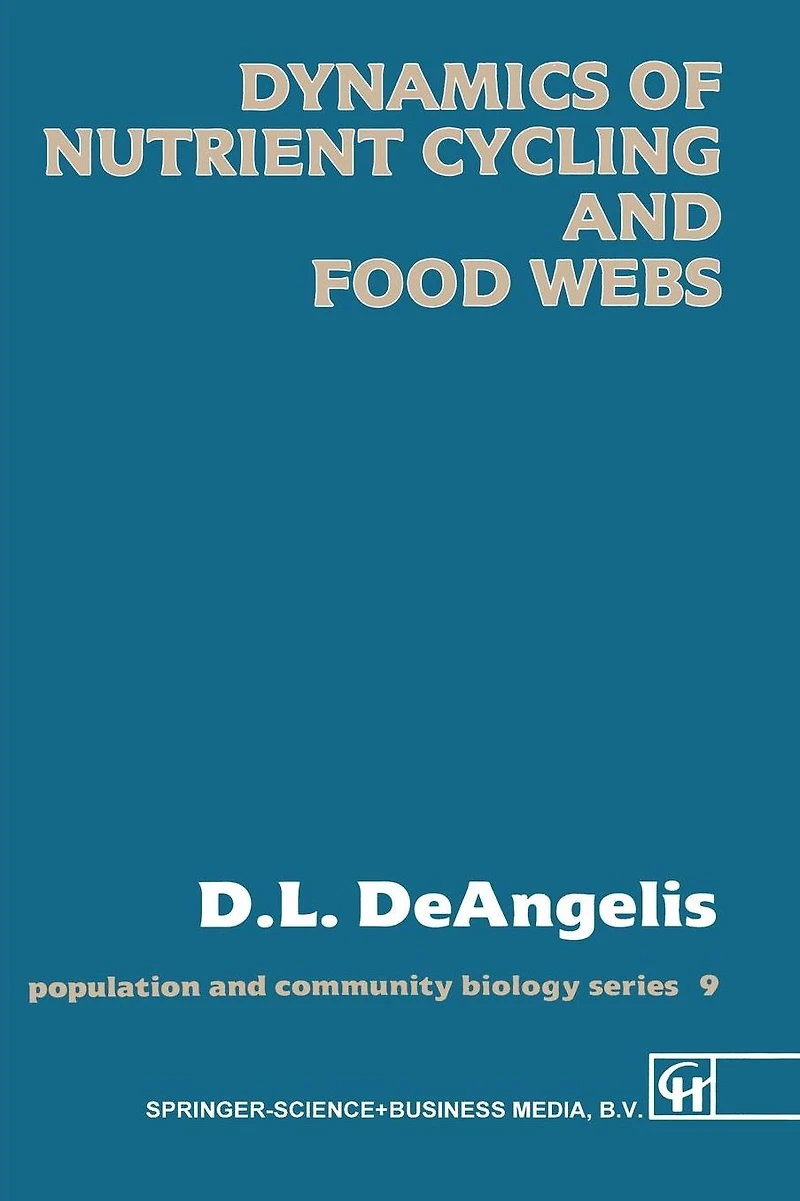
In all fields of science today, data are collected and theories are developed and published faster than scientists can keep up with, let alone thoroughly digest. In ecology the fact that practitioners tend to be divided between such subdisciplines as aquatic and terrestrial ecology, as well as between population, community, and ecosystem ecology, makes it even harder for them to keep up with all relevant research. Ecologists specializing in one sub discipline are not always aware of progress in another subdiscipline that relates to their own. Syntheses are frequently needed that pull together large bodies of information and organize them in ways that makes them more coherent, and thus more understandable. I have tried to perform this task of integration for the subject area that encompasses the interrelationships between the dynamics of ecological food webs and the cycling of nutrients. I believe this area cuts across many of the subdisciplines of ecology and is pivotal to our progress in understanding ecosystems and in dealing with human impacts on the environment. Many current ecological problems involve human disturbances of both food webs and the nutrients that cycle through them. Little progress can be made towards elucidating the complex feedback relations inherent in the study of nutrient cycles in ecological systems without the tools of mathematics and computer modelling. These tools are therefore liberally used throughout the book.
In all fields of science today, data are collected and theories are developed and published faster than scientists can keep up with, let alone thoroughly digest. In ecology the fact that practitioners tend to be divided between such subdisciplines as aquatic and terrestrial ecology, as well as between population, community, and ecosystem ecology, makes it even harder for them to keep up with all relevant research. Ecologists specializing in one sub discipline are not always aware of progress in another subdiscipline that relates to their own. Syntheses are frequently needed that pull together large bodies of information and organize them in ways that makes them more coherent, and thus more understandable. I have tried to perform this task of integration for the subject area that encompasses the interrelationships between the dynamics of ecological food webs and the cycling of nutrients. I believe this area cuts across many of the subdisciplines of ecology and is pivotal to our progress in understanding ecosystems and in dealing with human impacts on the environment. Many current ecological problems involve human disturbances of both food webs and the nutrients that cycle through them. Little progress can be made towards elucidating the complex feedback relations inherent in the study of nutrient cycles in ecological systems without the tools of mathematics and computer modelling. These tools are therefore liberally used throughout the book.
Shop Similar Products














Find at Mall of America® in Bloomington, MN
Visit at Mall of America® in Bloomington, MN