


Home
Dmitri Shostakovich: Symhonies Nos. 2, 3, 12 & 13
Barnes and Noble
Loading Inventory...
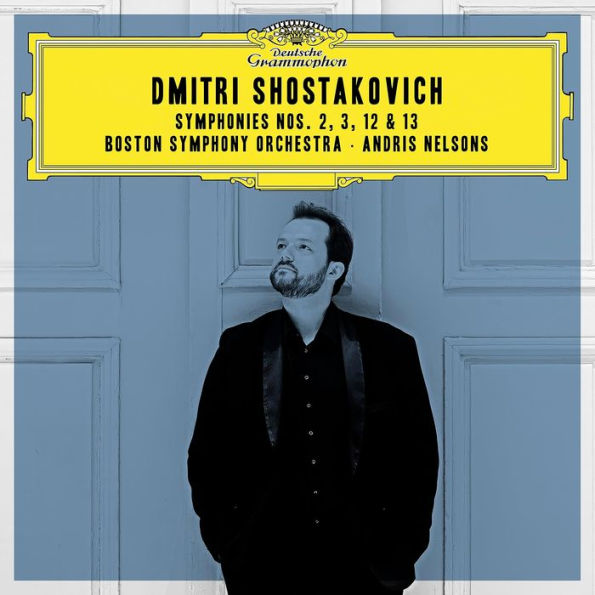
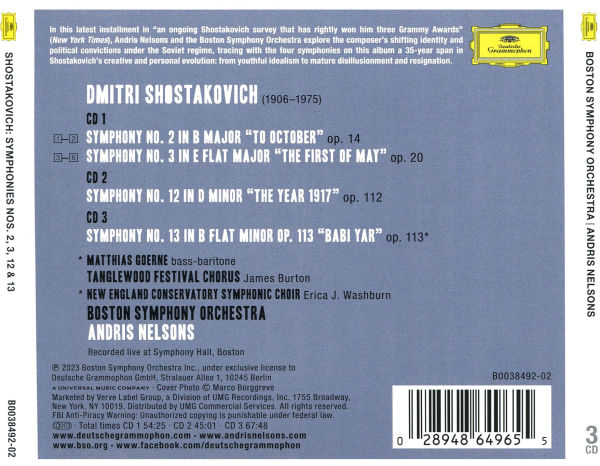
Dmitri Shostakovich: Symhonies Nos. 2, 3, 12 & 13 in Bloomington, MN
Current price: $42.99

Dmitri Shostakovich: Symhonies Nos. 2, 3, 12 & 13 in Bloomington, MN
Current price: $42.99
Loading Inventory...
Size: OS
This triple album wraps up the
Shostakovich
by conductor
Andris Nelsons
and the
Boston Symphony Orchestra
. The series has had much to recommend it, and
Nelsons
, by his own admission as a Latvian, has as strong a grasp of
's ambivalent attitude toward the Soviet state as anyone. Left for last here are possibly the four least-performed
symphonies: two early rather avant-garde pieces, the
Symphony No. 12 in D minor, Op 112 ("The Year 1917")
, and the
Symphony No. 13 in B flat minor, Op. 113 ("Babi Yar")
. All of these works are programmatic, and most of them have voices. The
Symphony No. 13
is a vocal-choral-orchestral work (baritone
Matthias Goerne
Tanglewood Festival Chorus
and
New England Conservatory Symphonic Choir
join
Symphony
). The best is saved for last;
Goerne
approaches this tragic work, marking the massacre of Ukrainian Jews in 1941, with deep soberness, and
maintains the elevated tone. The rest is not quite top-level. The
Symphony No. 12
is as close as
ever came to a pro-Soviet potboiler, and
seems unexcited by it. The early
Symphony No. 2 in B major, Op. 14 ("To October")
, and
Symphony No. 3 in E flat major, Op. 20 ("The First of May")
, have a nice edge, and
keeps things under control in the massive 13-part fugue at the end of the first part of the
Symphony No. 2
. This is brash, youthful
at its best and the album as a whole will satisfy followers of
' series and, in the
"Babi Yar" symphony
, anyone else. ~ James Manheim
Shostakovich
by conductor
Andris Nelsons
and the
Boston Symphony Orchestra
. The series has had much to recommend it, and
Nelsons
, by his own admission as a Latvian, has as strong a grasp of
's ambivalent attitude toward the Soviet state as anyone. Left for last here are possibly the four least-performed
symphonies: two early rather avant-garde pieces, the
Symphony No. 12 in D minor, Op 112 ("The Year 1917")
, and the
Symphony No. 13 in B flat minor, Op. 113 ("Babi Yar")
. All of these works are programmatic, and most of them have voices. The
Symphony No. 13
is a vocal-choral-orchestral work (baritone
Matthias Goerne
Tanglewood Festival Chorus
and
New England Conservatory Symphonic Choir
join
Symphony
). The best is saved for last;
Goerne
approaches this tragic work, marking the massacre of Ukrainian Jews in 1941, with deep soberness, and
maintains the elevated tone. The rest is not quite top-level. The
Symphony No. 12
is as close as
ever came to a pro-Soviet potboiler, and
seems unexcited by it. The early
Symphony No. 2 in B major, Op. 14 ("To October")
, and
Symphony No. 3 in E flat major, Op. 20 ("The First of May")
, have a nice edge, and
keeps things under control in the massive 13-part fugue at the end of the first part of the
Symphony No. 2
. This is brash, youthful
at its best and the album as a whole will satisfy followers of
' series and, in the
"Babi Yar" symphony
, anyone else. ~ James Manheim
This triple album wraps up the
Shostakovich
by conductor
Andris Nelsons
and the
Boston Symphony Orchestra
. The series has had much to recommend it, and
Nelsons
, by his own admission as a Latvian, has as strong a grasp of
's ambivalent attitude toward the Soviet state as anyone. Left for last here are possibly the four least-performed
symphonies: two early rather avant-garde pieces, the
Symphony No. 12 in D minor, Op 112 ("The Year 1917")
, and the
Symphony No. 13 in B flat minor, Op. 113 ("Babi Yar")
. All of these works are programmatic, and most of them have voices. The
Symphony No. 13
is a vocal-choral-orchestral work (baritone
Matthias Goerne
Tanglewood Festival Chorus
and
New England Conservatory Symphonic Choir
join
Symphony
). The best is saved for last;
Goerne
approaches this tragic work, marking the massacre of Ukrainian Jews in 1941, with deep soberness, and
maintains the elevated tone. The rest is not quite top-level. The
Symphony No. 12
is as close as
ever came to a pro-Soviet potboiler, and
seems unexcited by it. The early
Symphony No. 2 in B major, Op. 14 ("To October")
, and
Symphony No. 3 in E flat major, Op. 20 ("The First of May")
, have a nice edge, and
keeps things under control in the massive 13-part fugue at the end of the first part of the
Symphony No. 2
. This is brash, youthful
at its best and the album as a whole will satisfy followers of
' series and, in the
"Babi Yar" symphony
, anyone else. ~ James Manheim
Shostakovich
by conductor
Andris Nelsons
and the
Boston Symphony Orchestra
. The series has had much to recommend it, and
Nelsons
, by his own admission as a Latvian, has as strong a grasp of
's ambivalent attitude toward the Soviet state as anyone. Left for last here are possibly the four least-performed
symphonies: two early rather avant-garde pieces, the
Symphony No. 12 in D minor, Op 112 ("The Year 1917")
, and the
Symphony No. 13 in B flat minor, Op. 113 ("Babi Yar")
. All of these works are programmatic, and most of them have voices. The
Symphony No. 13
is a vocal-choral-orchestral work (baritone
Matthias Goerne
Tanglewood Festival Chorus
and
New England Conservatory Symphonic Choir
join
Symphony
). The best is saved for last;
Goerne
approaches this tragic work, marking the massacre of Ukrainian Jews in 1941, with deep soberness, and
maintains the elevated tone. The rest is not quite top-level. The
Symphony No. 12
is as close as
ever came to a pro-Soviet potboiler, and
seems unexcited by it. The early
Symphony No. 2 in B major, Op. 14 ("To October")
, and
Symphony No. 3 in E flat major, Op. 20 ("The First of May")
, have a nice edge, and
keeps things under control in the massive 13-part fugue at the end of the first part of the
Symphony No. 2
. This is brash, youthful
at its best and the album as a whole will satisfy followers of
' series and, in the
"Babi Yar" symphony
, anyone else. ~ James Manheim
Shop Similar Products









Find at Mall of America® in Bloomington, MN
Visit at Mall of America® in Bloomington, MN