


Home
Democratic Governance
Barnes and Noble
Loading Inventory...
Democratic Governance in Bloomington, MN
Current price: $55.00

Democratic Governance in Bloomington, MN
Current price: $55.00
Loading Inventory...
Size: Paperback
Democratic Governance
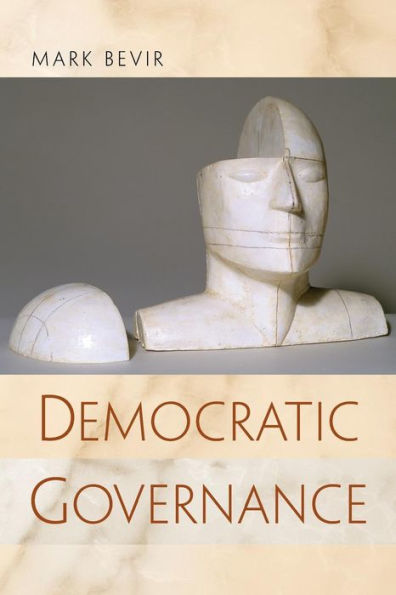
examines the changing nature of the modern state and reveals the dangers these changes pose to democracy. Mark Bevir shows how new ideas about governance have gradually displaced old-style notions of government in Britain and around the world. Policymakers cling to outdated concepts of representative government while at the same time placing ever more faith in expertise, markets, and networks. Democracy exhibits blurred lines of accountability and declining legitimacy.
Bevir explores how new theories of governance undermined traditional government in the twentieth century. Politicians responded by erecting great bureaucracies, increasingly relying on policy expertise and abstract notions of citizenship and, more recently, on networks of quasi-governmental and private organizations to deliver services using market-oriented techniques. Today, the state is an unwieldy edifice of nineteenth-century government buttressed by a sprawling substructure devoted to the very different idea of governanceand democracy has suffered.
In
, Bevir takes a comprehensive look at governance and the history and thinking behind it. He provides in-depth case studies of constitutional reform, judicial reform, joined-up government, and police reform. He argues that the best hope for democratic renewal lies in more interpretive styles of expertise, dialogic forms of policymaking, and more diverse avenues for public participation.
examines the changing nature of the modern state and reveals the dangers these changes pose to democracy. Mark Bevir shows how new ideas about governance have gradually displaced old-style notions of government in Britain and around the world. Policymakers cling to outdated concepts of representative government while at the same time placing ever more faith in expertise, markets, and networks. Democracy exhibits blurred lines of accountability and declining legitimacy.
Bevir explores how new theories of governance undermined traditional government in the twentieth century. Politicians responded by erecting great bureaucracies, increasingly relying on policy expertise and abstract notions of citizenship and, more recently, on networks of quasi-governmental and private organizations to deliver services using market-oriented techniques. Today, the state is an unwieldy edifice of nineteenth-century government buttressed by a sprawling substructure devoted to the very different idea of governanceand democracy has suffered.
In
, Bevir takes a comprehensive look at governance and the history and thinking behind it. He provides in-depth case studies of constitutional reform, judicial reform, joined-up government, and police reform. He argues that the best hope for democratic renewal lies in more interpretive styles of expertise, dialogic forms of policymaking, and more diverse avenues for public participation.
Democratic Governance
examines the changing nature of the modern state and reveals the dangers these changes pose to democracy. Mark Bevir shows how new ideas about governance have gradually displaced old-style notions of government in Britain and around the world. Policymakers cling to outdated concepts of representative government while at the same time placing ever more faith in expertise, markets, and networks. Democracy exhibits blurred lines of accountability and declining legitimacy.
Bevir explores how new theories of governance undermined traditional government in the twentieth century. Politicians responded by erecting great bureaucracies, increasingly relying on policy expertise and abstract notions of citizenship and, more recently, on networks of quasi-governmental and private organizations to deliver services using market-oriented techniques. Today, the state is an unwieldy edifice of nineteenth-century government buttressed by a sprawling substructure devoted to the very different idea of governanceand democracy has suffered.
In
, Bevir takes a comprehensive look at governance and the history and thinking behind it. He provides in-depth case studies of constitutional reform, judicial reform, joined-up government, and police reform. He argues that the best hope for democratic renewal lies in more interpretive styles of expertise, dialogic forms of policymaking, and more diverse avenues for public participation.
examines the changing nature of the modern state and reveals the dangers these changes pose to democracy. Mark Bevir shows how new ideas about governance have gradually displaced old-style notions of government in Britain and around the world. Policymakers cling to outdated concepts of representative government while at the same time placing ever more faith in expertise, markets, and networks. Democracy exhibits blurred lines of accountability and declining legitimacy.
Bevir explores how new theories of governance undermined traditional government in the twentieth century. Politicians responded by erecting great bureaucracies, increasingly relying on policy expertise and abstract notions of citizenship and, more recently, on networks of quasi-governmental and private organizations to deliver services using market-oriented techniques. Today, the state is an unwieldy edifice of nineteenth-century government buttressed by a sprawling substructure devoted to the very different idea of governanceand democracy has suffered.
In
, Bevir takes a comprehensive look at governance and the history and thinking behind it. He provides in-depth case studies of constitutional reform, judicial reform, joined-up government, and police reform. He argues that the best hope for democratic renewal lies in more interpretive styles of expertise, dialogic forms of policymaking, and more diverse avenues for public participation.
Shop Similar Products













Find at Mall of America® in Bloomington, MN
Visit at Mall of America® in Bloomington, MN