


Home
Criticizing Science: Stephen Jay Gould and the Struggle for American Democracy
Barnes and Noble
Loading Inventory...
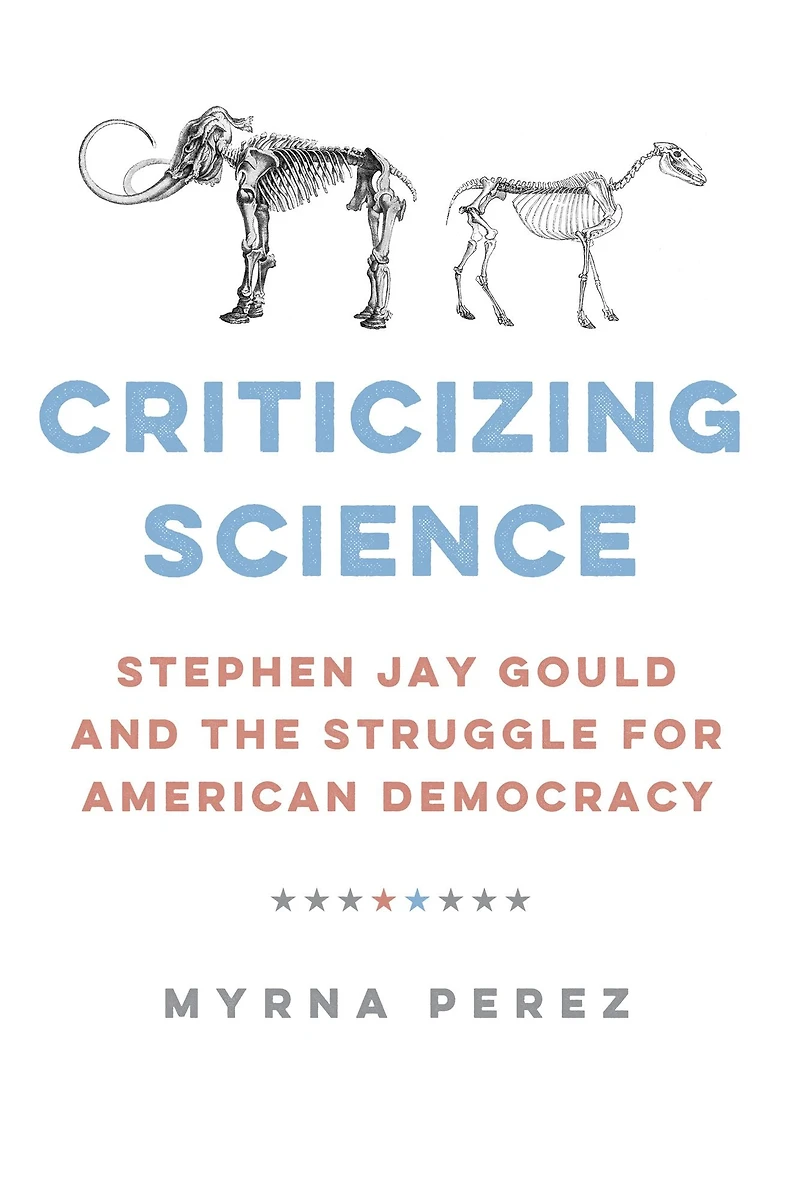
Criticizing Science: Stephen Jay Gould and the Struggle for American Democracy in Bloomington, MN
By Barnes & Noble
Current price: $54.95

Criticizing Science: Stephen Jay Gould and the Struggle for American Democracy in Bloomington, MN
Current price: $54.95
Loading Inventory...
Size: EBook
How Stephen Jay Gould's career illustrates that criticizing science is important for American democracy.The question of public trust in science feels newly urgent, but today is not the first time that opposing ends of the American political spectrum have critiqued modern science. This dynamic has historical roots in the early 1970s, when critiques of science emerged simultaneously out of Civil Rights, feminist, and decolonization movements on the left, as well as within the creationism of the Christian Right. In Criticizing Science, Myrna Perez follows the public career of evolutionary biologist, political leftist, and anticreationist Stephen Jay Gould during the final decades of the American twentieth century. Gould believed that denaturalizing scientific objectivity could be part of the greater work of racial and gender justice in the United States. Perez shows the promises and limitations of Gould's view—most famously expressed in his 1981 book The Mismeasure of Man—that the collective selfreflection on the history of scientific bias would lead to a better, less oppressive science. She argues that we must instead contend with the radical possibilities that are opened by working for a resolutely democratic science. By centering Gould, Perez clarifies divides among left, liberal, and rightwing movements over evolutionary science during the rise of the Christian Right and the expansion of academic feminism. These divides continue to shape contemporary debates over climate change, vaccines, abortion policy, and the nature of gender in presentday American politics.
How Stephen Jay Gould's career illustrates that criticizing science is important for American democracy.The question of public trust in science feels newly urgent, but today is not the first time that opposing ends of the American political spectrum have critiqued modern science. This dynamic has historical roots in the early 1970s, when critiques of science emerged simultaneously out of Civil Rights, feminist, and decolonization movements on the left, as well as within the creationism of the Christian Right. In Criticizing Science, Myrna Perez follows the public career of evolutionary biologist, political leftist, and anticreationist Stephen Jay Gould during the final decades of the American twentieth century. Gould believed that denaturalizing scientific objectivity could be part of the greater work of racial and gender justice in the United States. Perez shows the promises and limitations of Gould's view—most famously expressed in his 1981 book The Mismeasure of Man—that the collective selfreflection on the history of scientific bias would lead to a better, less oppressive science. She argues that we must instead contend with the radical possibilities that are opened by working for a resolutely democratic science. By centering Gould, Perez clarifies divides among left, liberal, and rightwing movements over evolutionary science during the rise of the Christian Right and the expansion of academic feminism. These divides continue to shape contemporary debates over climate change, vaccines, abortion policy, and the nature of gender in presentday American politics.
Shop Similar Products













Find at Mall of America® in Bloomington, MN
Visit at Mall of America® in Bloomington, MN