


Home
Creationism and Its Critics in Antiquity
Barnes and Noble
Loading Inventory...
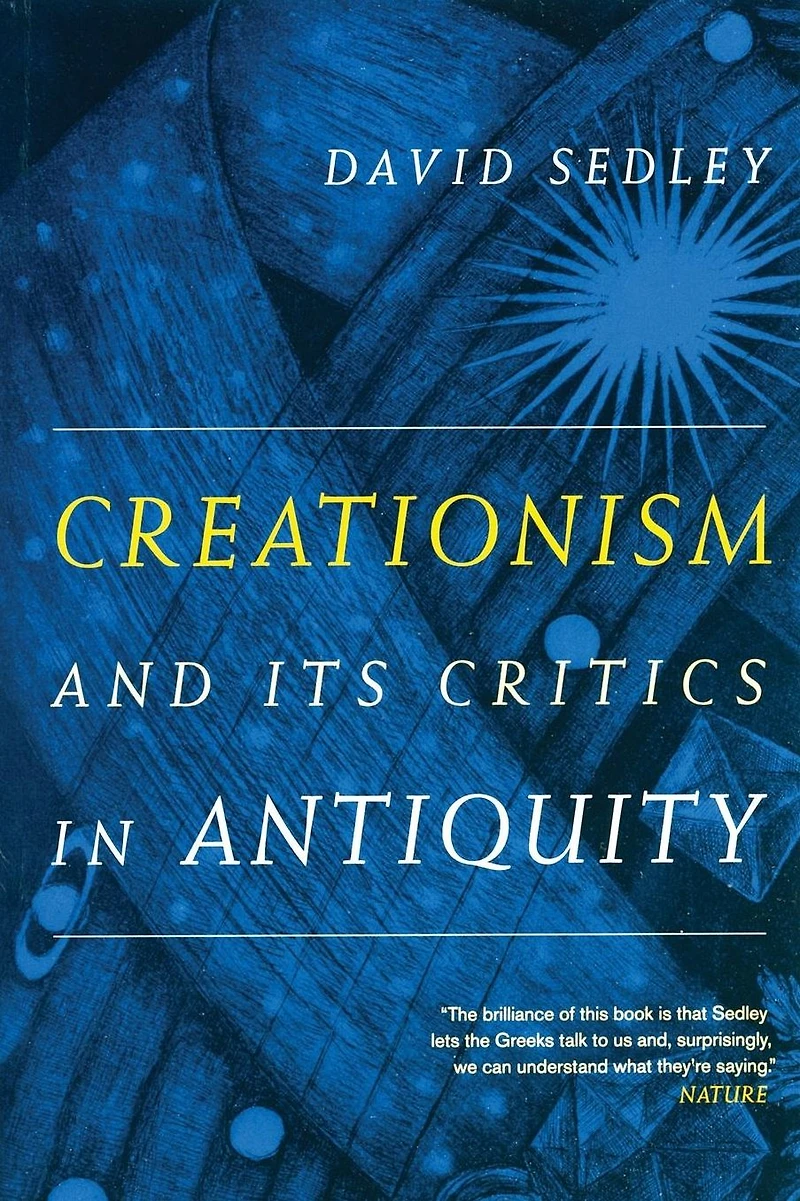
Creationism and Its Critics in Antiquity in Bloomington, MN
By Barnes & Noble
Current price: $34.95

Creationism and Its Critics in Antiquity in Bloomington, MN
Current price: $34.95
Loading Inventory...
Size: Paperback
The world is configured in ways that seem systematically hospitable to life forms, especially the human race. Is this the outcome of divine planning or simply of the laws of physics? Ancient Greeks and Romans famously disagreed on whether the cosmos was the product of design or accident. In this book, David Sedley examines this question and illuminates new historical perspectives on the pantheon of thinkers who laid the foundations of Western philosophy and science. Versions of what we call the "creationist" option were widely favored by the major thinkers of classical antiquity, including Plato, whose ideas on the subject prepared the ground for Aristotle's celebrated teleology. But Aristotle aligned himself with the anticreationist lobby, whose most militant members—the atomists—sought to show how a world just like ours would form inevitably by sheer accident, given only the infinity of space and matter. This stimulating study explores seven major thinkers and philosophical movements enmeshed in the debate: Anaxagoras, Empedocles, Socrates, Plato, the atomists, Aristotle, and the Stoics.
The world is configured in ways that seem systematically hospitable to life forms, especially the human race. Is this the outcome of divine planning or simply of the laws of physics? Ancient Greeks and Romans famously disagreed on whether the cosmos was the product of design or accident. In this book, David Sedley examines this question and illuminates new historical perspectives on the pantheon of thinkers who laid the foundations of Western philosophy and science. Versions of what we call the "creationist" option were widely favored by the major thinkers of classical antiquity, including Plato, whose ideas on the subject prepared the ground for Aristotle's celebrated teleology. But Aristotle aligned himself with the anticreationist lobby, whose most militant members—the atomists—sought to show how a world just like ours would form inevitably by sheer accident, given only the infinity of space and matter. This stimulating study explores seven major thinkers and philosophical movements enmeshed in the debate: Anaxagoras, Empedocles, Socrates, Plato, the atomists, Aristotle, and the Stoics.
Shop Similar Products














Find at Mall of America® in Bloomington, MN
Visit at Mall of America® in Bloomington, MN