


Home
Corpses Belgian Anatomy, 1860-1914: Nobody's Dead
Barnes and Noble
Loading Inventory...
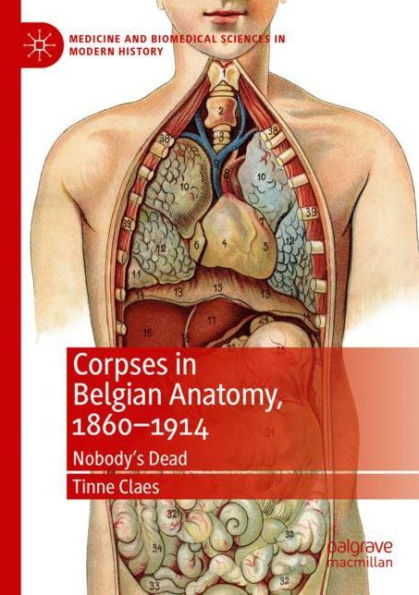
Corpses Belgian Anatomy, 1860-1914: Nobody's Dead in Bloomington, MN
Current price: $89.99

Corpses Belgian Anatomy, 1860-1914: Nobody's Dead in Bloomington, MN
Current price: $89.99
Loading Inventory...
Size: Hardcover
This book tells the story of the thousands of corpses that ended up in the hands of anatomists in the late nineteenth and early twentieth centuries. Composed as a travel story from the point of view of the cadaver, this study offers a full-blown cultural history of death and dissection, with insights that easily go beyond the history of anatomy and the specific case of Belgium. From acquisition to disposal, the trajectories of the corpse changed under the influence of social policies, ideological tensions, religious sensitivities, cultures of death and broader changes in the field of medical ethics. Anatomists increasingly had to reconcile their ways with the diverse meanings that the dead body held. To a certain extent, as this book argues, they started to treat the corpse as subject rather than object. Interweaving broad historical evolutions with detailed case studies, this book offers unique insights into a field dominated by Anglo-American perspectives, evaluating the similaritiesand differences within other European contexts.
This book tells the story of the thousands of corpses that ended up in the hands of anatomists in the late nineteenth and early twentieth centuries. Composed as a travel story from the point of view of the cadaver, this study offers a full-blown cultural history of death and dissection, with insights that easily go beyond the history of anatomy and the specific case of Belgium. From acquisition to disposal, the trajectories of the corpse changed under the influence of social policies, ideological tensions, religious sensitivities, cultures of death and broader changes in the field of medical ethics. Anatomists increasingly had to reconcile their ways with the diverse meanings that the dead body held. To a certain extent, as this book argues, they started to treat the corpse as subject rather than object. Interweaving broad historical evolutions with detailed case studies, this book offers unique insights into a field dominated by Anglo-American perspectives, evaluating the similaritiesand differences within other European contexts.
Shop Similar Products




![Nobody's Girl [Marbled Violet Vinyl] [Barnes & Noble Exclusive]](https://prodimage.images-bn.com/pimages/0880882667313_p0_v2_s600x595.jpg)









Find at Mall of America® in Bloomington, MN
Visit at Mall of America® in Bloomington, MN