


Home
Coercive Distribution
Barnes and Noble
Loading Inventory...
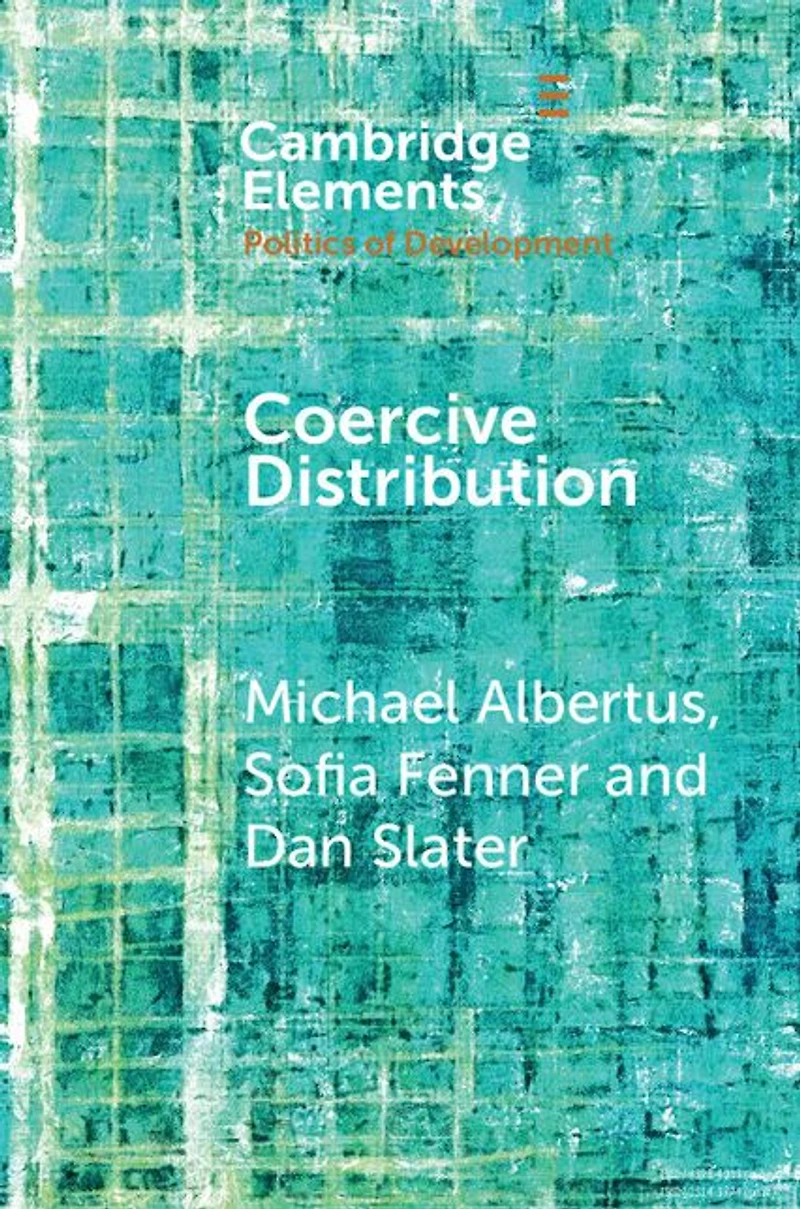

Coercive Distribution in Bloomington, MN
By Barnes & Noble
Current price: $25.00

Coercive Distribution in Bloomington, MN
Current price: $25.00
Loading Inventory...
Size: EBook
Canonical theories of political economy struggle to explain patterns of distribution in authoritarian regimes. In this Element, Albertus, Fenner, and Slater challenge existing models and introduce an alternative, supply-side, and state-centered theory of 'coercive distribution'. Authoritarian regimes proactively deploy distributive policies as advantageous strategies to consolidate their monopoly on power. These policies contribute to authoritarian durability by undercutting rival elites and enmeshing the masses in lasting relations of coercive dependence. The authors illustrate the patterns, timing, and breadth of coercive distribution with global and Latin American quantitative evidence and with a series of historical case studies from regimes in Latin America, Asia, and the Middle East. By recognizing distribution's coercive dimensions, they account for empirical patterns of distribution that do not fit with quasi-democratic understandings of distribution as quid pro quo exchange. Under authoritarian conditions, distribution is less an alternative to coercion than one of its most effective expressions.
Canonical theories of political economy struggle to explain patterns of distribution in authoritarian regimes. In this Element, Albertus, Fenner, and Slater challenge existing models and introduce an alternative, supply-side, and state-centered theory of 'coercive distribution'. Authoritarian regimes proactively deploy distributive policies as advantageous strategies to consolidate their monopoly on power. These policies contribute to authoritarian durability by undercutting rival elites and enmeshing the masses in lasting relations of coercive dependence. The authors illustrate the patterns, timing, and breadth of coercive distribution with global and Latin American quantitative evidence and with a series of historical case studies from regimes in Latin America, Asia, and the Middle East. By recognizing distribution's coercive dimensions, they account for empirical patterns of distribution that do not fit with quasi-democratic understandings of distribution as quid pro quo exchange. Under authoritarian conditions, distribution is less an alternative to coercion than one of its most effective expressions.
Shop Similar Products




![The Inquisition: A Critical And Historical Study Of Coercive Power Church [2nd Ed.]](https://cdn.mall.adeptmind.ai/https%253A%252F%252Fcdn.shopify.com%252Fs%252Ffiles%252F1%252F0674%252F5433%252F7265%252Ffiles%252F9781786258618_p0.jpg_medium.webp)










Find at Mall of America® in Bloomington, MN
Visit at Mall of America® in Bloomington, MN