


Home
CO2 Storage Carboniferous Formations and Abandoned Coal Mines
Barnes and Noble
Loading Inventory...
CO2 Storage Carboniferous Formations and Abandoned Coal Mines in Bloomington, MN
By Barnes & Noble
Current price: $235.00

CO2 Storage Carboniferous Formations and Abandoned Coal Mines in Bloomington, MN
Current price: $235.00
Loading Inventory...
Size: EBook
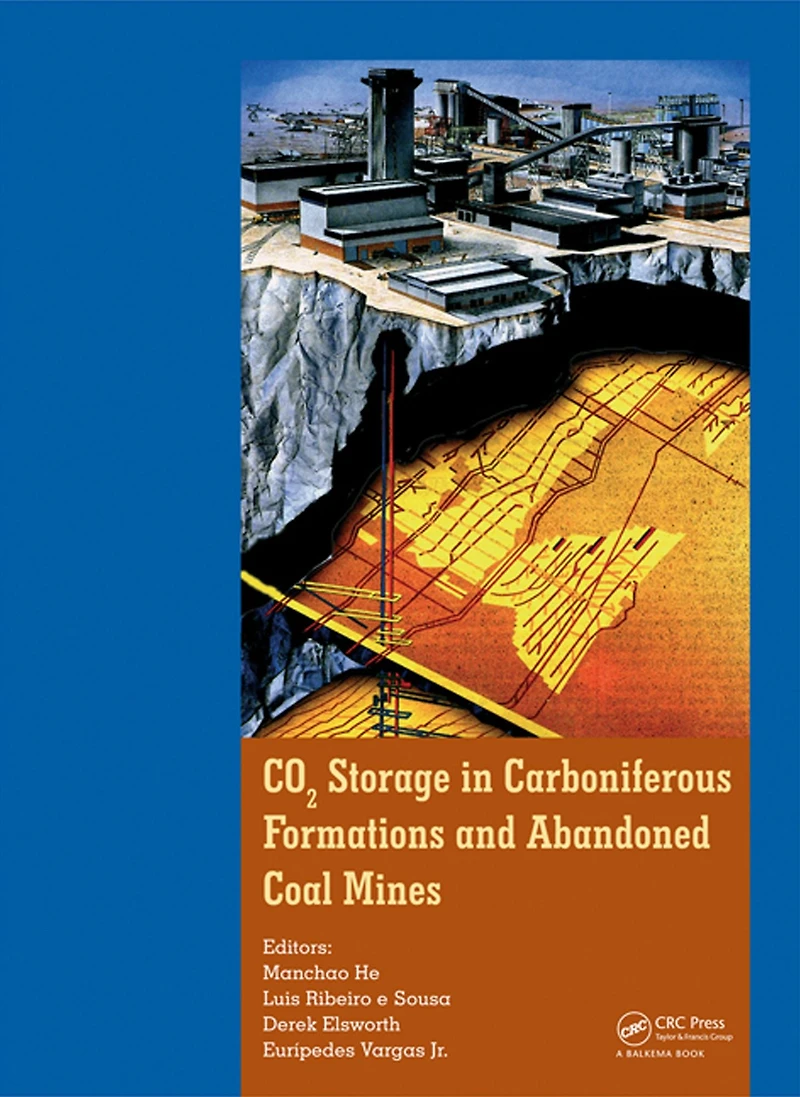
Underground geological storage of carbon dioxide (CO2) has considerable potential for mitigating climate change. CO2 can be safely injected and stored at well characterized and properly managed sites. Injecting carbon dioxide in deep geological formations can store it underground for long periods of time. Depleted oil and gas reservoirs, saline aquifers and carboniferous formations can be used for storage of CO2, as well as in abandoned coal mines. At depths below about 800-1000m, CO2 has a liquid-like density that permits the efficient use of underground reservoirs in porous sedimentary rocks.The papers in the present volume are from leading experts in the field of CO2 storage and were presented at an International Workshop on CO2 Storage in Carboniferous Formations and Abandoned Coal Mines (Beijing, China, 8-9 January 2011). CO2 storage in abandoned coal mines appears to have a bright future. Although CO2 Storage in Carboniferous Formations and Abandoned Coal Mines is primarily intended for mining engineers, environmental engineers and engineering geologists, the book will also be useful to civil engineers, and academics and professionals in geophysics and geochemistry.
Underground geological storage of carbon dioxide (CO2) has considerable potential for mitigating climate change. CO2 can be safely injected and stored at well characterized and properly managed sites. Injecting carbon dioxide in deep geological formations can store it underground for long periods of time. Depleted oil and gas reservoirs, saline aquifers and carboniferous formations can be used for storage of CO2, as well as in abandoned coal mines. At depths below about 800-1000m, CO2 has a liquid-like density that permits the efficient use of underground reservoirs in porous sedimentary rocks.The papers in the present volume are from leading experts in the field of CO2 storage and were presented at an International Workshop on CO2 Storage in Carboniferous Formations and Abandoned Coal Mines (Beijing, China, 8-9 January 2011). CO2 storage in abandoned coal mines appears to have a bright future. Although CO2 Storage in Carboniferous Formations and Abandoned Coal Mines is primarily intended for mining engineers, environmental engineers and engineering geologists, the book will also be useful to civil engineers, and academics and professionals in geophysics and geochemistry.
Shop Similar Products














Find at Mall of America® in Bloomington, MN
Visit at Mall of America® in Bloomington, MN