


Home
Carving the Western Path: By River, Rail, and Road Through Central and Northern B.C.
Barnes and Noble
Loading Inventory...
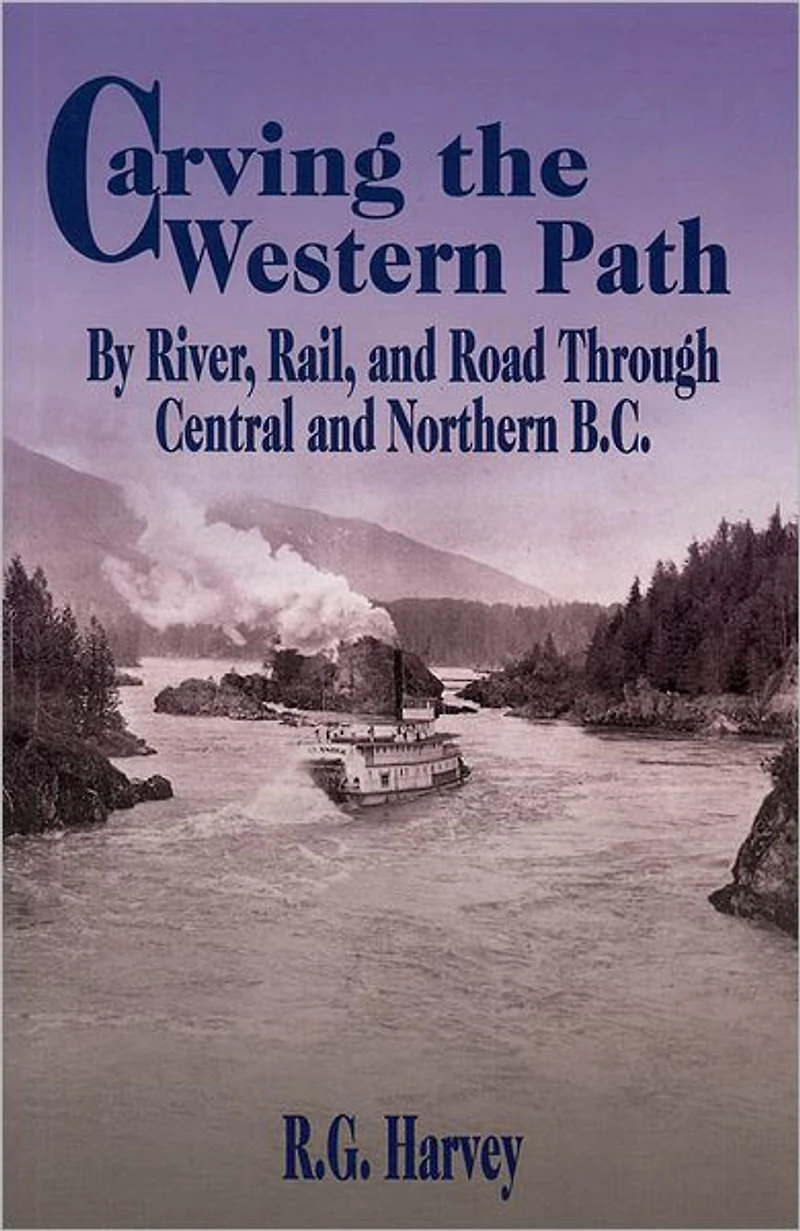
Carving the Western Path: By River, Rail, and Road Through Central and Northern B.C. in Bloomington, MN
By Barnes & Noble
Current price: $9.99

Carving the Western Path: By River, Rail, and Road Through Central and Northern B.C. in Bloomington, MN
Current price: $9.99
Loading Inventory...
Size: EBook
The history of British Columbia's transportation systems north of the Canadian National Railway's mainline may not be well known—but it certainly is colourful. Continuing the story he began in the first volume of Carving the Western Path, R.G. Harvey describes the development of river, road and rail routes that crossed the northern two-thirds of BC. This was a land of dreams and schemes that seemed to feed on each other. It started with the Collins Overland Telegraph, a communication link that was to connect Europe and America in the 1860s. Though this plan collapsed with the success of the trans-Atlantic cable, the telegraph surveyors established patterns for future roads and settlement. They also sparked the Omineca gold rush. It was a land full of larger-than-life characters, including: Charles Hays, who dreamed of a major seaport at Prince Rupert but died on the Titanic before he could realize his vision Charles Bedaux, who in the 1930s carved his 416-mile path into the northern Rockies Railway promoters Warburton Pike, Sir Edward Phillipps-Wolley, William Mackenzie and Donald Mann, who got gifts of land and money but couldn't always meet their promises. Their stories mingle with those of the Grand Trunk Pacific Railway, the Alaska Highway, the White Pass and Yukon Railway and those of the sternwheelers, fur traders, gold miners and other adventurers who were drawn to this last frontier.
The history of British Columbia's transportation systems north of the Canadian National Railway's mainline may not be well known—but it certainly is colourful. Continuing the story he began in the first volume of Carving the Western Path, R.G. Harvey describes the development of river, road and rail routes that crossed the northern two-thirds of BC. This was a land of dreams and schemes that seemed to feed on each other. It started with the Collins Overland Telegraph, a communication link that was to connect Europe and America in the 1860s. Though this plan collapsed with the success of the trans-Atlantic cable, the telegraph surveyors established patterns for future roads and settlement. They also sparked the Omineca gold rush. It was a land full of larger-than-life characters, including: Charles Hays, who dreamed of a major seaport at Prince Rupert but died on the Titanic before he could realize his vision Charles Bedaux, who in the 1930s carved his 416-mile path into the northern Rockies Railway promoters Warburton Pike, Sir Edward Phillipps-Wolley, William Mackenzie and Donald Mann, who got gifts of land and money but couldn't always meet their promises. Their stories mingle with those of the Grand Trunk Pacific Railway, the Alaska Highway, the White Pass and Yukon Railway and those of the sternwheelers, fur traders, gold miners and other adventurers who were drawn to this last frontier.
Shop Similar Products















Find at Mall of America® in Bloomington, MN
Visit at Mall of America® in Bloomington, MN