


Home
Campaign Finance and Political Polarization: When Purists Prevail
Barnes and Noble
Loading Inventory...
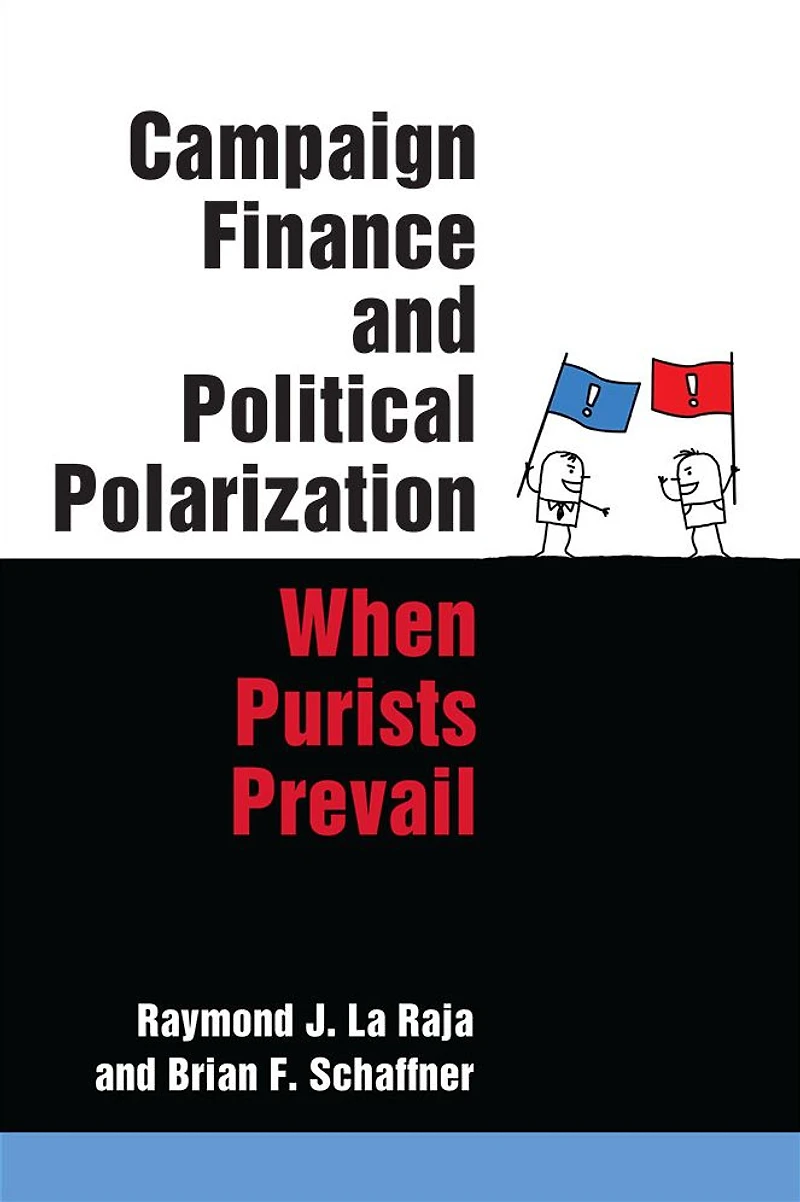
Campaign Finance and Political Polarization: When Purists Prevail in Bloomington, MN
By Barnes & Noble
Current price: $29.95

Campaign Finance and Political Polarization: When Purists Prevail in Bloomington, MN
Current price: $29.95
Loading Inventory...
Size: Paperback
Efforts to reform the U.S. campaign finance system typically focus on the corrupting influence of large contributions. Yet, as Raymond J. La Raja and Brian F. Schaffner argue, reforms aimed at cutting the flow of money into politics have unintentionally favored candidates with extreme ideological agendas and, consequently, fostered political polarization.Drawing on data from 50 states and the U.S. Congress over 20 years, La Raja and Schaffner reveal that current rules allow wealthy ideological groups and donors to dominate the financing of political campaigns. In order to attract funding, candidates take uncompromising positions on key issues and, if elected, take their partisan views into the legislature. As a remedy, the authors propose that additional campaign money be channeled through party organizationsrather than directly to candidatesbecause these organizations tend to be less ideological than the activists who now provide the lion’s share of money to political candidates. Shifting campaign finance to parties would ease polarization by reducing the influence of “purist” donors with their rigid policy stances. La Raja and Schaffner conclude the book with policy recommendations for campaign finance in the United States. They are among the few non-libertarians who argue that less regulation, particularly for political parties, may in fact improve the democratic process.
Efforts to reform the U.S. campaign finance system typically focus on the corrupting influence of large contributions. Yet, as Raymond J. La Raja and Brian F. Schaffner argue, reforms aimed at cutting the flow of money into politics have unintentionally favored candidates with extreme ideological agendas and, consequently, fostered political polarization.Drawing on data from 50 states and the U.S. Congress over 20 years, La Raja and Schaffner reveal that current rules allow wealthy ideological groups and donors to dominate the financing of political campaigns. In order to attract funding, candidates take uncompromising positions on key issues and, if elected, take their partisan views into the legislature. As a remedy, the authors propose that additional campaign money be channeled through party organizationsrather than directly to candidatesbecause these organizations tend to be less ideological than the activists who now provide the lion’s share of money to political candidates. Shifting campaign finance to parties would ease polarization by reducing the influence of “purist” donors with their rigid policy stances. La Raja and Schaffner conclude the book with policy recommendations for campaign finance in the United States. They are among the few non-libertarians who argue that less regulation, particularly for political parties, may in fact improve the democratic process.
Shop Similar Products








Find at Mall of America® in Bloomington, MN
Visit at Mall of America® in Bloomington, MN