


Home
Babylonian Talmud Book 2
Barnes and Noble
Loading Inventory...
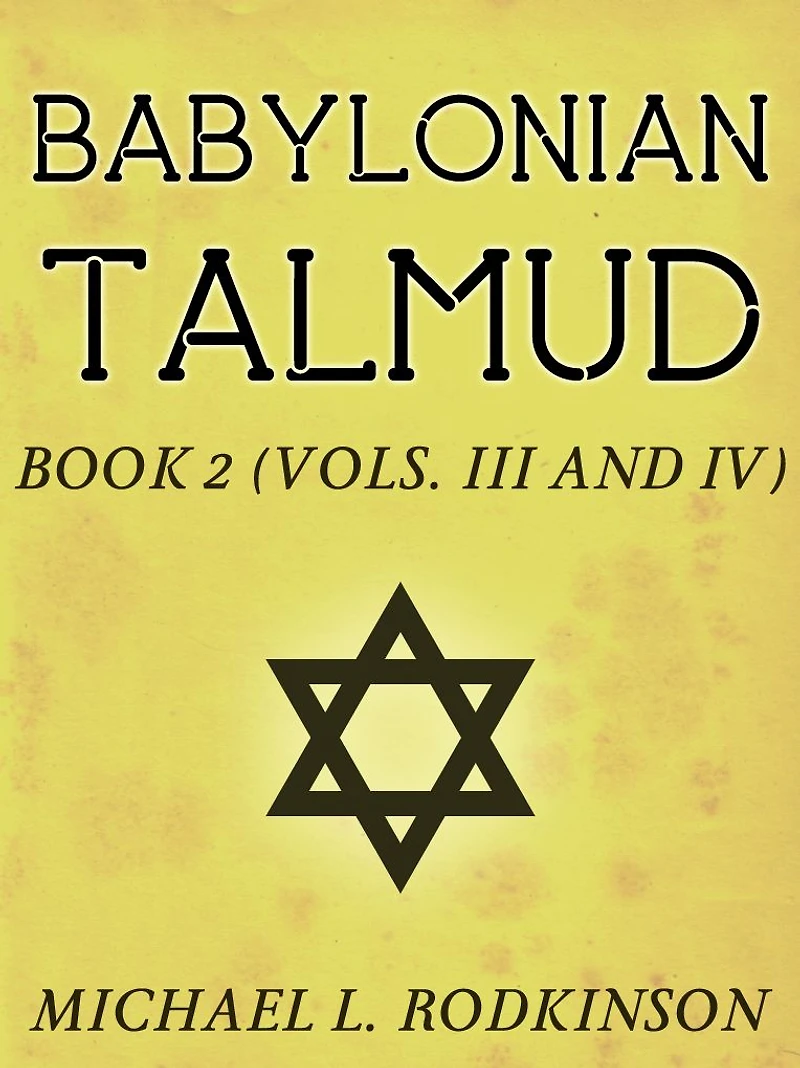
Babylonian Talmud Book 2 in Bloomington, MN
By Barnes & Noble
Current price: $3.99

Babylonian Talmud Book 2 in Bloomington, MN
Current price: $3.99
Loading Inventory...
Size: EBook
Babylonian Talmudia Book 2 - Vols. III and IVTranslated by Michael L. RodkinsonThis Tract, virtually the third of the Sabbath series, treats of subjects similar to those discussed in the first two. The main point of. difference is, that most of the laws laid down in the preceding two volumes are founded on biblical behests, while those instituted in the present volume are of purely rabbinical origin, notwithstanding the assertion of a solitary individual who appears in the course of a debate and declares that the legal-limit branch of the Erub is a biblical enactment.A remarkable feature of the Tract is the exposition of the manner in which the shrewd sages circumvene the rigorous prohibitions contained in the Tract Sabbath and how they take advantage of every loophole afforded them through imperfections in the law, at the same time avoiding any palpable infraction of the law itself.As already explained in the introduction to Volume I., the restrictions with which the Sabbath was surrounded had their unquestionable political import, but their very rigor made the sages, than whom none knew the people better, doubt whether enforcement and still less voluntary observance could ever be possible. It became necessary, therefore, to find some way of modifying the law, not directly, but by the institution of other in a measure counteracting laws. The solution for this problem presented itself in the "Erub" (literally "commixture") ordinances, the first results of which were to bring about a distinction between the different kinds of ground inhabited by man. Lines of demarcation between public, unclaimed, and private ground and ground which was under no particular jurisdiction were strictly drawn. Whatever ground, however, could be made by hook or crook to come under the category of private ground was eagerly included, as in the latter things could be carried about at will. In order, therefore, to have as much private ground as possible, each man having an interest in public ground would relinquish or transfer his right to his neighbor and thus make it communal or private property. Of course, this could be done only among Israelites, and where a Gentile had an interest in a piece of coveted ground, his share had to be bought outright.
Babylonian Talmudia Book 2 - Vols. III and IVTranslated by Michael L. RodkinsonThis Tract, virtually the third of the Sabbath series, treats of subjects similar to those discussed in the first two. The main point of. difference is, that most of the laws laid down in the preceding two volumes are founded on biblical behests, while those instituted in the present volume are of purely rabbinical origin, notwithstanding the assertion of a solitary individual who appears in the course of a debate and declares that the legal-limit branch of the Erub is a biblical enactment.A remarkable feature of the Tract is the exposition of the manner in which the shrewd sages circumvene the rigorous prohibitions contained in the Tract Sabbath and how they take advantage of every loophole afforded them through imperfections in the law, at the same time avoiding any palpable infraction of the law itself.As already explained in the introduction to Volume I., the restrictions with which the Sabbath was surrounded had their unquestionable political import, but their very rigor made the sages, than whom none knew the people better, doubt whether enforcement and still less voluntary observance could ever be possible. It became necessary, therefore, to find some way of modifying the law, not directly, but by the institution of other in a measure counteracting laws. The solution for this problem presented itself in the "Erub" (literally "commixture") ordinances, the first results of which were to bring about a distinction between the different kinds of ground inhabited by man. Lines of demarcation between public, unclaimed, and private ground and ground which was under no particular jurisdiction were strictly drawn. Whatever ground, however, could be made by hook or crook to come under the category of private ground was eagerly included, as in the latter things could be carried about at will. In order, therefore, to have as much private ground as possible, each man having an interest in public ground would relinquish or transfer his right to his neighbor and thus make it communal or private property. Of course, this could be done only among Israelites, and where a Gentile had an interest in a piece of coveted ground, his share had to be bought outright.
Shop Similar Products















Find at Mall of America® in Bloomington, MN
Visit at Mall of America® in Bloomington, MN