


Home
Artificial Intelligence for Ocean Remote Sensing
Barnes and Noble
Loading Inventory...
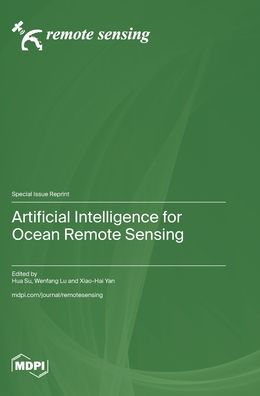
Artificial Intelligence for Ocean Remote Sensing in Bloomington, MN
Current price: $96.85

Artificial Intelligence for Ocean Remote Sensing in Bloomington, MN
Current price: $96.85
Loading Inventory...
Size: OS
The use of Artificial Intelligence (AI) has the potential to revolutionize the way we collect, analyze, and interpret data from the vast and complex oceans. AI oceanography has demonstrated its capability in the handling of various oceanic problems, from monitoring marine ecosystems and the environment to predicting ocean currents and weather patterns. Concurrently, propelled by the continuous development of remote sensing techniques over recent decades, ocean observation has entered the big data era. An increasing number of ocean satellites equipped with broad sensors have been deployed to view oceans from large-scale and high-resolution perspectives. The fusion of AI and remote sensing has unleased great potential in dealing with remote sensing retrieval, feature/pattern recognition, and reconstruction problems. The underlying rules of hidden correlation can be revealed from the collected data to advance our understanding of oceans and contribute to more effective protection and management efforts. By further combining these with other oceanic data, such as numerical models and re-analyses, the challenges faced by traditional oceanography can be effectively mitigated, and a new data-driven direction for ocean remote sensing can emerge as a new paradigm.
The use of Artificial Intelligence (AI) has the potential to revolutionize the way we collect, analyze, and interpret data from the vast and complex oceans. AI oceanography has demonstrated its capability in the handling of various oceanic problems, from monitoring marine ecosystems and the environment to predicting ocean currents and weather patterns. Concurrently, propelled by the continuous development of remote sensing techniques over recent decades, ocean observation has entered the big data era. An increasing number of ocean satellites equipped with broad sensors have been deployed to view oceans from large-scale and high-resolution perspectives. The fusion of AI and remote sensing has unleased great potential in dealing with remote sensing retrieval, feature/pattern recognition, and reconstruction problems. The underlying rules of hidden correlation can be revealed from the collected data to advance our understanding of oceans and contribute to more effective protection and management efforts. By further combining these with other oceanic data, such as numerical models and re-analyses, the challenges faced by traditional oceanography can be effectively mitigated, and a new data-driven direction for ocean remote sensing can emerge as a new paradigm.
Shop Similar Products










Find at Mall of America® in Bloomington, MN
Visit at Mall of America® in Bloomington, MN