


Home
Analogical Thinking Architecture: Connecting Design and Theory the Built Environment
Barnes and Noble
Loading Inventory...
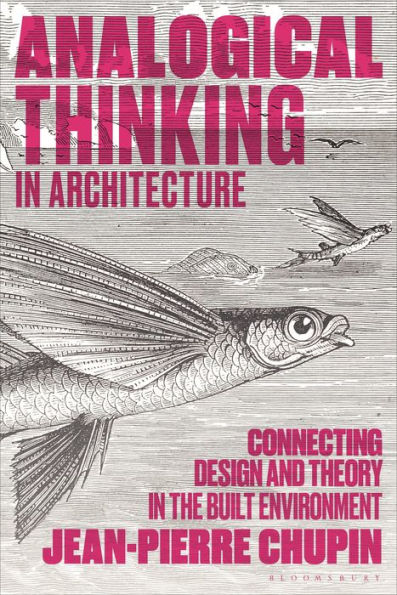
Analogical Thinking Architecture: Connecting Design and Theory the Built Environment in Bloomington, MN
Current price: $115.00

Analogical Thinking Architecture: Connecting Design and Theory the Built Environment in Bloomington, MN
Current price: $115.00
Loading Inventory...
Size: Hardcover
This book provides an in-depth exploration of the rich and persistent use of analogical thinking in the built environment. Since the turn of the 21st century, “design thinking” has permeated many fields outside of the design disciplines, used whenever disciplinary boundaries need to be transcended in order to think “outside the box”. This book argues that these qualities have long been supported by “analogical thinking”-an agile way of reasoning in which we think the unknown through the familiar.
The book is organized into four case studies: the first reviews analogical models that have been at the heart of design thinking representations from the 1960s to the present day; the second investigates the staying power of biological analogies; the third explores the paradoxical imaginary of "analogous cities" as a means of integrating contemporary architecture with heritage contexts; while the fourth unpacks the critical and theoretical potential of linguistic metaphors and visual comparisons in architectural discourse.
Comparing views on the role of analogies and metaphors by prominent voices in architecture and related disciplines from the 17th century to the present, the book shows how the “analogical world of the project” is revealed as a wide-open field of creative and cognitive interactions. Showing how analogy has the power to reconcile design and theory, it is a must-read for both designers and theorists alike.
The book is organized into four case studies: the first reviews analogical models that have been at the heart of design thinking representations from the 1960s to the present day; the second investigates the staying power of biological analogies; the third explores the paradoxical imaginary of "analogous cities" as a means of integrating contemporary architecture with heritage contexts; while the fourth unpacks the critical and theoretical potential of linguistic metaphors and visual comparisons in architectural discourse.
Comparing views on the role of analogies and metaphors by prominent voices in architecture and related disciplines from the 17th century to the present, the book shows how the “analogical world of the project” is revealed as a wide-open field of creative and cognitive interactions. Showing how analogy has the power to reconcile design and theory, it is a must-read for both designers and theorists alike.
This book provides an in-depth exploration of the rich and persistent use of analogical thinking in the built environment. Since the turn of the 21st century, “design thinking” has permeated many fields outside of the design disciplines, used whenever disciplinary boundaries need to be transcended in order to think “outside the box”. This book argues that these qualities have long been supported by “analogical thinking”-an agile way of reasoning in which we think the unknown through the familiar.
The book is organized into four case studies: the first reviews analogical models that have been at the heart of design thinking representations from the 1960s to the present day; the second investigates the staying power of biological analogies; the third explores the paradoxical imaginary of "analogous cities" as a means of integrating contemporary architecture with heritage contexts; while the fourth unpacks the critical and theoretical potential of linguistic metaphors and visual comparisons in architectural discourse.
Comparing views on the role of analogies and metaphors by prominent voices in architecture and related disciplines from the 17th century to the present, the book shows how the “analogical world of the project” is revealed as a wide-open field of creative and cognitive interactions. Showing how analogy has the power to reconcile design and theory, it is a must-read for both designers and theorists alike.
The book is organized into four case studies: the first reviews analogical models that have been at the heart of design thinking representations from the 1960s to the present day; the second investigates the staying power of biological analogies; the third explores the paradoxical imaginary of "analogous cities" as a means of integrating contemporary architecture with heritage contexts; while the fourth unpacks the critical and theoretical potential of linguistic metaphors and visual comparisons in architectural discourse.
Comparing views on the role of analogies and metaphors by prominent voices in architecture and related disciplines from the 17th century to the present, the book shows how the “analogical world of the project” is revealed as a wide-open field of creative and cognitive interactions. Showing how analogy has the power to reconcile design and theory, it is a must-read for both designers and theorists alike.













Find at Mall of America® in Bloomington, MN
Visit at Mall of America® in Bloomington, MN