


Home
Addressing the Long-Run Budget Deficit: A Comparison of Approaches
Barnes and Noble
Loading Inventory...
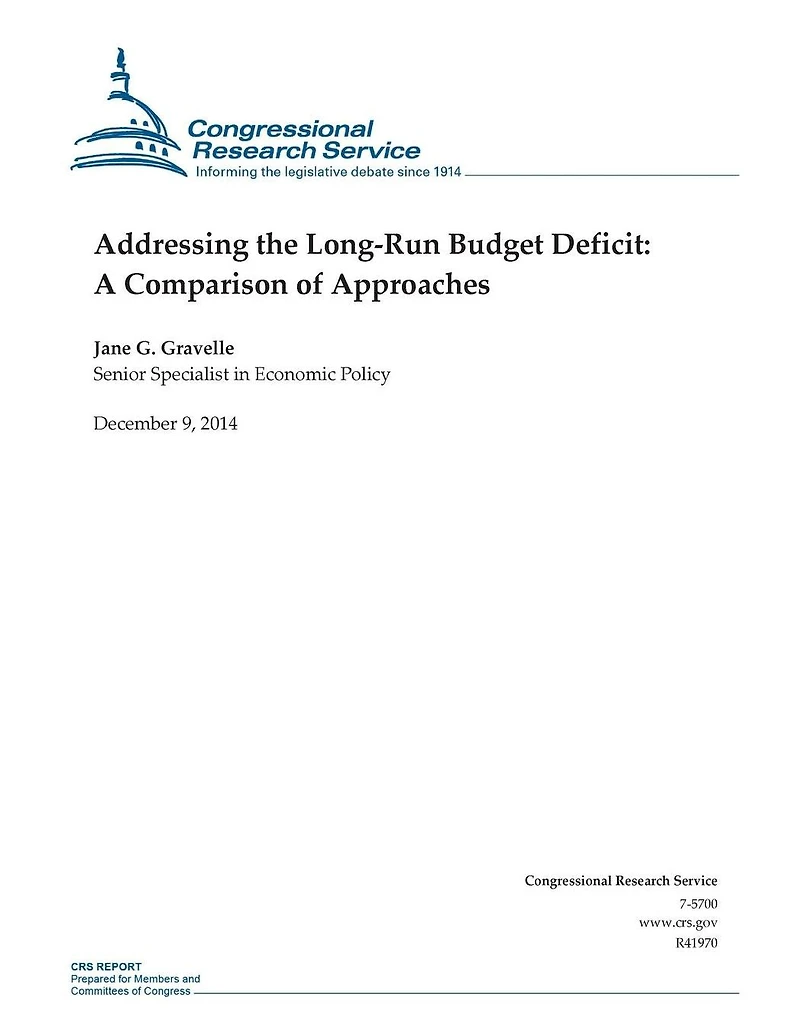
Addressing the Long-Run Budget Deficit: A Comparison of Approaches in Bloomington, MN
By Barnes & Noble
Current price: $19.95

Addressing the Long-Run Budget Deficit: A Comparison of Approaches in Bloomington, MN
Current price: $19.95
Loading Inventory...
Size: Paperback
A small share of federal spending is for direct provision of domestic government services, which many people may think of when considering federal spending. Because this spending is normally about 10% of total federal spending and about 2% of gross domestic product (GDP) and deficits are projected to be 2.8% of GDP and rising in the future, cutting this type of spending can make only a limited contribution to reducing the deficit. (Note that direct provision of domestic services by the federal government is smaller than the total of nondefense discretionary spending, about 17% of spending, because it excludes transfers. Discretionary spending is spending that requires appropriations.) Transfers and payments to persons and state and local governments constitute most of federal spending, about 70%. Defense spending, currently accounting for about 20% of spending, has declined over the past 35 years but tends to vary depending, in part, on the presence and magnitude of international conflicts.
A small share of federal spending is for direct provision of domestic government services, which many people may think of when considering federal spending. Because this spending is normally about 10% of total federal spending and about 2% of gross domestic product (GDP) and deficits are projected to be 2.8% of GDP and rising in the future, cutting this type of spending can make only a limited contribution to reducing the deficit. (Note that direct provision of domestic services by the federal government is smaller than the total of nondefense discretionary spending, about 17% of spending, because it excludes transfers. Discretionary spending is spending that requires appropriations.) Transfers and payments to persons and state and local governments constitute most of federal spending, about 70%. Defense spending, currently accounting for about 20% of spending, has declined over the past 35 years but tends to vary depending, in part, on the presence and magnitude of international conflicts.
Shop Similar Products















Find at Mall of America® in Bloomington, MN
Visit at Mall of America® in Bloomington, MN