


Home
A Romance of Canvas Town And Other Stories
Barnes and Noble
Loading Inventory...

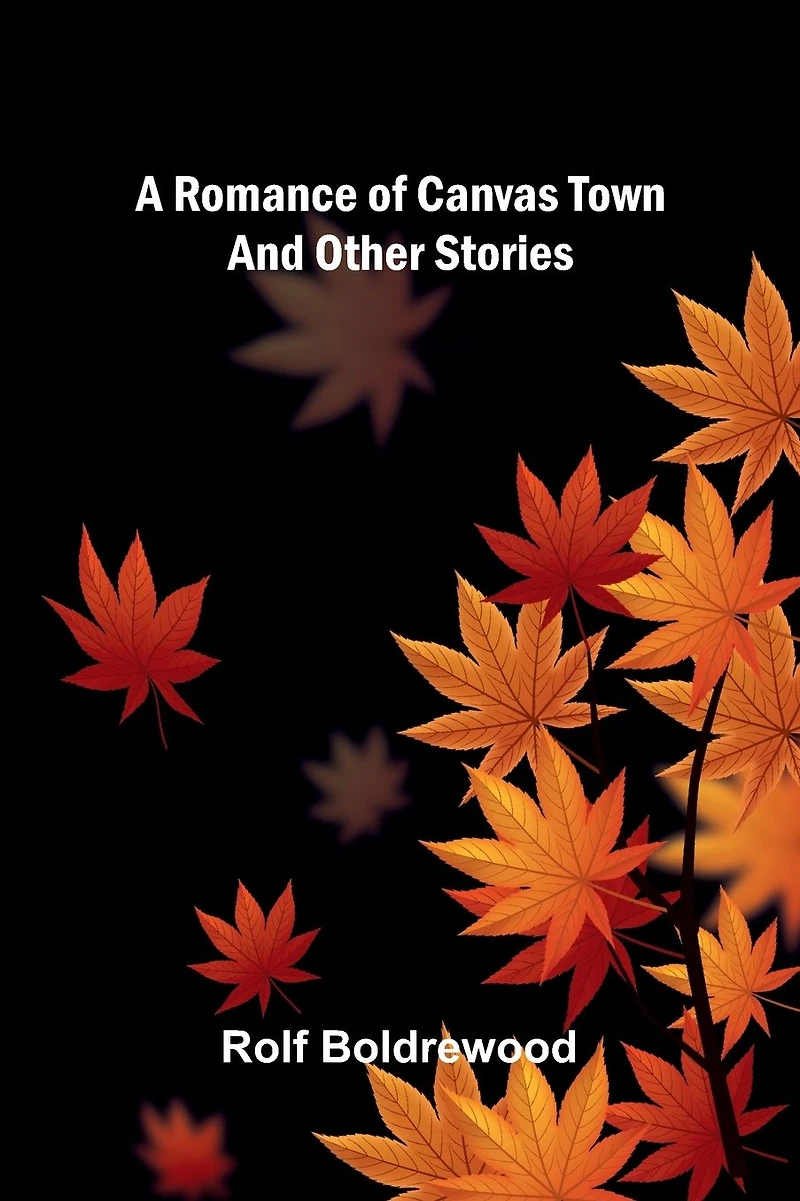
A Romance of Canvas Town And Other Stories in Bloomington, MN
By Barnes & Noble
Current price: $2.99

A Romance of Canvas Town And Other Stories in Bloomington, MN
Current price: $2.99
Loading Inventory...
Size: EBook
DWELLERS in Melbourne during 1851 and the immediately succeedingyears of the golden age in Australia will remember Canvas Town. Goodcause, doubtless, have certain prosperous citizens to recall thestrange suburb of Melbourne across the river, in which they, withhundreds of strangers and pilgrims, were fain to abide, pendingsuitable lodgings or employment. It arose mushroom-like from the baretrampled clay, a town of tents and calico, at no great distance fromPrince's-bridge, shouldering the road which then led to thefashionable suburb of South Yarra.Its raison d'être was briefly this. When tidings of the wondrousyields of Ballarat and Forest Creek--of gold dust and ingots, soprofuse, so easily won--reached Europe, fleets of vessels bearingarmies of adventurers set sail for Eldorado. When the flotillaanchored in Hobson's Bay, disembarking in crowds, the young and theold, the rich and the poor, the delicately nurtured with the rudelyreared, there was simply no place to put them, nowhere for them to go.For in Melbourne, houses and cottages, huts and hotels were alikefull, more than full, with legitimate occupants. The verandahs andeven the back yards were utilized as dormitories. A list of theextraordinary makeshifts for bedrooms then in common use would readlike a chapter from the Hunting of the Snark or kindred literature.Only with this difference, that the nonsense would all be true,--terribly true.What, then, was to be done? Filled with auriferous fancies andfables, it was yet impossible for all of these inexperienced,untraveled innocents to march at once for the diggings. Many hadimagined that they could 'step over,' on arrival, to the goldenfields, and commence the colonial industry of nugget gathering withoutloss of time.To fathers of families--some of near kin to Mr. Micawber--to rawlads, to the feeble, the sick, the penniless--there were many of theselast--it may easily be imagined how terrible was the first experienceof the strange, inhospitable, and apparently savage land in which theyfound themselves.Landed at Sandridge or on the wharves of Melbourne, in the midst ofrude, jostling crowds, what misery must many of them have undergone! Ifear me that the complacent colonists, thriving and experienced, fullyaware of the fact that all property, whether of stock, land, stations,or houses, had become enormously enhanced in value, must have seemedto the forlorn emigrants hard and unfeeling. There was a savour ofselfishness, surely, about the way in which the herd of helplessstrangers--gentle and simple, good, bad, or indifferent--was permittedto go its own road, to sink or swim, with but little aid or counselfrom their countrymen in Victoria.The deadly wharf-struggle over, it became a vital question with thehouseless horde where to go and how to shelter themselves. There,indeed, was the rub! Melbourne, as before stated, was crammed full.They could not camp in the streets. They were unprepared for the bush.They knew not which way to turn. Whether, in some semi-official way,directed to locate themselves upon the site, long famous andmemorable, or, whether as being within reach of the Yarra, of thetown, and apparently unoccupied, and unowned, the bright idea of"pegging out" struck some smart pilgrim, and the rest followed suit,cannot be known. But almost in a night Canvas Town arose, and became alocalized, tangible fact.About that time there lived in the pastoral region of Victoria,occasionally visiting Melbourne like his brethren, when a decentexcuse offered, a squatter named Evan Cameron. This young person hadlately brought a draft of fat cattle from his station near the mouthof the Glenelg. The season being that of winter, the weather bad, andhis assistant strictly unreliable, he had been sorely tried andendured hardship. But, as he had sold the drove at an unprecedentedlyhigh price, and was even now enjoying a well-earned holiday, thememory of his privations was becoming faint and obscure.
DWELLERS in Melbourne during 1851 and the immediately succeedingyears of the golden age in Australia will remember Canvas Town. Goodcause, doubtless, have certain prosperous citizens to recall thestrange suburb of Melbourne across the river, in which they, withhundreds of strangers and pilgrims, were fain to abide, pendingsuitable lodgings or employment. It arose mushroom-like from the baretrampled clay, a town of tents and calico, at no great distance fromPrince's-bridge, shouldering the road which then led to thefashionable suburb of South Yarra.Its raison d'être was briefly this. When tidings of the wondrousyields of Ballarat and Forest Creek--of gold dust and ingots, soprofuse, so easily won--reached Europe, fleets of vessels bearingarmies of adventurers set sail for Eldorado. When the flotillaanchored in Hobson's Bay, disembarking in crowds, the young and theold, the rich and the poor, the delicately nurtured with the rudelyreared, there was simply no place to put them, nowhere for them to go.For in Melbourne, houses and cottages, huts and hotels were alikefull, more than full, with legitimate occupants. The verandahs andeven the back yards were utilized as dormitories. A list of theextraordinary makeshifts for bedrooms then in common use would readlike a chapter from the Hunting of the Snark or kindred literature.Only with this difference, that the nonsense would all be true,--terribly true.What, then, was to be done? Filled with auriferous fancies andfables, it was yet impossible for all of these inexperienced,untraveled innocents to march at once for the diggings. Many hadimagined that they could 'step over,' on arrival, to the goldenfields, and commence the colonial industry of nugget gathering withoutloss of time.To fathers of families--some of near kin to Mr. Micawber--to rawlads, to the feeble, the sick, the penniless--there were many of theselast--it may easily be imagined how terrible was the first experienceof the strange, inhospitable, and apparently savage land in which theyfound themselves.Landed at Sandridge or on the wharves of Melbourne, in the midst ofrude, jostling crowds, what misery must many of them have undergone! Ifear me that the complacent colonists, thriving and experienced, fullyaware of the fact that all property, whether of stock, land, stations,or houses, had become enormously enhanced in value, must have seemedto the forlorn emigrants hard and unfeeling. There was a savour ofselfishness, surely, about the way in which the herd of helplessstrangers--gentle and simple, good, bad, or indifferent--was permittedto go its own road, to sink or swim, with but little aid or counselfrom their countrymen in Victoria.The deadly wharf-struggle over, it became a vital question with thehouseless horde where to go and how to shelter themselves. There,indeed, was the rub! Melbourne, as before stated, was crammed full.They could not camp in the streets. They were unprepared for the bush.They knew not which way to turn. Whether, in some semi-official way,directed to locate themselves upon the site, long famous andmemorable, or, whether as being within reach of the Yarra, of thetown, and apparently unoccupied, and unowned, the bright idea of"pegging out" struck some smart pilgrim, and the rest followed suit,cannot be known. But almost in a night Canvas Town arose, and became alocalized, tangible fact.About that time there lived in the pastoral region of Victoria,occasionally visiting Melbourne like his brethren, when a decentexcuse offered, a squatter named Evan Cameron. This young person hadlately brought a draft of fat cattle from his station near the mouthof the Glenelg. The season being that of winter, the weather bad, andhis assistant strictly unreliable, he had been sorely tried andendured hardship. But, as he had sold the drove at an unprecedentedlyhigh price, and was even now enjoying a well-earned holiday, thememory of his privations was becoming faint and obscure.
Shop Similar Products









Find at Mall of America® in Bloomington, MN
Visit at Mall of America® in Bloomington, MN