


Home
USMC M4A2 Sherman vs Japanese Type 95 Ha-Go: The Central Pacific 1943-44
Barnes and Noble
Loading Inventory...
USMC M4A2 Sherman vs Japanese Type 95 Ha-Go: The Central Pacific 1943-44 in Bloomington, MN
Current price: $22.00

USMC M4A2 Sherman vs Japanese Type 95 Ha-Go: The Central Pacific 1943-44 in Bloomington, MN
Current price: $22.00
Loading Inventory...
Size: Paperback
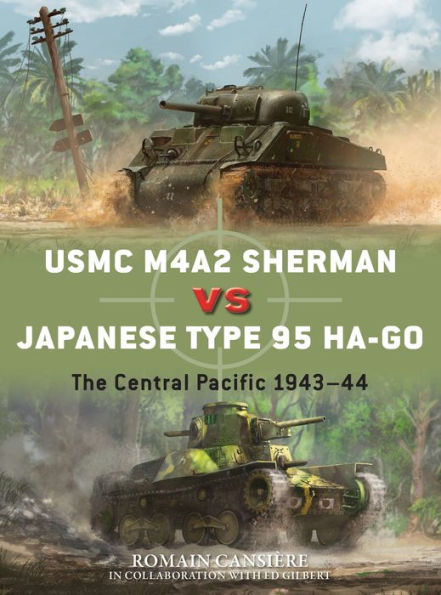
Drawing upon personal testimonies from veterans, official reports, and never-before published photographs, this superbly detailed title explores the duels between the USMC M4A2 and the Japanese Type 95 Ha-Go, which often proved to be epic and unique.
The different national tank doctrines of the United States and Imperial Japan resulted in a terrible mismatch of the predominant tank types in the crucial Central Pacific campaign. A flawed Japanese doctrine emphasized light infantry support tanks, often used in small numbers. Tactically, tanks were often frittered away in armored versions of the familiar
banzai
attacks. Meanwhile, the Americans saw the tank as an infantry support weapon, but developed a more systematic tactical doctrine. They settled upon a larger medium tank--in the case of most Marine Corps tank battalions, the diesel-powered M4A2 (unwanted by the US Army).
This superbly detailed title reveals how both the two sides' tactical and technical differences in the approach to armored warfare soon became apparent over a series of deadly engagements, from the first tank fight at the battle of Tarawa in November 1943, through to engagements on Parry Island, Saipan, and Guam, before ending with Peleliu in September 1944.
The different national tank doctrines of the United States and Imperial Japan resulted in a terrible mismatch of the predominant tank types in the crucial Central Pacific campaign. A flawed Japanese doctrine emphasized light infantry support tanks, often used in small numbers. Tactically, tanks were often frittered away in armored versions of the familiar
banzai
attacks. Meanwhile, the Americans saw the tank as an infantry support weapon, but developed a more systematic tactical doctrine. They settled upon a larger medium tank--in the case of most Marine Corps tank battalions, the diesel-powered M4A2 (unwanted by the US Army).
This superbly detailed title reveals how both the two sides' tactical and technical differences in the approach to armored warfare soon became apparent over a series of deadly engagements, from the first tank fight at the battle of Tarawa in November 1943, through to engagements on Parry Island, Saipan, and Guam, before ending with Peleliu in September 1944.
Drawing upon personal testimonies from veterans, official reports, and never-before published photographs, this superbly detailed title explores the duels between the USMC M4A2 and the Japanese Type 95 Ha-Go, which often proved to be epic and unique.
The different national tank doctrines of the United States and Imperial Japan resulted in a terrible mismatch of the predominant tank types in the crucial Central Pacific campaign. A flawed Japanese doctrine emphasized light infantry support tanks, often used in small numbers. Tactically, tanks were often frittered away in armored versions of the familiar
banzai
attacks. Meanwhile, the Americans saw the tank as an infantry support weapon, but developed a more systematic tactical doctrine. They settled upon a larger medium tank--in the case of most Marine Corps tank battalions, the diesel-powered M4A2 (unwanted by the US Army).
This superbly detailed title reveals how both the two sides' tactical and technical differences in the approach to armored warfare soon became apparent over a series of deadly engagements, from the first tank fight at the battle of Tarawa in November 1943, through to engagements on Parry Island, Saipan, and Guam, before ending with Peleliu in September 1944.
The different national tank doctrines of the United States and Imperial Japan resulted in a terrible mismatch of the predominant tank types in the crucial Central Pacific campaign. A flawed Japanese doctrine emphasized light infantry support tanks, often used in small numbers. Tactically, tanks were often frittered away in armored versions of the familiar
banzai
attacks. Meanwhile, the Americans saw the tank as an infantry support weapon, but developed a more systematic tactical doctrine. They settled upon a larger medium tank--in the case of most Marine Corps tank battalions, the diesel-powered M4A2 (unwanted by the US Army).
This superbly detailed title reveals how both the two sides' tactical and technical differences in the approach to armored warfare soon became apparent over a series of deadly engagements, from the first tank fight at the battle of Tarawa in November 1943, through to engagements on Parry Island, Saipan, and Guam, before ending with Peleliu in September 1944.
Shop Similar Products










Find at Mall of America® in Bloomington, MN
Visit at Mall of America® in Bloomington, MN