


Home
Threads of Empire: Loyalty and Tsarist Authority Bashkiria, 1552-1917
Barnes and Noble
Loading Inventory...
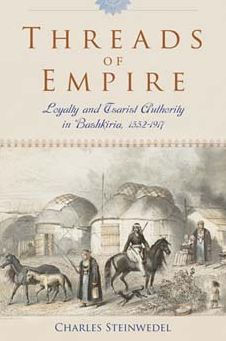
Threads of Empire: Loyalty and Tsarist Authority Bashkiria, 1552-1917 in Bloomington, MN
Current price: $22.00

Threads of Empire: Loyalty and Tsarist Authority Bashkiria, 1552-1917 in Bloomington, MN
Current price: $22.00
Loading Inventory...
Size: Hardcover
Threads of Empire
examines how Russia's imperial officials and intellectual elites made and maintained their authority among the changing intellectual and political currents in Eurasia from the mid-16th century to the revolution of 1917. The book focuses on a region 750 miles east of Moscow known as Bashkiria. The region was split nearly evenly between Russian and Turkic language speakers, both nomads and farmers. Ufa province at Bashkiria's core had the largest Muslim population of any province in the empire. The empire's leading Muslim official, the mufti, was based there, but the region also hosted a Russian Orthodox bishop. Bashkirs and peasants had different legal status, and powerful Russian Orthodox and Muslim nobles dominated the peasant estate. By the 20th century, industrial mining and rail commerce gave rise to a class structure of workers and managers. Bashkiria thus presents a fascinating case study of empire in all its complexities and of how the tsarist empire's ideology and categories of rule changed over time.
examines how Russia's imperial officials and intellectual elites made and maintained their authority among the changing intellectual and political currents in Eurasia from the mid-16th century to the revolution of 1917. The book focuses on a region 750 miles east of Moscow known as Bashkiria. The region was split nearly evenly between Russian and Turkic language speakers, both nomads and farmers. Ufa province at Bashkiria's core had the largest Muslim population of any province in the empire. The empire's leading Muslim official, the mufti, was based there, but the region also hosted a Russian Orthodox bishop. Bashkirs and peasants had different legal status, and powerful Russian Orthodox and Muslim nobles dominated the peasant estate. By the 20th century, industrial mining and rail commerce gave rise to a class structure of workers and managers. Bashkiria thus presents a fascinating case study of empire in all its complexities and of how the tsarist empire's ideology and categories of rule changed over time.
Threads of Empire
examines how Russia's imperial officials and intellectual elites made and maintained their authority among the changing intellectual and political currents in Eurasia from the mid-16th century to the revolution of 1917. The book focuses on a region 750 miles east of Moscow known as Bashkiria. The region was split nearly evenly between Russian and Turkic language speakers, both nomads and farmers. Ufa province at Bashkiria's core had the largest Muslim population of any province in the empire. The empire's leading Muslim official, the mufti, was based there, but the region also hosted a Russian Orthodox bishop. Bashkirs and peasants had different legal status, and powerful Russian Orthodox and Muslim nobles dominated the peasant estate. By the 20th century, industrial mining and rail commerce gave rise to a class structure of workers and managers. Bashkiria thus presents a fascinating case study of empire in all its complexities and of how the tsarist empire's ideology and categories of rule changed over time.
examines how Russia's imperial officials and intellectual elites made and maintained their authority among the changing intellectual and political currents in Eurasia from the mid-16th century to the revolution of 1917. The book focuses on a region 750 miles east of Moscow known as Bashkiria. The region was split nearly evenly between Russian and Turkic language speakers, both nomads and farmers. Ufa province at Bashkiria's core had the largest Muslim population of any province in the empire. The empire's leading Muslim official, the mufti, was based there, but the region also hosted a Russian Orthodox bishop. Bashkirs and peasants had different legal status, and powerful Russian Orthodox and Muslim nobles dominated the peasant estate. By the 20th century, industrial mining and rail commerce gave rise to a class structure of workers and managers. Bashkiria thus presents a fascinating case study of empire in all its complexities and of how the tsarist empire's ideology and categories of rule changed over time.
Shop Similar Products












Find at Mall of America® in Bloomington, MN
Visit at Mall of America® in Bloomington, MN