


Home
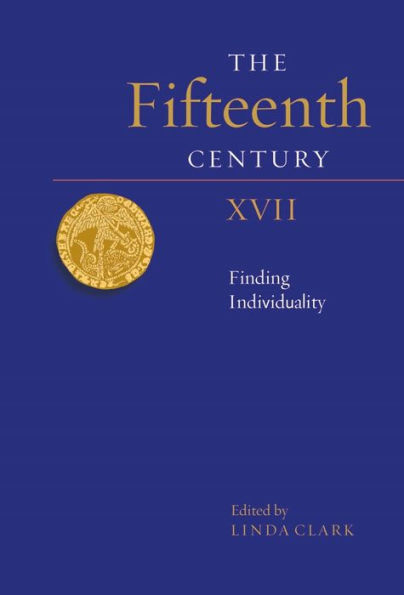
The Fifteenth Century XVII: Finding Individuality
Barnes and Noble
Loading Inventory...
The Fifteenth Century XVII: Finding Individuality in Bloomington, MN
Current price: $95.00

The Fifteenth Century XVII: Finding Individuality in Bloomington, MN
Current price: $95.00
Loading Inventory...
Size: OS
This series [pushes] the boundaries of knowledge and [develops] new trends in approach and understanding. ENGLISH HISTORICAL REVIEW
The essays collected here cast light on the factors that made or defined an individual, and the ways in which the men and women concerned gave expression to their individuality. Facets of the characters of English kings emerge from the varying contents of their wills, and the use of propaganda in their personal letters. By contrast, Margaret of Anjou's early years are explored for the roots of her conduct as queen consort, and how she matched up to contemporary expectations following Henry VI's mental collapse. The law courts and the legal profession provide the stage and cast for several papers: individual lawyers, of dubious integrity and adept at manipulating legal processes intheir own interests, provoked the violence that led to their own deaths, while a member of the same profession is shown to have orchestrated civic riots in which he and his neighbours sought to give expression to their own statusas they perceived it. Finally, in their frustrated search for justice, strongminded women asserted their individual rights by taking their grievances to Henry VII's star chamber.
Contributors: Chris GivenWilson, Anthony Gross, David Grummitt, Samuel Lane, Simon Payling, Alice Raw, Anne F. Sutton, Deborah Youngs.
The essays collected here cast light on the factors that made or defined an individual, and the ways in which the men and women concerned gave expression to their individuality. Facets of the characters of English kings emerge from the varying contents of their wills, and the use of propaganda in their personal letters. By contrast, Margaret of Anjou's early years are explored for the roots of her conduct as queen consort, and how she matched up to contemporary expectations following Henry VI's mental collapse. The law courts and the legal profession provide the stage and cast for several papers: individual lawyers, of dubious integrity and adept at manipulating legal processes intheir own interests, provoked the violence that led to their own deaths, while a member of the same profession is shown to have orchestrated civic riots in which he and his neighbours sought to give expression to their own statusas they perceived it. Finally, in their frustrated search for justice, strongminded women asserted their individual rights by taking their grievances to Henry VII's star chamber.
Contributors: Chris GivenWilson, Anthony Gross, David Grummitt, Samuel Lane, Simon Payling, Alice Raw, Anne F. Sutton, Deborah Youngs.
This series [pushes] the boundaries of knowledge and [develops] new trends in approach and understanding. ENGLISH HISTORICAL REVIEW
The essays collected here cast light on the factors that made or defined an individual, and the ways in which the men and women concerned gave expression to their individuality. Facets of the characters of English kings emerge from the varying contents of their wills, and the use of propaganda in their personal letters. By contrast, Margaret of Anjou's early years are explored for the roots of her conduct as queen consort, and how she matched up to contemporary expectations following Henry VI's mental collapse. The law courts and the legal profession provide the stage and cast for several papers: individual lawyers, of dubious integrity and adept at manipulating legal processes intheir own interests, provoked the violence that led to their own deaths, while a member of the same profession is shown to have orchestrated civic riots in which he and his neighbours sought to give expression to their own statusas they perceived it. Finally, in their frustrated search for justice, strongminded women asserted their individual rights by taking their grievances to Henry VII's star chamber.
Contributors: Chris GivenWilson, Anthony Gross, David Grummitt, Samuel Lane, Simon Payling, Alice Raw, Anne F. Sutton, Deborah Youngs.
The essays collected here cast light on the factors that made or defined an individual, and the ways in which the men and women concerned gave expression to their individuality. Facets of the characters of English kings emerge from the varying contents of their wills, and the use of propaganda in their personal letters. By contrast, Margaret of Anjou's early years are explored for the roots of her conduct as queen consort, and how she matched up to contemporary expectations following Henry VI's mental collapse. The law courts and the legal profession provide the stage and cast for several papers: individual lawyers, of dubious integrity and adept at manipulating legal processes intheir own interests, provoked the violence that led to their own deaths, while a member of the same profession is shown to have orchestrated civic riots in which he and his neighbours sought to give expression to their own statusas they perceived it. Finally, in their frustrated search for justice, strongminded women asserted their individual rights by taking their grievances to Henry VII's star chamber.
Contributors: Chris GivenWilson, Anthony Gross, David Grummitt, Samuel Lane, Simon Payling, Alice Raw, Anne F. Sutton, Deborah Youngs.
Shop Similar Products











Find at Mall of America® in Bloomington, MN
Visit at Mall of America® in Bloomington, MN