


Home
The Ego and His Own: A Masterpiece on Western Philosophy
Barnes and Noble
Loading Inventory...
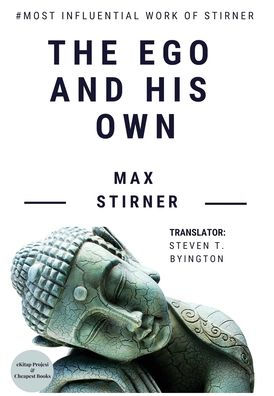
The Ego and His Own: A Masterpiece on Western Philosophy in Bloomington, MN
Current price: $28.99

The Ego and His Own: A Masterpiece on Western Philosophy in Bloomington, MN
Current price: $28.99
Loading Inventory...
Size: Hardcover
The Ego and Its Own
is an 1844 work by German philosopher Max Stirner. It presents a radically nominalist and individualist critique of, on the one hand, Christianity, nationalism and traditional morality, and on the other, humanism, utilitarianism, liberalism and much of the then-burgeoning socialist movement, advocating instead an amoral (although importantly not inherently immoral or antisocial) egoism.
Stirner believed that there was no objective social reality independent of the individual; social classes, the state, the masses, and humanity are abstractions and therefore need not be considered seriously. He wrote of a finite, empirical ego, which he saw as the motive force of every human action. Writing chiefly for working-class readers, he taught that all persons are capable of the self-awareness that would make them “egoists,” or true individuals.
Max Stirner
in his book
The Ego and His Own
(1845) recommended, instead of social reform, a ruthless individualism that should seek satisfaction by any means and at whatever risk. A small group of other individualists.
is an 1844 work by German philosopher Max Stirner. It presents a radically nominalist and individualist critique of, on the one hand, Christianity, nationalism and traditional morality, and on the other, humanism, utilitarianism, liberalism and much of the then-burgeoning socialist movement, advocating instead an amoral (although importantly not inherently immoral or antisocial) egoism.
Stirner believed that there was no objective social reality independent of the individual; social classes, the state, the masses, and humanity are abstractions and therefore need not be considered seriously. He wrote of a finite, empirical ego, which he saw as the motive force of every human action. Writing chiefly for working-class readers, he taught that all persons are capable of the self-awareness that would make them “egoists,” or true individuals.
Max Stirner
in his book
The Ego and His Own
(1845) recommended, instead of social reform, a ruthless individualism that should seek satisfaction by any means and at whatever risk. A small group of other individualists.
The Ego and Its Own
is an 1844 work by German philosopher Max Stirner. It presents a radically nominalist and individualist critique of, on the one hand, Christianity, nationalism and traditional morality, and on the other, humanism, utilitarianism, liberalism and much of the then-burgeoning socialist movement, advocating instead an amoral (although importantly not inherently immoral or antisocial) egoism.
Stirner believed that there was no objective social reality independent of the individual; social classes, the state, the masses, and humanity are abstractions and therefore need not be considered seriously. He wrote of a finite, empirical ego, which he saw as the motive force of every human action. Writing chiefly for working-class readers, he taught that all persons are capable of the self-awareness that would make them “egoists,” or true individuals.
Max Stirner
in his book
The Ego and His Own
(1845) recommended, instead of social reform, a ruthless individualism that should seek satisfaction by any means and at whatever risk. A small group of other individualists.
is an 1844 work by German philosopher Max Stirner. It presents a radically nominalist and individualist critique of, on the one hand, Christianity, nationalism and traditional morality, and on the other, humanism, utilitarianism, liberalism and much of the then-burgeoning socialist movement, advocating instead an amoral (although importantly not inherently immoral or antisocial) egoism.
Stirner believed that there was no objective social reality independent of the individual; social classes, the state, the masses, and humanity are abstractions and therefore need not be considered seriously. He wrote of a finite, empirical ego, which he saw as the motive force of every human action. Writing chiefly for working-class readers, he taught that all persons are capable of the self-awareness that would make them “egoists,” or true individuals.
Max Stirner
in his book
The Ego and His Own
(1845) recommended, instead of social reform, a ruthless individualism that should seek satisfaction by any means and at whatever risk. A small group of other individualists.
Shop Similar Products














Find at Mall of America® in Bloomington, MN
Visit at Mall of America® in Bloomington, MN