


Home
The British Adventure Hero: Industrial Gentlemanliness Text and Image, 1870-1914
Barnes and Noble
Loading Inventory...
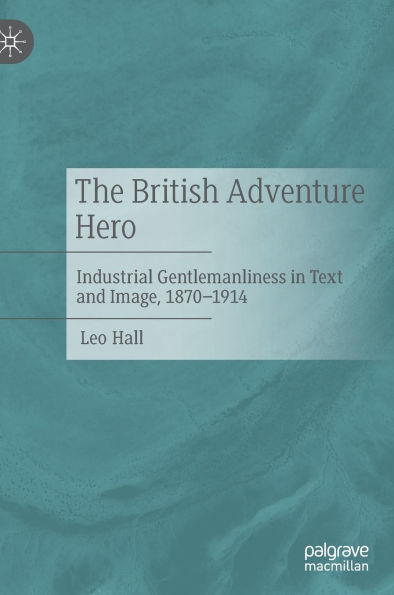
The British Adventure Hero: Industrial Gentlemanliness Text and Image, 1870-1914 in Bloomington, MN
Current price: $159.99

The British Adventure Hero: Industrial Gentlemanliness Text and Image, 1870-1914 in Bloomington, MN
Current price: $159.99
Loading Inventory...
Size: Hardcover
This book explores the construction of the fin-de-siècle adventure hero: set against a romanticised vision of the past and a nostalgic ideal of gentlemanliness, but also forward-looking in terms of forging a future for Britain through the imperialist dream. The British Adventure Hero offers a unique focus on how the adventure hero’s masculinity is shaped by Victorian industrial, technological, and scientific developments, which influenced concepts of national identity both psychologically and physiologically. Central to exploring the relationship between the adventure hero and industrialisation are the original illustrations that were printed with the stories in periodicals and the first illustrated editions. This approach to studying the partnership between both text and illustrations demonstrates that the adventure story is a paradox: an outcome of invention, scientific, technological and industrial progress, yet also a supposed escape from nineteenth-century industrial modernity. The book traces this context through analysis of Robert Louis Stevenson’s Treasure Island (1883), Arthur Conan Doyle’s The Lost World (1912), Jules Verne’s Around the World in Eighty Days (1873), and Edgar Rice Burroughs’s Tarzan of the Apes (1912). Significantly, the book also examines how these authors’ perspectives on the idealised English identities of their heroes are informed by their Scottish, French, and American nationalities.
This book explores the construction of the fin-de-siècle adventure hero: set against a romanticised vision of the past and a nostalgic ideal of gentlemanliness, but also forward-looking in terms of forging a future for Britain through the imperialist dream. The British Adventure Hero offers a unique focus on how the adventure hero’s masculinity is shaped by Victorian industrial, technological, and scientific developments, which influenced concepts of national identity both psychologically and physiologically. Central to exploring the relationship between the adventure hero and industrialisation are the original illustrations that were printed with the stories in periodicals and the first illustrated editions. This approach to studying the partnership between both text and illustrations demonstrates that the adventure story is a paradox: an outcome of invention, scientific, technological and industrial progress, yet also a supposed escape from nineteenth-century industrial modernity. The book traces this context through analysis of Robert Louis Stevenson’s Treasure Island (1883), Arthur Conan Doyle’s The Lost World (1912), Jules Verne’s Around the World in Eighty Days (1873), and Edgar Rice Burroughs’s Tarzan of the Apes (1912). Significantly, the book also examines how these authors’ perspectives on the idealised English identities of their heroes are informed by their Scottish, French, and American nationalities.
Shop Similar Products












Find at Mall of America® in Bloomington, MN
Visit at Mall of America® in Bloomington, MN