


Home
Stories of Tonality the Age François-Joseph Fétis
Barnes and Noble
Loading Inventory...
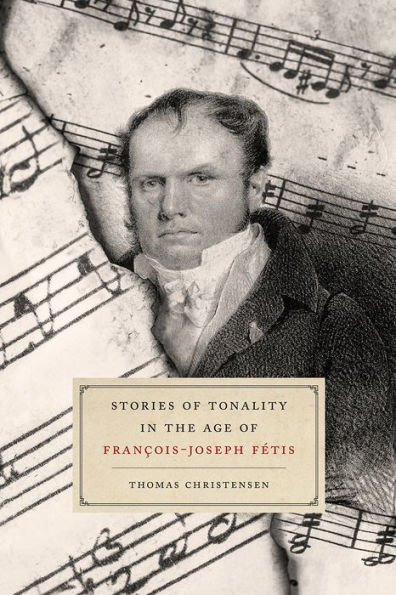
Stories of Tonality the Age François-Joseph Fétis in Bloomington, MN
Current price: $59.00

Stories of Tonality the Age François-Joseph Fétis in Bloomington, MN
Current price: $59.00
Loading Inventory...
Size: Hardcover
Stories of Tonality in the Age of François-Joseph Fétis
explores the concept of musical tonality through the writings of the Belgian musicologist François-Joseph Fétis (1784-1867), who was singularly responsible for theorizing and popularizing the term in the nineteenth century. Thomas Christensen weaves a rich story in which tonality emerges as a theoretical construct born of anxiety and alterity for Europeans during this time as they learned more about “other” musics and alternative tonal systems. Tonality became a central vortex in which French musicians thoughtand arguedabout a variety of musical repertoires, be they contemporary European musics of the stage, concert hall, or church, folk songs from the provinces, microtonal scale systems of Arabic and Indian music, or the medieval and Renaissance music whose notational traces were just beginning to be deciphered by scholars. Fétis’s influential writings offer insight into how tonality ingrained itself within nineteenth-century music discourse, and why it has continued to resonate with uncanny prescience throughout the musical upheavals of the twentieth and twenty-first centuries.
explores the concept of musical tonality through the writings of the Belgian musicologist François-Joseph Fétis (1784-1867), who was singularly responsible for theorizing and popularizing the term in the nineteenth century. Thomas Christensen weaves a rich story in which tonality emerges as a theoretical construct born of anxiety and alterity for Europeans during this time as they learned more about “other” musics and alternative tonal systems. Tonality became a central vortex in which French musicians thoughtand arguedabout a variety of musical repertoires, be they contemporary European musics of the stage, concert hall, or church, folk songs from the provinces, microtonal scale systems of Arabic and Indian music, or the medieval and Renaissance music whose notational traces were just beginning to be deciphered by scholars. Fétis’s influential writings offer insight into how tonality ingrained itself within nineteenth-century music discourse, and why it has continued to resonate with uncanny prescience throughout the musical upheavals of the twentieth and twenty-first centuries.
Stories of Tonality in the Age of François-Joseph Fétis
explores the concept of musical tonality through the writings of the Belgian musicologist François-Joseph Fétis (1784-1867), who was singularly responsible for theorizing and popularizing the term in the nineteenth century. Thomas Christensen weaves a rich story in which tonality emerges as a theoretical construct born of anxiety and alterity for Europeans during this time as they learned more about “other” musics and alternative tonal systems. Tonality became a central vortex in which French musicians thoughtand arguedabout a variety of musical repertoires, be they contemporary European musics of the stage, concert hall, or church, folk songs from the provinces, microtonal scale systems of Arabic and Indian music, or the medieval and Renaissance music whose notational traces were just beginning to be deciphered by scholars. Fétis’s influential writings offer insight into how tonality ingrained itself within nineteenth-century music discourse, and why it has continued to resonate with uncanny prescience throughout the musical upheavals of the twentieth and twenty-first centuries.
explores the concept of musical tonality through the writings of the Belgian musicologist François-Joseph Fétis (1784-1867), who was singularly responsible for theorizing and popularizing the term in the nineteenth century. Thomas Christensen weaves a rich story in which tonality emerges as a theoretical construct born of anxiety and alterity for Europeans during this time as they learned more about “other” musics and alternative tonal systems. Tonality became a central vortex in which French musicians thoughtand arguedabout a variety of musical repertoires, be they contemporary European musics of the stage, concert hall, or church, folk songs from the provinces, microtonal scale systems of Arabic and Indian music, or the medieval and Renaissance music whose notational traces were just beginning to be deciphered by scholars. Fétis’s influential writings offer insight into how tonality ingrained itself within nineteenth-century music discourse, and why it has continued to resonate with uncanny prescience throughout the musical upheavals of the twentieth and twenty-first centuries.
Shop Similar Products
















Find at Mall of America® in Bloomington, MN
Visit at Mall of America® in Bloomington, MN