


Home
St. Peter Street Strutters
Barnes and Noble
Loading Inventory...
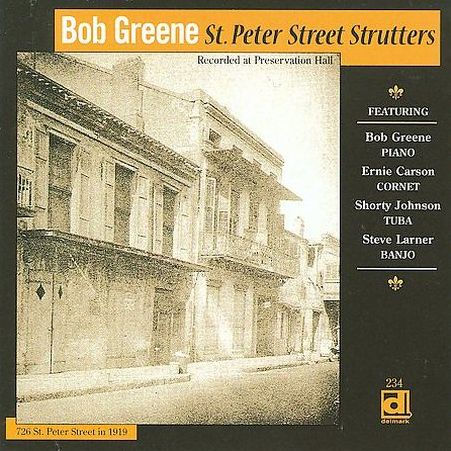
St. Peter Street Strutters in Bloomington, MN
Current price: $16.99

St. Peter Street Strutters in Bloomington, MN
Current price: $16.99
Loading Inventory...
Size: OS
A group formed upon the suggestion of
Preservation Hall Jazz Band
founding father, the now late
Allan Jaffe
, the
St. Peter Street Strutters
made this recording in late December of 1964, at a time when vintage jazz was not necessarily very high on the radar. Over the years, the music has held its ground among more modern styles, but not in the stripped-down small combo format used here. New York born pianist
Bob Greene
is steeped in the tradition of
Jelly Roll Morton
, playing saloon and parlor-type early jazz with the tantalizing spirit and joy the music has always displayed. He's helped by South Dakota native, tuba player
Hal "Shorty" Johnson
(formerly with
Turk Murphy
) and the lead cornet of Portland, OR's
Ernie Carson
(ex-
Murphy
,
Ray Bauduc
Castle Jazz Band
) for a session documented in the legendary New Orleans landmark
Preservation Hall
, where they all met. Banjo player
Steve Larner
was a professional cameraman before taking up the invite to sit in with this band, one of few trios or quartets in the latter history of authentic, original jazz. This CD version also contains five previously unissued tracks that were not available to be placed on the original vinyl LP. You expect and receive typical hot jazz jam treatments of
Morton
's
"Kansas City Stomp"
and
King Oliver
"Dr. Jazz,"
the good-time
evergreen
"The Pearls,"
and the midtempo
Oliver
number
"Snake Rag"
featuring a strutting
Larner
, all standouts. Where
Carson
's cornet is most conspicuous and delightful apart from any comparisons with
Louis Armstrong
is evident on
"Winin' Boy Blues"
alongside
Greene
's lilting piano, or during the typical take of
"Just a Closer Walk with Thee."
"Wolverine Blues"
is the definitive song of the six compositions played by the group as penned by
, a solid swinging classic that the band plays as if they'd done so all their lives.
's propensity for sounding like a pub pianist probably has to do with the upright piano at
, but also with his approach in making it sing, jingle, and jangle. It should also be noted that
strapped a single drum stick to his foot to add percussive effects in lieu of having no drummer. His bluesy playing on
"After You've Gone,"
the way he muses through
"Sweet Substitute,"
or his simple, barebones phrasings for the bookend tracks
"St. Peter Street Strut"
or
W.C. Handy
"Atlanta Blues"
suggest he's able to mold the sound of the instrument via his personal tastes.
Johnson
's supportive tuba is not all oom-pah-pah, but much more substantive rhythmically, in a muscular fashion for most of the tunes, rambling up and away for the pure Dixieland, longer jam
"Angry."
A most startling rendition of the old chestnut
"Tiger Rag"
has
sounding trapped in a crystal-clear music box, with dainty, tinkling piano notes streaming forth in a purposefully stiff manner before he and
rip into the well-worn, neighborhood cakewalking melody. The recording quality of this original analog tape has held up, and is good within digital transfer conditions. After almost 50 years, the bandmembers -- who at the time are all still living -- can be proud of this one-shot post-Christmas/pre-New Year's Eve document they made in the Crescent City before returning to their respective homes. It's one that fans of this music will definitely want. ~ Michael G. Nastos
Preservation Hall Jazz Band
founding father, the now late
Allan Jaffe
, the
St. Peter Street Strutters
made this recording in late December of 1964, at a time when vintage jazz was not necessarily very high on the radar. Over the years, the music has held its ground among more modern styles, but not in the stripped-down small combo format used here. New York born pianist
Bob Greene
is steeped in the tradition of
Jelly Roll Morton
, playing saloon and parlor-type early jazz with the tantalizing spirit and joy the music has always displayed. He's helped by South Dakota native, tuba player
Hal "Shorty" Johnson
(formerly with
Turk Murphy
) and the lead cornet of Portland, OR's
Ernie Carson
(ex-
Murphy
,
Ray Bauduc
Castle Jazz Band
) for a session documented in the legendary New Orleans landmark
Preservation Hall
, where they all met. Banjo player
Steve Larner
was a professional cameraman before taking up the invite to sit in with this band, one of few trios or quartets in the latter history of authentic, original jazz. This CD version also contains five previously unissued tracks that were not available to be placed on the original vinyl LP. You expect and receive typical hot jazz jam treatments of
Morton
's
"Kansas City Stomp"
and
King Oliver
"Dr. Jazz,"
the good-time
evergreen
"The Pearls,"
and the midtempo
Oliver
number
"Snake Rag"
featuring a strutting
Larner
, all standouts. Where
Carson
's cornet is most conspicuous and delightful apart from any comparisons with
Louis Armstrong
is evident on
"Winin' Boy Blues"
alongside
Greene
's lilting piano, or during the typical take of
"Just a Closer Walk with Thee."
"Wolverine Blues"
is the definitive song of the six compositions played by the group as penned by
, a solid swinging classic that the band plays as if they'd done so all their lives.
's propensity for sounding like a pub pianist probably has to do with the upright piano at
, but also with his approach in making it sing, jingle, and jangle. It should also be noted that
strapped a single drum stick to his foot to add percussive effects in lieu of having no drummer. His bluesy playing on
"After You've Gone,"
the way he muses through
"Sweet Substitute,"
or his simple, barebones phrasings for the bookend tracks
"St. Peter Street Strut"
or
W.C. Handy
"Atlanta Blues"
suggest he's able to mold the sound of the instrument via his personal tastes.
Johnson
's supportive tuba is not all oom-pah-pah, but much more substantive rhythmically, in a muscular fashion for most of the tunes, rambling up and away for the pure Dixieland, longer jam
"Angry."
A most startling rendition of the old chestnut
"Tiger Rag"
has
sounding trapped in a crystal-clear music box, with dainty, tinkling piano notes streaming forth in a purposefully stiff manner before he and
rip into the well-worn, neighborhood cakewalking melody. The recording quality of this original analog tape has held up, and is good within digital transfer conditions. After almost 50 years, the bandmembers -- who at the time are all still living -- can be proud of this one-shot post-Christmas/pre-New Year's Eve document they made in the Crescent City before returning to their respective homes. It's one that fans of this music will definitely want. ~ Michael G. Nastos
A group formed upon the suggestion of
Preservation Hall Jazz Band
founding father, the now late
Allan Jaffe
, the
St. Peter Street Strutters
made this recording in late December of 1964, at a time when vintage jazz was not necessarily very high on the radar. Over the years, the music has held its ground among more modern styles, but not in the stripped-down small combo format used here. New York born pianist
Bob Greene
is steeped in the tradition of
Jelly Roll Morton
, playing saloon and parlor-type early jazz with the tantalizing spirit and joy the music has always displayed. He's helped by South Dakota native, tuba player
Hal "Shorty" Johnson
(formerly with
Turk Murphy
) and the lead cornet of Portland, OR's
Ernie Carson
(ex-
Murphy
,
Ray Bauduc
Castle Jazz Band
) for a session documented in the legendary New Orleans landmark
Preservation Hall
, where they all met. Banjo player
Steve Larner
was a professional cameraman before taking up the invite to sit in with this band, one of few trios or quartets in the latter history of authentic, original jazz. This CD version also contains five previously unissued tracks that were not available to be placed on the original vinyl LP. You expect and receive typical hot jazz jam treatments of
Morton
's
"Kansas City Stomp"
and
King Oliver
"Dr. Jazz,"
the good-time
evergreen
"The Pearls,"
and the midtempo
Oliver
number
"Snake Rag"
featuring a strutting
Larner
, all standouts. Where
Carson
's cornet is most conspicuous and delightful apart from any comparisons with
Louis Armstrong
is evident on
"Winin' Boy Blues"
alongside
Greene
's lilting piano, or during the typical take of
"Just a Closer Walk with Thee."
"Wolverine Blues"
is the definitive song of the six compositions played by the group as penned by
, a solid swinging classic that the band plays as if they'd done so all their lives.
's propensity for sounding like a pub pianist probably has to do with the upright piano at
, but also with his approach in making it sing, jingle, and jangle. It should also be noted that
strapped a single drum stick to his foot to add percussive effects in lieu of having no drummer. His bluesy playing on
"After You've Gone,"
the way he muses through
"Sweet Substitute,"
or his simple, barebones phrasings for the bookend tracks
"St. Peter Street Strut"
or
W.C. Handy
"Atlanta Blues"
suggest he's able to mold the sound of the instrument via his personal tastes.
Johnson
's supportive tuba is not all oom-pah-pah, but much more substantive rhythmically, in a muscular fashion for most of the tunes, rambling up and away for the pure Dixieland, longer jam
"Angry."
A most startling rendition of the old chestnut
"Tiger Rag"
has
sounding trapped in a crystal-clear music box, with dainty, tinkling piano notes streaming forth in a purposefully stiff manner before he and
rip into the well-worn, neighborhood cakewalking melody. The recording quality of this original analog tape has held up, and is good within digital transfer conditions. After almost 50 years, the bandmembers -- who at the time are all still living -- can be proud of this one-shot post-Christmas/pre-New Year's Eve document they made in the Crescent City before returning to their respective homes. It's one that fans of this music will definitely want. ~ Michael G. Nastos
Preservation Hall Jazz Band
founding father, the now late
Allan Jaffe
, the
St. Peter Street Strutters
made this recording in late December of 1964, at a time when vintage jazz was not necessarily very high on the radar. Over the years, the music has held its ground among more modern styles, but not in the stripped-down small combo format used here. New York born pianist
Bob Greene
is steeped in the tradition of
Jelly Roll Morton
, playing saloon and parlor-type early jazz with the tantalizing spirit and joy the music has always displayed. He's helped by South Dakota native, tuba player
Hal "Shorty" Johnson
(formerly with
Turk Murphy
) and the lead cornet of Portland, OR's
Ernie Carson
(ex-
Murphy
,
Ray Bauduc
Castle Jazz Band
) for a session documented in the legendary New Orleans landmark
Preservation Hall
, where they all met. Banjo player
Steve Larner
was a professional cameraman before taking up the invite to sit in with this band, one of few trios or quartets in the latter history of authentic, original jazz. This CD version also contains five previously unissued tracks that were not available to be placed on the original vinyl LP. You expect and receive typical hot jazz jam treatments of
Morton
's
"Kansas City Stomp"
and
King Oliver
"Dr. Jazz,"
the good-time
evergreen
"The Pearls,"
and the midtempo
Oliver
number
"Snake Rag"
featuring a strutting
Larner
, all standouts. Where
Carson
's cornet is most conspicuous and delightful apart from any comparisons with
Louis Armstrong
is evident on
"Winin' Boy Blues"
alongside
Greene
's lilting piano, or during the typical take of
"Just a Closer Walk with Thee."
"Wolverine Blues"
is the definitive song of the six compositions played by the group as penned by
, a solid swinging classic that the band plays as if they'd done so all their lives.
's propensity for sounding like a pub pianist probably has to do with the upright piano at
, but also with his approach in making it sing, jingle, and jangle. It should also be noted that
strapped a single drum stick to his foot to add percussive effects in lieu of having no drummer. His bluesy playing on
"After You've Gone,"
the way he muses through
"Sweet Substitute,"
or his simple, barebones phrasings for the bookend tracks
"St. Peter Street Strut"
or
W.C. Handy
"Atlanta Blues"
suggest he's able to mold the sound of the instrument via his personal tastes.
Johnson
's supportive tuba is not all oom-pah-pah, but much more substantive rhythmically, in a muscular fashion for most of the tunes, rambling up and away for the pure Dixieland, longer jam
"Angry."
A most startling rendition of the old chestnut
"Tiger Rag"
has
sounding trapped in a crystal-clear music box, with dainty, tinkling piano notes streaming forth in a purposefully stiff manner before he and
rip into the well-worn, neighborhood cakewalking melody. The recording quality of this original analog tape has held up, and is good within digital transfer conditions. After almost 50 years, the bandmembers -- who at the time are all still living -- can be proud of this one-shot post-Christmas/pre-New Year's Eve document they made in the Crescent City before returning to their respective homes. It's one that fans of this music will definitely want. ~ Michael G. Nastos
Shop Similar Products













Find at Mall of America® in Bloomington, MN
Visit at Mall of America® in Bloomington, MN