


Home
Science and Religion Mamluk Egypt: Ibn al-Nafis, Pulmonary Transit Bodily Resurrection
Barnes and Noble
Loading Inventory...
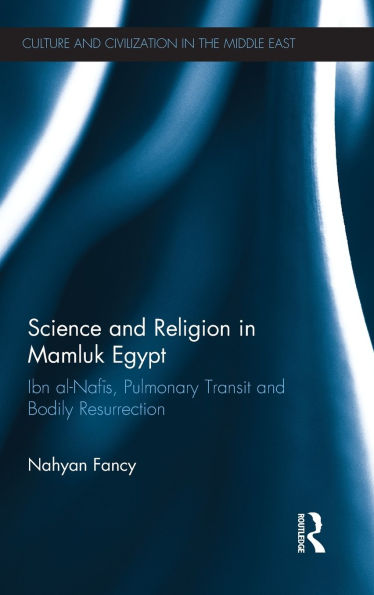
Science and Religion Mamluk Egypt: Ibn al-Nafis, Pulmonary Transit Bodily Resurrection in Bloomington, MN
Current price: $200.00

Science and Religion Mamluk Egypt: Ibn al-Nafis, Pulmonary Transit Bodily Resurrection in Bloomington, MN
Current price: $200.00
Loading Inventory...
Size: Hardcover
The discovery of the pulmonary transit of blood was a ground-breaking discovery in the history of the life sciences, and a prerequisite for William Harvey’s fully developed theory of blood circulation three centuries later. This book is the first attempt at understanding Ibn al-Nafīs’s anatomical discovery from within the medical and theological works of this thirteenth century physician-jurist, and his broader social, religious and intellectual contexts.
Although Ibn al-Nafīs did not posit a theory of blood circulation, he nevertheless challenged the reigning Galenic and Avicennian physiological theories, and the then prevailing anatomical understandings of the heart. Far from being a happy guess, Ibn al-Nafīs’s anatomical result is rooted in an extensive re-evaluation of the reigning medical theories. Moreover, this book shows that Ibn al-Nafīs’s re-evaluation is itself a result of his engagement with post-Avicennian debates on the relationship between reason and revelation, and the rationality of traditionalist beliefs, such as bodily resurrection.
Breaking new ground by showing how medicine, philosophy and theology were intertwined in the intellectual fabric of pre-modern Islamic societies,
Science and Religion in Mamluk Egypt
will be of interest to students and scholars of the History of Science, the History of Medicine and Islamic Studies.
Although Ibn al-Nafīs did not posit a theory of blood circulation, he nevertheless challenged the reigning Galenic and Avicennian physiological theories, and the then prevailing anatomical understandings of the heart. Far from being a happy guess, Ibn al-Nafīs’s anatomical result is rooted in an extensive re-evaluation of the reigning medical theories. Moreover, this book shows that Ibn al-Nafīs’s re-evaluation is itself a result of his engagement with post-Avicennian debates on the relationship between reason and revelation, and the rationality of traditionalist beliefs, such as bodily resurrection.
Breaking new ground by showing how medicine, philosophy and theology were intertwined in the intellectual fabric of pre-modern Islamic societies,
Science and Religion in Mamluk Egypt
will be of interest to students and scholars of the History of Science, the History of Medicine and Islamic Studies.
The discovery of the pulmonary transit of blood was a ground-breaking discovery in the history of the life sciences, and a prerequisite for William Harvey’s fully developed theory of blood circulation three centuries later. This book is the first attempt at understanding Ibn al-Nafīs’s anatomical discovery from within the medical and theological works of this thirteenth century physician-jurist, and his broader social, religious and intellectual contexts.
Although Ibn al-Nafīs did not posit a theory of blood circulation, he nevertheless challenged the reigning Galenic and Avicennian physiological theories, and the then prevailing anatomical understandings of the heart. Far from being a happy guess, Ibn al-Nafīs’s anatomical result is rooted in an extensive re-evaluation of the reigning medical theories. Moreover, this book shows that Ibn al-Nafīs’s re-evaluation is itself a result of his engagement with post-Avicennian debates on the relationship between reason and revelation, and the rationality of traditionalist beliefs, such as bodily resurrection.
Breaking new ground by showing how medicine, philosophy and theology were intertwined in the intellectual fabric of pre-modern Islamic societies,
Science and Religion in Mamluk Egypt
will be of interest to students and scholars of the History of Science, the History of Medicine and Islamic Studies.
Although Ibn al-Nafīs did not posit a theory of blood circulation, he nevertheless challenged the reigning Galenic and Avicennian physiological theories, and the then prevailing anatomical understandings of the heart. Far from being a happy guess, Ibn al-Nafīs’s anatomical result is rooted in an extensive re-evaluation of the reigning medical theories. Moreover, this book shows that Ibn al-Nafīs’s re-evaluation is itself a result of his engagement with post-Avicennian debates on the relationship between reason and revelation, and the rationality of traditionalist beliefs, such as bodily resurrection.
Breaking new ground by showing how medicine, philosophy and theology were intertwined in the intellectual fabric of pre-modern Islamic societies,
Science and Religion in Mamluk Egypt
will be of interest to students and scholars of the History of Science, the History of Medicine and Islamic Studies.
Shop Similar Products
















Find at Mall of America® in Bloomington, MN
Visit at Mall of America® in Bloomington, MN