


Home
Return to Archive
Barnes and Noble
Loading Inventory...
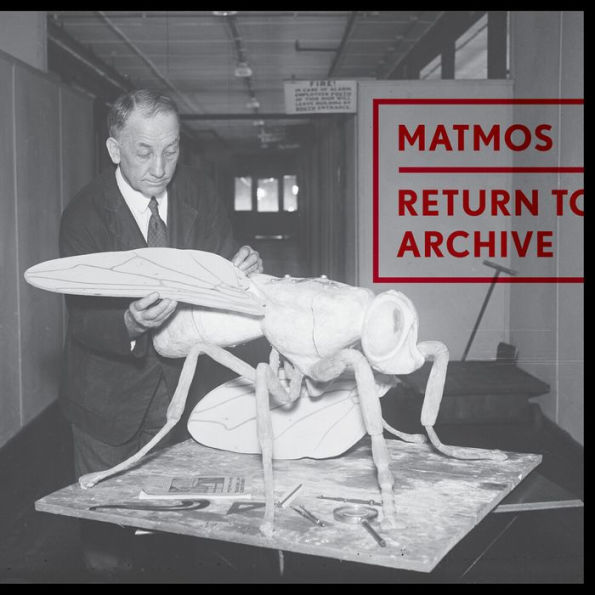
Return to Archive in Bloomington, MN
Current price: $17.99

Return to Archive in Bloomington, MN
Current price: $17.99
Loading Inventory...
Size: CD
By the early 2020s,
Matmos
'
Drew Daniel
and
M.C. Schmidt
had earned such a reputation for their intricate sample collages that they were commissioned to create pieces from the works of renowned composers and institutions. After reassembling the music of Polish composer
Boguslaw Schaeffer
into fantastical new shapes on
Regards/Uklony dla Boguslaw Schaeffer
,
Schmidt
Daniel
helped
Smithsonian Folkways
celebrate the label's 75th anniversary with 2023's
Return to Archive
. Though
Folkways
is famed for its collection of music by artists such as
Woody Guthrie
Lead Belly
, it's also home to non-musical recordings captured in the 1950s and '60s, including Sounds of North American Frogs, Sounds of the Junk Yard, and The Science of Sound. These are the sounds that
piece together, playfully and reverently, on
.
's use of these recordings as the album's only source lets one of the world's greatest sonic archives -- and
' technique -- shine. As on
A Chance to Cut Is a Chance to Cure
Plastic Anniversary
, and
Ultimate Care II
, concentrating on non-musical sources emphasizes the duo's brilliance with rhythms and textures. On "Injection Basic Sound,"
turn the repetition of the titular phrase and the gurgling, squishing, and sputtering tones of air injected into an esophagus into an inviting groove; on the impish prologue "Good Morning Electronics," they seem to condense the entire
catalog into a minute-long celebration of sound itself.
often feels like a collaboration between
and the recordists doggedly capturing the sounds of bottlenose dolphins and the noise the ionosphere makes more than half a century prior. Even when
transform their source material, they remain true to its spirit. When they fuse operatic vocals with screeching ones on the hypnotic "Music or Noise?," the answer to the track's question is "both." With each listen,
reveals more thought-provoking layers and surreal connections. Over a ribbiting rhythm of frog calls, "Why?" lets a child's questions bounce around the stereo field, evoking humankind's innate need to discover and document. On the title track, an announcer discusses frogs while an expansive assembly of sounds made by humans -- engines, chisels, gunshots -- reaches a droning peak echoed by "Mud-Dauber Wasp," an insistently buzzing techno homage to an animal as skilled at repurposing as
themselves. At times,
rivals
when it comes to the more challenging, cerebral side of
' music, but its fascinating reflections on how we build on and reframe the past make for a hip, thoughtful celebration of
' forward-thinking legacy. ~ Heather Phares
Matmos
'
Drew Daniel
and
M.C. Schmidt
had earned such a reputation for their intricate sample collages that they were commissioned to create pieces from the works of renowned composers and institutions. After reassembling the music of Polish composer
Boguslaw Schaeffer
into fantastical new shapes on
Regards/Uklony dla Boguslaw Schaeffer
,
Schmidt
Daniel
helped
Smithsonian Folkways
celebrate the label's 75th anniversary with 2023's
Return to Archive
. Though
Folkways
is famed for its collection of music by artists such as
Woody Guthrie
Lead Belly
, it's also home to non-musical recordings captured in the 1950s and '60s, including Sounds of North American Frogs, Sounds of the Junk Yard, and The Science of Sound. These are the sounds that
piece together, playfully and reverently, on
.
's use of these recordings as the album's only source lets one of the world's greatest sonic archives -- and
' technique -- shine. As on
A Chance to Cut Is a Chance to Cure
Plastic Anniversary
, and
Ultimate Care II
, concentrating on non-musical sources emphasizes the duo's brilliance with rhythms and textures. On "Injection Basic Sound,"
turn the repetition of the titular phrase and the gurgling, squishing, and sputtering tones of air injected into an esophagus into an inviting groove; on the impish prologue "Good Morning Electronics," they seem to condense the entire
catalog into a minute-long celebration of sound itself.
often feels like a collaboration between
and the recordists doggedly capturing the sounds of bottlenose dolphins and the noise the ionosphere makes more than half a century prior. Even when
transform their source material, they remain true to its spirit. When they fuse operatic vocals with screeching ones on the hypnotic "Music or Noise?," the answer to the track's question is "both." With each listen,
reveals more thought-provoking layers and surreal connections. Over a ribbiting rhythm of frog calls, "Why?" lets a child's questions bounce around the stereo field, evoking humankind's innate need to discover and document. On the title track, an announcer discusses frogs while an expansive assembly of sounds made by humans -- engines, chisels, gunshots -- reaches a droning peak echoed by "Mud-Dauber Wasp," an insistently buzzing techno homage to an animal as skilled at repurposing as
themselves. At times,
rivals
when it comes to the more challenging, cerebral side of
' music, but its fascinating reflections on how we build on and reframe the past make for a hip, thoughtful celebration of
' forward-thinking legacy. ~ Heather Phares
By the early 2020s,
Matmos
'
Drew Daniel
and
M.C. Schmidt
had earned such a reputation for their intricate sample collages that they were commissioned to create pieces from the works of renowned composers and institutions. After reassembling the music of Polish composer
Boguslaw Schaeffer
into fantastical new shapes on
Regards/Uklony dla Boguslaw Schaeffer
,
Schmidt
Daniel
helped
Smithsonian Folkways
celebrate the label's 75th anniversary with 2023's
Return to Archive
. Though
Folkways
is famed for its collection of music by artists such as
Woody Guthrie
Lead Belly
, it's also home to non-musical recordings captured in the 1950s and '60s, including Sounds of North American Frogs, Sounds of the Junk Yard, and The Science of Sound. These are the sounds that
piece together, playfully and reverently, on
.
's use of these recordings as the album's only source lets one of the world's greatest sonic archives -- and
' technique -- shine. As on
A Chance to Cut Is a Chance to Cure
Plastic Anniversary
, and
Ultimate Care II
, concentrating on non-musical sources emphasizes the duo's brilliance with rhythms and textures. On "Injection Basic Sound,"
turn the repetition of the titular phrase and the gurgling, squishing, and sputtering tones of air injected into an esophagus into an inviting groove; on the impish prologue "Good Morning Electronics," they seem to condense the entire
catalog into a minute-long celebration of sound itself.
often feels like a collaboration between
and the recordists doggedly capturing the sounds of bottlenose dolphins and the noise the ionosphere makes more than half a century prior. Even when
transform their source material, they remain true to its spirit. When they fuse operatic vocals with screeching ones on the hypnotic "Music or Noise?," the answer to the track's question is "both." With each listen,
reveals more thought-provoking layers and surreal connections. Over a ribbiting rhythm of frog calls, "Why?" lets a child's questions bounce around the stereo field, evoking humankind's innate need to discover and document. On the title track, an announcer discusses frogs while an expansive assembly of sounds made by humans -- engines, chisels, gunshots -- reaches a droning peak echoed by "Mud-Dauber Wasp," an insistently buzzing techno homage to an animal as skilled at repurposing as
themselves. At times,
rivals
when it comes to the more challenging, cerebral side of
' music, but its fascinating reflections on how we build on and reframe the past make for a hip, thoughtful celebration of
' forward-thinking legacy. ~ Heather Phares
Matmos
'
Drew Daniel
and
M.C. Schmidt
had earned such a reputation for their intricate sample collages that they were commissioned to create pieces from the works of renowned composers and institutions. After reassembling the music of Polish composer
Boguslaw Schaeffer
into fantastical new shapes on
Regards/Uklony dla Boguslaw Schaeffer
,
Schmidt
Daniel
helped
Smithsonian Folkways
celebrate the label's 75th anniversary with 2023's
Return to Archive
. Though
Folkways
is famed for its collection of music by artists such as
Woody Guthrie
Lead Belly
, it's also home to non-musical recordings captured in the 1950s and '60s, including Sounds of North American Frogs, Sounds of the Junk Yard, and The Science of Sound. These are the sounds that
piece together, playfully and reverently, on
.
's use of these recordings as the album's only source lets one of the world's greatest sonic archives -- and
' technique -- shine. As on
A Chance to Cut Is a Chance to Cure
Plastic Anniversary
, and
Ultimate Care II
, concentrating on non-musical sources emphasizes the duo's brilliance with rhythms and textures. On "Injection Basic Sound,"
turn the repetition of the titular phrase and the gurgling, squishing, and sputtering tones of air injected into an esophagus into an inviting groove; on the impish prologue "Good Morning Electronics," they seem to condense the entire
catalog into a minute-long celebration of sound itself.
often feels like a collaboration between
and the recordists doggedly capturing the sounds of bottlenose dolphins and the noise the ionosphere makes more than half a century prior. Even when
transform their source material, they remain true to its spirit. When they fuse operatic vocals with screeching ones on the hypnotic "Music or Noise?," the answer to the track's question is "both." With each listen,
reveals more thought-provoking layers and surreal connections. Over a ribbiting rhythm of frog calls, "Why?" lets a child's questions bounce around the stereo field, evoking humankind's innate need to discover and document. On the title track, an announcer discusses frogs while an expansive assembly of sounds made by humans -- engines, chisels, gunshots -- reaches a droning peak echoed by "Mud-Dauber Wasp," an insistently buzzing techno homage to an animal as skilled at repurposing as
themselves. At times,
rivals
when it comes to the more challenging, cerebral side of
' music, but its fascinating reflections on how we build on and reframe the past make for a hip, thoughtful celebration of
' forward-thinking legacy. ~ Heather Phares
Shop Similar Products
















Find at Mall of America® in Bloomington, MN
Visit at Mall of America® in Bloomington, MN