


Home
Rehumanizer
Barnes and Noble
Loading Inventory...
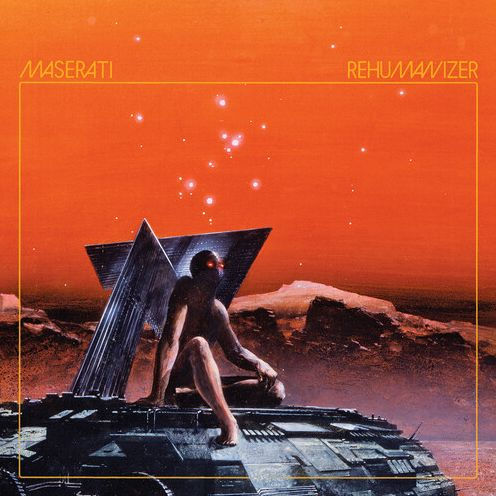
Rehumanizer in Bloomington, MN
Current price: $15.99

Rehumanizer in Bloomington, MN
Current price: $15.99
Loading Inventory...
Size: CD
By the time
Rehumanizer
arrived in 2015, the fusion of post-rock,
John Carpenter
's film music, and space rock -- of which
Maserati
are prime examples -- had been going on long enough that it felt due for a revival (indeed,
Carpenter
also released his first non-score music that year).
's discography is wide and deep enough that they can easily draw on aspects of what they've already done, especially since they were forced to reinvent themselves after drummer
Jerry Fuchs
' death in 2009. Since his passing, the band has focused on their proggier, spacier aspects than their dance leanings, a transition that started with 2012's
Maserati VII
.
travels even farther down that road, its very title hinting at its more organic sound. The album finds
sounding more "rock" than they have in some time, whether on galloping tracks like "Living Cell" or moodier ones such as "Mones Jura," where the grit and muscle remain underneath the gated drums and synth strings. The one song that could truly be called danceable is "End of Man," a vocodered piece of robot rock that makes the way
Matt Cherry
intones "institutional" into an unlikely but undeniable hook. Instead,
's main attractions are its rock epics. "No Cave" is a bold statement of intent, with synth drones and arpeggios that soon give way to ten minutes of expertly structured space rock that let the band be both forceful and subtle; the way that quieter elements, like the delayed guitars that float like vapor trails, hold their own among the towering drums and riffage is fascinating. Taken as a suite, "Rehumanizer I" and "Rehumanizer II" are just as impressive, with the former track cruising along on an unyielding rhythm guitar that acts like an afterburner, while the latter begins with what sounds like a more menacing version of the opening riff to "I Ran So Far Away," although the overall impression is more a murder of crows than
A Flock of Seagulls
. A leaner, at times heavier album than its predecessor,
still satisfies as it proves that
's music is built for endurance as well as speed. ~ Heather Phares
Rehumanizer
arrived in 2015, the fusion of post-rock,
John Carpenter
's film music, and space rock -- of which
Maserati
are prime examples -- had been going on long enough that it felt due for a revival (indeed,
Carpenter
also released his first non-score music that year).
's discography is wide and deep enough that they can easily draw on aspects of what they've already done, especially since they were forced to reinvent themselves after drummer
Jerry Fuchs
' death in 2009. Since his passing, the band has focused on their proggier, spacier aspects than their dance leanings, a transition that started with 2012's
Maserati VII
.
travels even farther down that road, its very title hinting at its more organic sound. The album finds
sounding more "rock" than they have in some time, whether on galloping tracks like "Living Cell" or moodier ones such as "Mones Jura," where the grit and muscle remain underneath the gated drums and synth strings. The one song that could truly be called danceable is "End of Man," a vocodered piece of robot rock that makes the way
Matt Cherry
intones "institutional" into an unlikely but undeniable hook. Instead,
's main attractions are its rock epics. "No Cave" is a bold statement of intent, with synth drones and arpeggios that soon give way to ten minutes of expertly structured space rock that let the band be both forceful and subtle; the way that quieter elements, like the delayed guitars that float like vapor trails, hold their own among the towering drums and riffage is fascinating. Taken as a suite, "Rehumanizer I" and "Rehumanizer II" are just as impressive, with the former track cruising along on an unyielding rhythm guitar that acts like an afterburner, while the latter begins with what sounds like a more menacing version of the opening riff to "I Ran So Far Away," although the overall impression is more a murder of crows than
A Flock of Seagulls
. A leaner, at times heavier album than its predecessor,
still satisfies as it proves that
's music is built for endurance as well as speed. ~ Heather Phares
By the time
Rehumanizer
arrived in 2015, the fusion of post-rock,
John Carpenter
's film music, and space rock -- of which
Maserati
are prime examples -- had been going on long enough that it felt due for a revival (indeed,
Carpenter
also released his first non-score music that year).
's discography is wide and deep enough that they can easily draw on aspects of what they've already done, especially since they were forced to reinvent themselves after drummer
Jerry Fuchs
' death in 2009. Since his passing, the band has focused on their proggier, spacier aspects than their dance leanings, a transition that started with 2012's
Maserati VII
.
travels even farther down that road, its very title hinting at its more organic sound. The album finds
sounding more "rock" than they have in some time, whether on galloping tracks like "Living Cell" or moodier ones such as "Mones Jura," where the grit and muscle remain underneath the gated drums and synth strings. The one song that could truly be called danceable is "End of Man," a vocodered piece of robot rock that makes the way
Matt Cherry
intones "institutional" into an unlikely but undeniable hook. Instead,
's main attractions are its rock epics. "No Cave" is a bold statement of intent, with synth drones and arpeggios that soon give way to ten minutes of expertly structured space rock that let the band be both forceful and subtle; the way that quieter elements, like the delayed guitars that float like vapor trails, hold their own among the towering drums and riffage is fascinating. Taken as a suite, "Rehumanizer I" and "Rehumanizer II" are just as impressive, with the former track cruising along on an unyielding rhythm guitar that acts like an afterburner, while the latter begins with what sounds like a more menacing version of the opening riff to "I Ran So Far Away," although the overall impression is more a murder of crows than
A Flock of Seagulls
. A leaner, at times heavier album than its predecessor,
still satisfies as it proves that
's music is built for endurance as well as speed. ~ Heather Phares
Rehumanizer
arrived in 2015, the fusion of post-rock,
John Carpenter
's film music, and space rock -- of which
Maserati
are prime examples -- had been going on long enough that it felt due for a revival (indeed,
Carpenter
also released his first non-score music that year).
's discography is wide and deep enough that they can easily draw on aspects of what they've already done, especially since they were forced to reinvent themselves after drummer
Jerry Fuchs
' death in 2009. Since his passing, the band has focused on their proggier, spacier aspects than their dance leanings, a transition that started with 2012's
Maserati VII
.
travels even farther down that road, its very title hinting at its more organic sound. The album finds
sounding more "rock" than they have in some time, whether on galloping tracks like "Living Cell" or moodier ones such as "Mones Jura," where the grit and muscle remain underneath the gated drums and synth strings. The one song that could truly be called danceable is "End of Man," a vocodered piece of robot rock that makes the way
Matt Cherry
intones "institutional" into an unlikely but undeniable hook. Instead,
's main attractions are its rock epics. "No Cave" is a bold statement of intent, with synth drones and arpeggios that soon give way to ten minutes of expertly structured space rock that let the band be both forceful and subtle; the way that quieter elements, like the delayed guitars that float like vapor trails, hold their own among the towering drums and riffage is fascinating. Taken as a suite, "Rehumanizer I" and "Rehumanizer II" are just as impressive, with the former track cruising along on an unyielding rhythm guitar that acts like an afterburner, while the latter begins with what sounds like a more menacing version of the opening riff to "I Ran So Far Away," although the overall impression is more a murder of crows than
A Flock of Seagulls
. A leaner, at times heavier album than its predecessor,
still satisfies as it proves that
's music is built for endurance as well as speed. ~ Heather Phares
Shop Similar Products
![C'mon [Barnes & Noble Exclusive]](https://prodimage.images-bn.com/pimages/0751937362326_p0_v1_s600x595.jpg)


![Echo [II] [Barnes & Noble Exclusive]](https://prodimage.images-bn.com/pimages/0198704375095_p0_v2_s600x595.jpg)
![Last Bell [Barnes & Noble Exclusive]](https://prodimage.images-bn.com/pimages/0198704145698_p0_v1_s600x595.jpg)
![Old Sock [Barnes & Noble Exclusive]](https://prodimage.images-bn.com/pimages/0197188216498_p0_v1_s600x595.jpg)


![Perfect Lie [Barnes & Noble Exclusive]](https://prodimage.images-bn.com/pimages/0602498868737_p0_v1_s600x595.jpg)

![Orpheus Descending [Barnes & Noble Exclusive]](https://prodimage.images-bn.com/pimages/0602455291592_p0_v1_s600x595.jpg)







Find at Mall of America® in Bloomington, MN
Visit at Mall of America® in Bloomington, MN