


Home
Reclaiming Haiti's Futures: Returned Intellectuals, Placemaking, and Radical Imagination
Barnes and Noble
Loading Inventory...
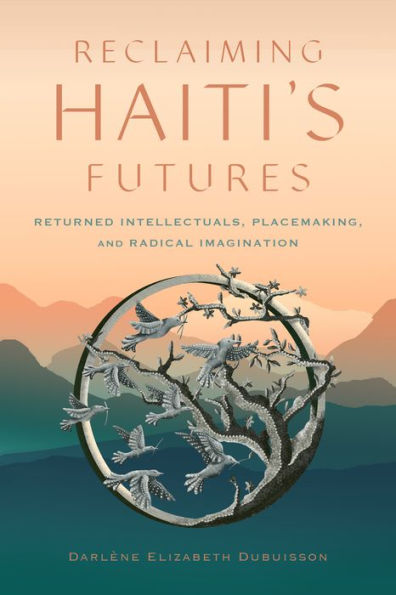
Reclaiming Haiti's Futures: Returned Intellectuals, Placemaking, and Radical Imagination in Bloomington, MN
Current price: $120.00

Reclaiming Haiti's Futures: Returned Intellectuals, Placemaking, and Radical Imagination in Bloomington, MN
Current price: $120.00
Loading Inventory...
Size: Hardcover
Haiti was once a beacon of Black liberatory futures, but now it is often depicted as a place with no future where emigration is the only way out for most of its population. But
Reclaiming Haiti's Futures
tells a different story. It is a story about two generations of Haitian scholars who returned home after particular crises to partake in social change. The first generation, called
jenerasyon 86
, were intellectuals who fled Haiti during the Duvalier dictatorship (1957-1986). They returned after the regime fell to participate in the democratic transition through their political leadership and activism. The younger generation, dubbed the
jenn doktè
, returned after the 2010 earthquake to partake in national reconstruction through public higher education reform. An ethnography of the future, the book explores how these returned scholars resisted coloniality's fractures and displacements by working toward and creating inhabitability or future-oriented places of belonging through improvisation,
rasanblaj
(assembly), and radical imagination. By centering on Haiti and the Caribbean, the book offers insights not just into the Haitian experience but also into how fractures have come to typify more aspects of life globally and what we might do about it.
Reclaiming Haiti's Futures
tells a different story. It is a story about two generations of Haitian scholars who returned home after particular crises to partake in social change. The first generation, called
jenerasyon 86
, were intellectuals who fled Haiti during the Duvalier dictatorship (1957-1986). They returned after the regime fell to participate in the democratic transition through their political leadership and activism. The younger generation, dubbed the
jenn doktè
, returned after the 2010 earthquake to partake in national reconstruction through public higher education reform. An ethnography of the future, the book explores how these returned scholars resisted coloniality's fractures and displacements by working toward and creating inhabitability or future-oriented places of belonging through improvisation,
rasanblaj
(assembly), and radical imagination. By centering on Haiti and the Caribbean, the book offers insights not just into the Haitian experience but also into how fractures have come to typify more aspects of life globally and what we might do about it.
Haiti was once a beacon of Black liberatory futures, but now it is often depicted as a place with no future where emigration is the only way out for most of its population. But
Reclaiming Haiti's Futures
tells a different story. It is a story about two generations of Haitian scholars who returned home after particular crises to partake in social change. The first generation, called
jenerasyon 86
, were intellectuals who fled Haiti during the Duvalier dictatorship (1957-1986). They returned after the regime fell to participate in the democratic transition through their political leadership and activism. The younger generation, dubbed the
jenn doktè
, returned after the 2010 earthquake to partake in national reconstruction through public higher education reform. An ethnography of the future, the book explores how these returned scholars resisted coloniality's fractures and displacements by working toward and creating inhabitability or future-oriented places of belonging through improvisation,
rasanblaj
(assembly), and radical imagination. By centering on Haiti and the Caribbean, the book offers insights not just into the Haitian experience but also into how fractures have come to typify more aspects of life globally and what we might do about it.
Reclaiming Haiti's Futures
tells a different story. It is a story about two generations of Haitian scholars who returned home after particular crises to partake in social change. The first generation, called
jenerasyon 86
, were intellectuals who fled Haiti during the Duvalier dictatorship (1957-1986). They returned after the regime fell to participate in the democratic transition through their political leadership and activism. The younger generation, dubbed the
jenn doktè
, returned after the 2010 earthquake to partake in national reconstruction through public higher education reform. An ethnography of the future, the book explores how these returned scholars resisted coloniality's fractures and displacements by working toward and creating inhabitability or future-oriented places of belonging through improvisation,
rasanblaj
(assembly), and radical imagination. By centering on Haiti and the Caribbean, the book offers insights not just into the Haitian experience but also into how fractures have come to typify more aspects of life globally and what we might do about it.
Shop Similar Products
















Find at Mall of America® in Bloomington, MN
Visit at Mall of America® in Bloomington, MN