


Home
Q-Birds: The Impact of American Manned Aircraft as Drones
Barnes and Noble
Loading Inventory...
Q-Birds: The Impact of American Manned Aircraft as Drones in Bloomington, MN
Current price: $51.64

Q-Birds: The Impact of American Manned Aircraft as Drones in Bloomington, MN
Current price: $51.64
Loading Inventory...
Size: OS
"Altogether this is a valuable work of reference on the OV10 Bronco that will prove to be indispensable to modellers of the type." IPMS Magazine
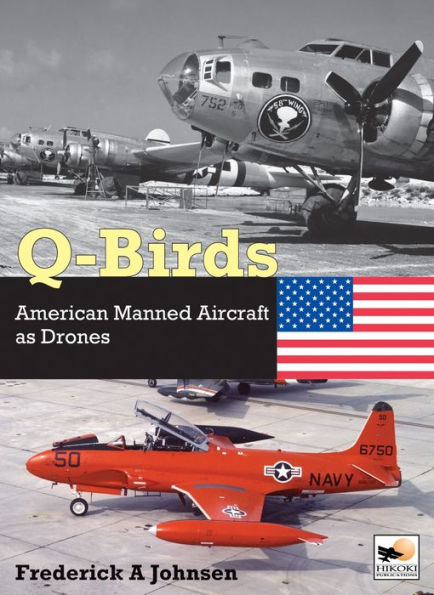
This is an account of a fascinating but largely unknown aspect of post World War 2 US military aviation history, the conversion and use of former frontline aircraft to serve as remotely piloted drones. This story begins as far back as the 1920s, gains momentum during World War 2 and peaks with the postwar glut of airframes during the Cold War era.
The list of manned aircraft converted to drones over the decades is long and includes at least the following: P12, B17, PB4Y2, SB2C, F80, T33, F6F, F86, B29, B47, F9F Panther and Cougar, F100, F102, F104, F106, F4, F16, P39 and Boeing 720. These aircraft were used in a wide range of capacities; as test beds, flying bombs and targets for missiles and other aircraft to intercept and shoot down. One example of the sort of secret projects covered by this book, was a postwar scheme to use remotely controlled B29s as oneway nuclear delivery devices under the code name Banshee.
Since the 1970s the author has visited a number of drone sites, including the plant that converted F100s and F102s as well as ranges where drones were used. His files include many photographs, mostly never previously published of the many and varied types of drone which were created including the last B17G Boeing that rolled out the door in Seattle and was ultimately consumed as a QB17 drone.
Aviation historians and enthusiasts will find so much of interest in this genuinely original, thoroughly researched, wellillustrated and utterly absorbing book which explores in detail a neglected but compelling aspect of recent US military aviation history.
This is an account of a fascinating but largely unknown aspect of post World War 2 US military aviation history, the conversion and use of former frontline aircraft to serve as remotely piloted drones. This story begins as far back as the 1920s, gains momentum during World War 2 and peaks with the postwar glut of airframes during the Cold War era.
The list of manned aircraft converted to drones over the decades is long and includes at least the following: P12, B17, PB4Y2, SB2C, F80, T33, F6F, F86, B29, B47, F9F Panther and Cougar, F100, F102, F104, F106, F4, F16, P39 and Boeing 720. These aircraft were used in a wide range of capacities; as test beds, flying bombs and targets for missiles and other aircraft to intercept and shoot down. One example of the sort of secret projects covered by this book, was a postwar scheme to use remotely controlled B29s as oneway nuclear delivery devices under the code name Banshee.
Since the 1970s the author has visited a number of drone sites, including the plant that converted F100s and F102s as well as ranges where drones were used. His files include many photographs, mostly never previously published of the many and varied types of drone which were created including the last B17G Boeing that rolled out the door in Seattle and was ultimately consumed as a QB17 drone.
Aviation historians and enthusiasts will find so much of interest in this genuinely original, thoroughly researched, wellillustrated and utterly absorbing book which explores in detail a neglected but compelling aspect of recent US military aviation history.
"Altogether this is a valuable work of reference on the OV10 Bronco that will prove to be indispensable to modellers of the type." IPMS Magazine
This is an account of a fascinating but largely unknown aspect of post World War 2 US military aviation history, the conversion and use of former frontline aircraft to serve as remotely piloted drones. This story begins as far back as the 1920s, gains momentum during World War 2 and peaks with the postwar glut of airframes during the Cold War era.
The list of manned aircraft converted to drones over the decades is long and includes at least the following: P12, B17, PB4Y2, SB2C, F80, T33, F6F, F86, B29, B47, F9F Panther and Cougar, F100, F102, F104, F106, F4, F16, P39 and Boeing 720. These aircraft were used in a wide range of capacities; as test beds, flying bombs and targets for missiles and other aircraft to intercept and shoot down. One example of the sort of secret projects covered by this book, was a postwar scheme to use remotely controlled B29s as oneway nuclear delivery devices under the code name Banshee.
Since the 1970s the author has visited a number of drone sites, including the plant that converted F100s and F102s as well as ranges where drones were used. His files include many photographs, mostly never previously published of the many and varied types of drone which were created including the last B17G Boeing that rolled out the door in Seattle and was ultimately consumed as a QB17 drone.
Aviation historians and enthusiasts will find so much of interest in this genuinely original, thoroughly researched, wellillustrated and utterly absorbing book which explores in detail a neglected but compelling aspect of recent US military aviation history.
This is an account of a fascinating but largely unknown aspect of post World War 2 US military aviation history, the conversion and use of former frontline aircraft to serve as remotely piloted drones. This story begins as far back as the 1920s, gains momentum during World War 2 and peaks with the postwar glut of airframes during the Cold War era.
The list of manned aircraft converted to drones over the decades is long and includes at least the following: P12, B17, PB4Y2, SB2C, F80, T33, F6F, F86, B29, B47, F9F Panther and Cougar, F100, F102, F104, F106, F4, F16, P39 and Boeing 720. These aircraft were used in a wide range of capacities; as test beds, flying bombs and targets for missiles and other aircraft to intercept and shoot down. One example of the sort of secret projects covered by this book, was a postwar scheme to use remotely controlled B29s as oneway nuclear delivery devices under the code name Banshee.
Since the 1970s the author has visited a number of drone sites, including the plant that converted F100s and F102s as well as ranges where drones were used. His files include many photographs, mostly never previously published of the many and varied types of drone which were created including the last B17G Boeing that rolled out the door in Seattle and was ultimately consumed as a QB17 drone.
Aviation historians and enthusiasts will find so much of interest in this genuinely original, thoroughly researched, wellillustrated and utterly absorbing book which explores in detail a neglected but compelling aspect of recent US military aviation history.
Shop Similar Products













Find at Mall of America® in Bloomington, MN
Visit at Mall of America® in Bloomington, MN