


Home
Partisan Investment the Global Economy: Why Left Loves Foreign Direct and FDI
Barnes and Noble
Loading Inventory...
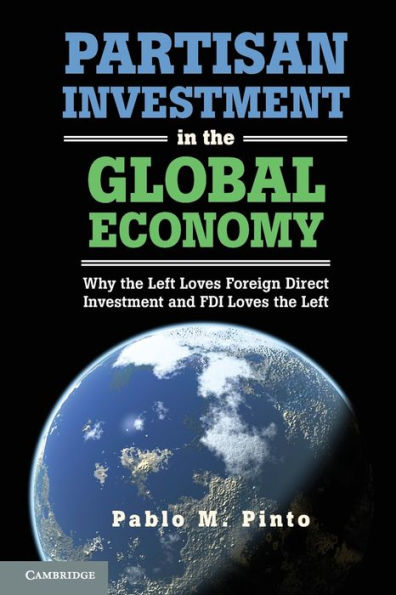
Partisan Investment the Global Economy: Why Left Loves Foreign Direct and FDI in Bloomington, MN
Current price: $120.00

Partisan Investment the Global Economy: Why Left Loves Foreign Direct and FDI in Bloomington, MN
Current price: $120.00
Loading Inventory...
Size: Hardcover
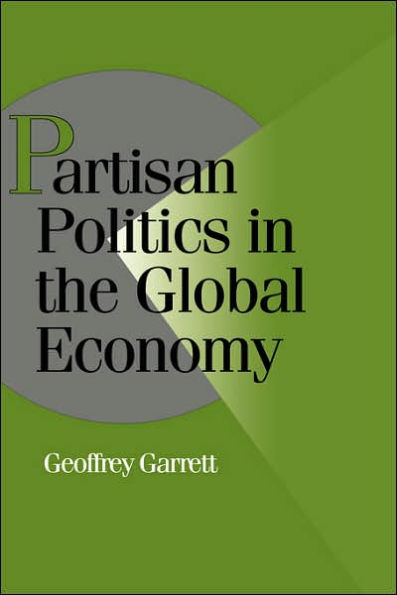
This book develops a partisan theory of foreign direct investment (FDI) to explain cross-country and temporal variance in the regulation of foreign investment and in the amount of FDI inflows that countries receive. The author explores the host governments' partisan alignment, whether pro-labor or pro-capital, to determine if they will be more open or closed to FDI. To reach this determination, the book derives the conditions under which investment flows should be expected to affect the relative demand for the services supplied by economic actors in host countries. Based on these expected distributive consequences, a political economy model of the regulation of FDI and changes in investment performance within countries and over time is developed. The theory is tested using both cross-national statistical analysis and two case studies exploring the development of the foreign investment regimes and their performance over the past century in Argentina and South Korea.
This book develops a partisan theory of foreign direct investment (FDI) to explain cross-country and temporal variance in the regulation of foreign investment and in the amount of FDI inflows that countries receive. The author explores the host governments' partisan alignment, whether pro-labor or pro-capital, to determine if they will be more open or closed to FDI. To reach this determination, the book derives the conditions under which investment flows should be expected to affect the relative demand for the services supplied by economic actors in host countries. Based on these expected distributive consequences, a political economy model of the regulation of FDI and changes in investment performance within countries and over time is developed. The theory is tested using both cross-national statistical analysis and two case studies exploring the development of the foreign investment regimes and their performance over the past century in Argentina and South Korea.
Shop Similar Products









Find at Mall of America® in Bloomington, MN
Visit at Mall of America® in Bloomington, MN